THE ADVENTURE COLLECTIVE® · Independent discovery and booking for outdoor travel

Three full-day tours from Salta fold Argentina’s north into a compact, three-day loop: vineyards and red rock at Cafayate, the chromatic heights of Humahuaca and Purmamarca, and the otherworldly Salinas Grandes salt flats. Travel by minivan with guides, tastings and national park fees included.
Three full-day tours from Salta fold Argentina’s north into a compact, three-day loop: vineyards and red rock at Cafayate, the chromatic heights of Humahuaca and Purmamarca, and the otherworldly Salinas Grandes salt flats. Travel by minivan with guides, tastings and national park fees included.
The minivan leaves Salta before sunrise, tires whispering over the pavement as the city bleeds amber into the high desert. By midmorning the valley opens into the Quebrada de las Conchas: red-brown cliffs carved into ribbed spires that seem to measure the patience of wind and water. That first day ends in Cafayate, glasses clinking over torrontés so bright they could be mistaken for sunlight.
Verified experiences and guided adventures in the surrounding area.
Operated by NORDIC TRAVEL EVT · Salta, Salta
The minivan leaves Salta before sunrise, tires whispering over the pavement as the city bleeds amber into the high desert. By midmorning the valley opens into the Quebrada de las Conchas: red-brown cliffs carved into ribbed spires that seem to measure the patience of wind and water. That first day ends in Cafayate, glasses clinking over torrontés so bright they could be mistaken for sunlight.
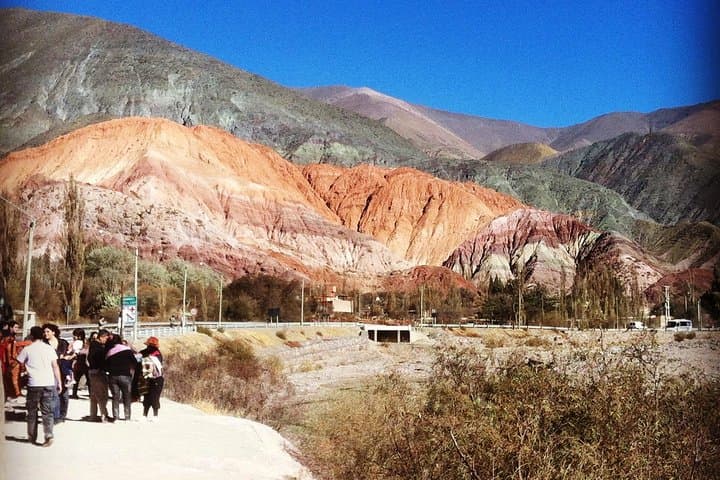
On day two the road climbs. Drivers steer toward the north, threading through towns where adobe houses sit low against a backdrop of striped mountains. Purmamarca’s Cerro de los Siete Colores announces itself before the village does—an honest demonstration of epochal geology where iron, clay and shell folded and bleached tell stories of an ancient sea. Higher still, Humahuaca perches near 3,000 meters, a compact town whose plaza has been a crossroad for Andean trade and resistance for centuries.
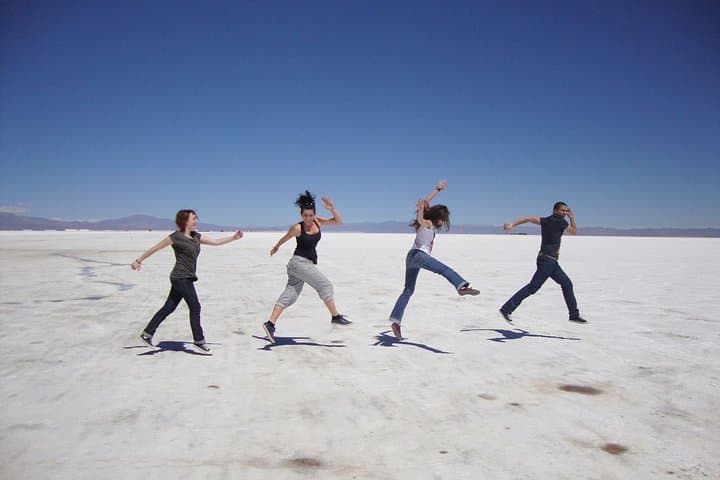
The third day turns stark: the Salinas Grandes salt flat spreads white and brittle, a horizon that challenges scale. At roughly 3,400–3,500 meters altitude the flats make even practiced eyes rethink distance; reflections on the crust turn sky into another terrain.
These excursions are not only scenic; they are cultural corridors. Cafayate’s vineyards are the legacy of viticultural pockets adapted to altitude and arid soils—wineries offer guided tastings and a lesson in how microclimate shapes flavor. The Quebrada de Humahuaca is a UNESCO-listed corridor with pre-Columbian routes, colonial churches, and contemporary artisan markets where Quechua and Aymara traditions remain visible in textiles and language. Geologically, the region is an exposed ledger: Tertiary uplift, wind erosion and salt deposition are readable in color bands and salt plains alike.
Practical edge: each excursion is a full day leaving Salta and returning the same evening, with pickup beginning at 6:30 a.m. Travelers should allow at least four full days in Salta to use this pack. Elevations range from Salta city (~1,200 m) up to Humahuaca and Salinas Grandes (around 3,000–3,500 m), so plan for acclimatization and slower pacing; altitude can make short walks feel harder.
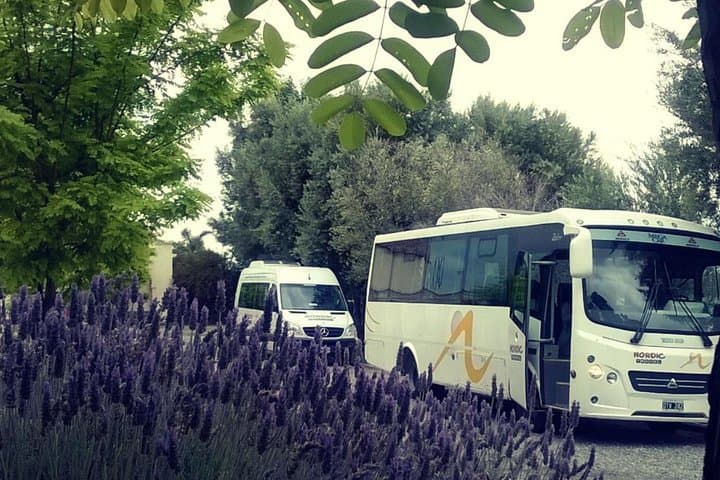
What to bring: layered clothing for hot valleys and cold high plateaus, sun protection, refillable water, sturdy shoes for uneven trails and town streets, and a passport (required for booking). The package includes guided transport in an air-conditioned minivan, national park fees, light refreshments and wine tastings. Guides are multilingual and the tour is wheelchair accessible in parts, but the terrain at viewpoints is often uneven.
For photographers and curious travelers, time your stops: mid-afternoon light sculpts the canyon walls, sunrise gilds the salt flats, and village markets are busiest around late morning. Plan logistics tightly: pickup windows are strict, and afternoons are best left free for slow walks through town plazas and vineyard terraces.
moderate.
3 days (3 full days).
Moderate fitness—comfortable with long days of sitting in transit and short walks at altitude
Yes—a current valid passport is required on the day of travel and for booking information.
Children must be accompanied by an adult; infants are required to sit on an adult’s lap and do not occupy seats during excursions.
Each excursion is a full day with short walks and viewpoints; travelers should have a moderate fitness level and be prepared for altitude.
Light refreshments are included and wine tastings are provided in Cafayate; plan on bringing extra snacks for longer stretches.
Cell service can be spotty in remote sections like the salt flats and deep canyons—download maps or rely on your guide for navigation.
Yes—national park fees are included in the package price.
The Quebrada de Humahuaca has been a trade and pilgrimage corridor for millennia and is recognized by UNESCO for its cultural landscape and Andean heritage.
Visitor pressure is concentrated at viewpoints and Salt Flats—stay on designated paths and support local guides and wineries that practice water-conscious viticulture.
NORDIC TRAVEL EVT operates guided outdoor trips and adventures with an emphasis on safety, stewardship, and memorable experiences.
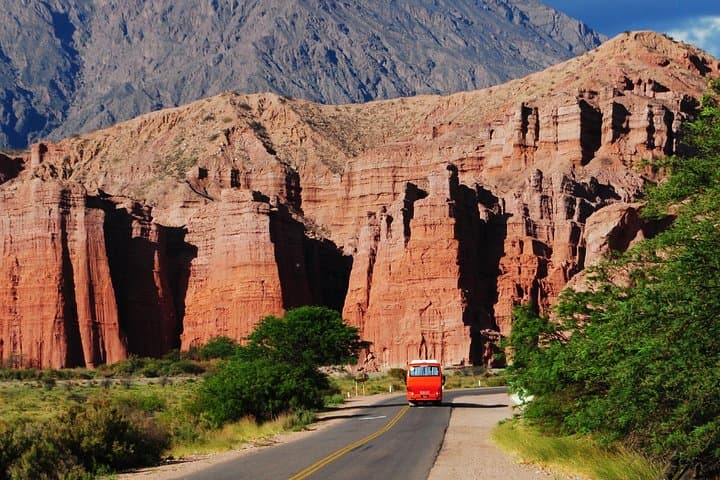
The minivan leaves Salta before sunrise, tires whispering over the pavement as the city bleeds amber into the high desert. By midmorning the valley opens into the Quebrada de las Conchas: red-brown cliffs carved into ribbed spires that seem to measure the patience of wind and water. That first day ends in Cafayate, glasses clinking over torrontés so bright they could be mistaken for sunlight.
The minivan leaves Salta before sunrise, tires whispering over the pavement as the city bleeds amber into the high desert. By midmorning the valley opens into the Quebrada de las Conchas: red-brown cliffs carved into ribbed spires that seem to measure the patience of wind and water. That first day ends in Cafayate, glasses clinking over torrontés so bright they could be mistaken for sunlight.
On day two the road climbs. Drivers steer toward the north, threading through towns where adobe houses sit low against a backdrop of striped mountains. Purmamarca’s Cerro de los Siete Colores announces itself before the village does—an honest demonstration of epochal geology where iron, clay and shell folded and bleached tell stories of an ancient sea. Higher still, Humahuaca perches near 3,000 meters, a compact town whose plaza has been a crossroad for Andean trade and resistance for centuries.
The third day turns stark: the Salinas Grandes salt flat spreads white and brittle, a horizon that challenges scale. At roughly 3,400–3,500 meters altitude the flats make even practiced eyes rethink distance; reflections on the crust turn sky into another terrain.
These excursions are not only scenic; they are cultural corridors. Cafayate’s vineyards are the legacy of viticultural pockets adapted to altitude and arid soils—wineries offer guided tastings and a lesson in how microclimate shapes flavor. The Quebrada de Humahuaca is a UNESCO-listed corridor with pre-Columbian routes, colonial churches, and contemporary artisan markets where Quechua and Aymara traditions remain visible in textiles and language. Geologically, the region is an exposed ledger: Tertiary uplift, wind erosion and salt deposition are readable in color bands and salt plains alike.
Practical edge: each excursion is a full day leaving Salta and returning the same evening, with pickup beginning at 6:30 a.m. Travelers should allow at least four full days in Salta to use this pack. Elevations range from Salta city (~1,200 m) up to Humahuaca and Salinas Grandes (around 3,000–3,500 m), so plan for acclimatization and slower pacing; altitude can make short walks feel harder.
What to bring: layered clothing for hot valleys and cold high plateaus, sun protection, refillable water, sturdy shoes for uneven trails and town streets, and a passport (required for booking). The package includes guided transport in an air-conditioned minivan, national park fees, light refreshments and wine tastings. Guides are multilingual and the tour is wheelchair accessible in parts, but the terrain at viewpoints is often uneven.
For photographers and curious travelers, time your stops: mid-afternoon light sculpts the canyon walls, sunrise gilds the salt flats, and village markets are busiest around late morning. Plan logistics tightly: pickup windows are strict, and afternoons are best left free for slow walks through town plazas and vineyard terraces.