THE ADVENTURE COLLECTIVE® · Independent discovery and booking for outdoor travel

A compact three-day circuit from Zurich that pairs urban history with the raw power of Rhine Falls and the high-alpine charm of Grindelwald and Interlaken. Ideal for travelers wanting scenic highlights without technical hiking.
A compact three-day circuit from Zurich that pairs urban history with the raw power of Rhine Falls and the high-alpine charm of Grindelwald and Interlaken. Ideal for travelers wanting scenic highlights without technical hiking.
You step off an air-conditioned coach on the quayside of Lake Zurich as gulls argue over bread crusts and a cold wind slides down from the Alps. The city’s medieval Old Town opens like a set of narrow rooms—cobblestone streets, carved stone facades and the Limmat River threading the place together—before the road pulls you away toward thunder: the Rhine Falls.
Verified experiences and guided adventures in the surrounding area.
Operated by Emo Tours Swiss · Zurich, Zürich
You step off an air-conditioned coach on the quayside of Lake Zurich as gulls argue over bread crusts and a cold wind slides down from the Alps. The city’s medieval Old Town opens like a set of narrow rooms—cobblestone streets, carved stone facades and the Limmat River threading the place together—before the road pulls you away toward thunder: the Rhine Falls.
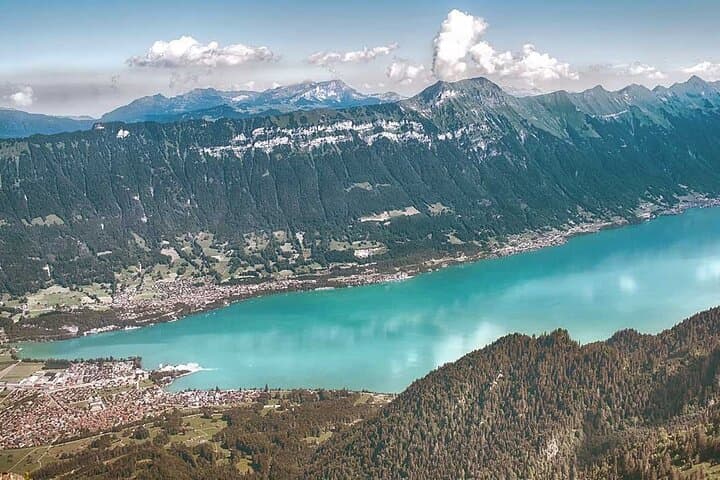
Europe’s largest waterfall is a geological crossroads where the Rhine squeezes through a hard limestone lip, sending sheets of water and spray into a roar you feel in your chest. The next day the route climbs into the Bernese Oberland, where villages like Grindelwald sit beneath the raw faces of the Eiger, Mönch and Jungfrau. These valleys were shaped by glaciers; moraine ridges and steep valley walls still guide local farming and alpine culture.
Culturally, Zurich balances finance and folklore—church towers mark old parish boundaries while cafés serve rösti and fondue. Grindelwald and Interlaken preserve mountaineering history from 19th-century climbers and today’s cable cars and railways make high ridges accessible without technical gear.
Practical guidance: bring sturdy, non-slip shoes for cobbles and wet viewing platforms, and layer for rapid temperature swings between lakeside and alpine passes. Expect long coach transfers; keep a power bank and a refillable water bottle handy. Confirm hotel pickup details and any mobility restrictions before departure, and plan for early starts to maximize daylight for photo stops and short walks around each village.
easy.
3 days (approx. 72 hours).
Suitable for most travelers with basic mobility; requires walking on uneven cobbles and short stairs.
Yes—private transportation and hotel pickup from Zurich are included; you’ll provide your pickup point at booking.
Admissions and viewing platform access are included for listed attractions per the itinerary, but some optional activities in Grindelwald/Interlaken may cost extra.
The tour involves coach transfers and short walks; it’s generally suitable for those with basic mobility but not recommended for travelers with serious spinal, pregnancy, or cardiovascular restrictions—check specifics before booking.
Guides and onboard information are typically provided in English; confirm if you need another language when booking.
Zurich grew from a Roman customs post into a medieval trade hub; the Bernese Oberland later became central to alpine tourism during the 19th-century golden age of alpinism.
Popular sites like Rhine Falls and the Jungfrau region implement visitor management and boardwalks to limit erosion; stick to paths and use refillable bottles to reduce waste.
Emo Tours Swiss operates guided outdoor trips and adventures with an emphasis on safety, stewardship, and memorable experiences.


You step off an air-conditioned coach on the quayside of Lake Zurich as gulls argue over bread crusts and a cold wind slides down from the Alps. The city’s medieval Old Town opens like a set of narrow rooms—cobblestone streets, carved stone facades and the Limmat River threading the place together—before the road pulls you away toward thunder: the Rhine Falls.
You step off an air-conditioned coach on the quayside of Lake Zurich as gulls argue over bread crusts and a cold wind slides down from the Alps. The city’s medieval Old Town opens like a set of narrow rooms—cobblestone streets, carved stone facades and the Limmat River threading the place together—before the road pulls you away toward thunder: the Rhine Falls.
Europe’s largest waterfall is a geological crossroads where the Rhine squeezes through a hard limestone lip, sending sheets of water and spray into a roar you feel in your chest. The next day the route climbs into the Bernese Oberland, where villages like Grindelwald sit beneath the raw faces of the Eiger, Mönch and Jungfrau. These valleys were shaped by glaciers; moraine ridges and steep valley walls still guide local farming and alpine culture.
Culturally, Zurich balances finance and folklore—church towers mark old parish boundaries while cafés serve rösti and fondue. Grindelwald and Interlaken preserve mountaineering history from 19th-century climbers and today’s cable cars and railways make high ridges accessible without technical gear.
Practical guidance: bring sturdy, non-slip shoes for cobbles and wet viewing platforms, and layer for rapid temperature swings between lakeside and alpine passes. Expect long coach transfers; keep a power bank and a refillable water bottle handy. Confirm hotel pickup details and any mobility restrictions before departure, and plan for early starts to maximize daylight for photo stops and short walks around each village.