THE ADVENTURE COLLECTIVE® · Independent discovery and booking for outdoor travel

Three days of Iceland in winter: tectonic rifts, thunderous waterfalls, black-sand coasts and a guided ice cave under Vatnajökull. Read on for terrain notes, what to pack and how the tour strings together the island’s most elemental scenes.
Three days of Iceland in winter: tectonic rifts, thunderous waterfalls, black-sand coasts and a guided ice cave under Vatnajökull. Read on for terrain notes, what to pack and how the tour strings together the island’s most elemental scenes.
You step out of the van and the air bites, clean and honest; a hush hangs under low winter light while the landscape rearranges itself between black lava, silver ice and distant cliffs. On day one the rift of Þingvellir opens like a slow, geological wound—rock walls that have been pulling apart for millennia and a lake that reflects a pale sky. The guide points to the fissure where two tectonic plates sit apart, and for an instant you can feel the earth keep its own quiet counsel.
Verified experiences and guided adventures in the surrounding area.
Operated by Iceland Highlights Travel Agency · Reykjavík, Capital Region
You step out of the van and the air bites, clean and honest; a hush hangs under low winter light while the landscape rearranges itself between black lava, silver ice and distant cliffs. On day one the rift of Þingvellir opens like a slow, geological wound—rock walls that have been pulling apart for millennia and a lake that reflects a pale sky. The guide points to the fissure where two tectonic plates sit apart, and for an instant you can feel the earth keep its own quiet counsel.
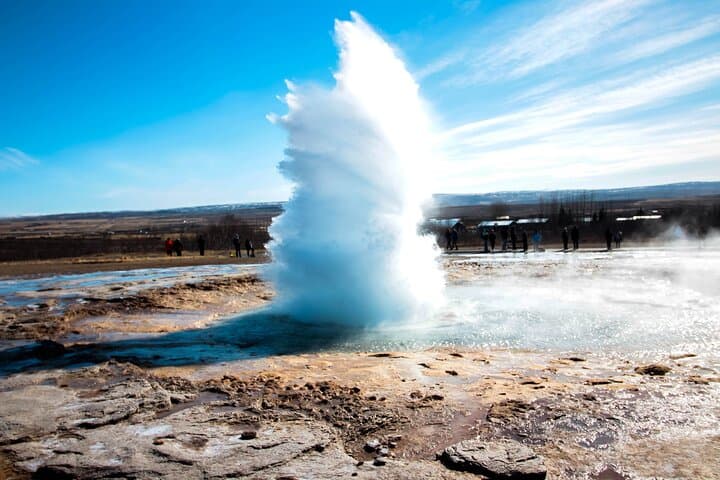
This 3-day winter sweep threads three of Iceland’s defining landscapes. The Golden Circle—Þingvellir, Gullfoss and Kerið—maps political and volcanic history: Þingvellir hosted the Althing from 930 AD, the world’s oldest parliament, while Gullfoss lets meltwater throw itself off a two-step chasm with relentless force. Kerið is a volcanic crater whose red walls frame an aquamarine pool formed roughly 3,000 years ago.
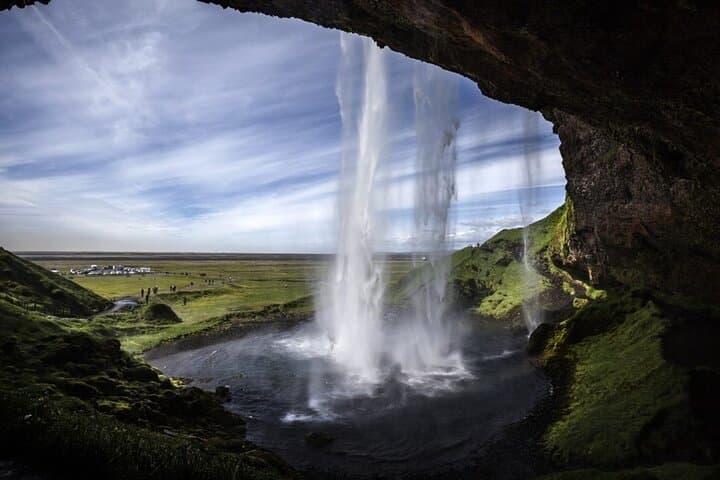
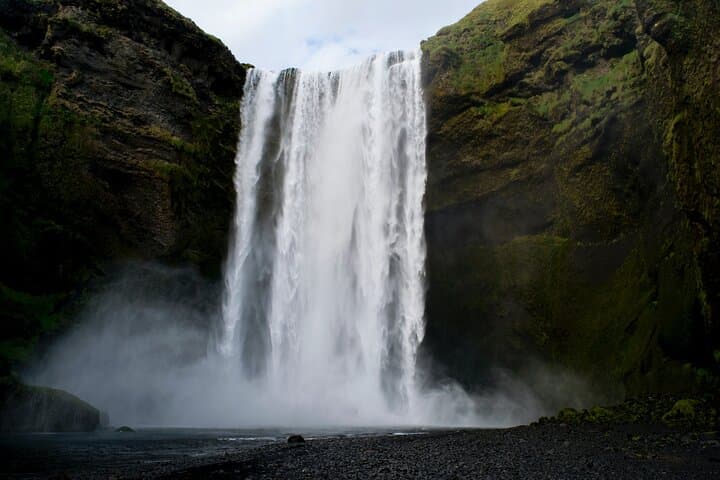
The second day slides down the south coast, where waterfalls play with light. Seljalandsfoss drops from farmland cliffs and dares you to walk behind it; Skógafoss punches Atlantic spray into the air and often gifts a double rainbow on clear days. Reynisfjara’s black sands and basalt columns stand like an amphitheater to the North Atlantic, and Dyrhólaey’s promontory watches storms and seabirds with the same blunt patience.
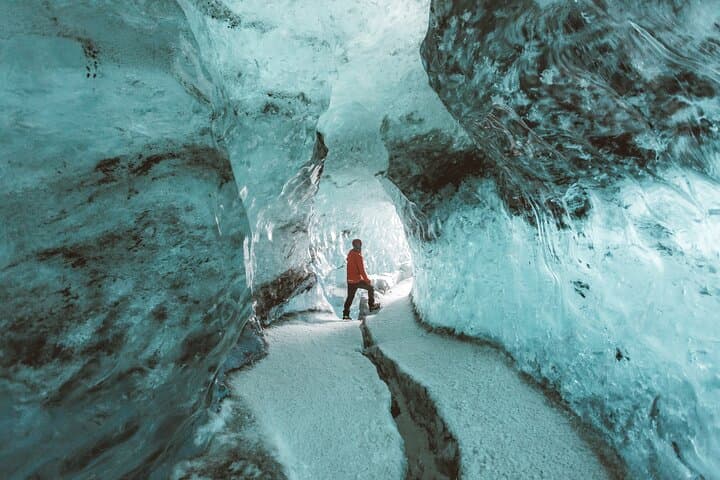
Day three turns glacier-blue. You travel farther east to Vatnajökull’s outwash plain: Skaftafell’s short hikes, the braided river that carved Fjaðrárgljúfur, and then Jökulsárlón, where icebergs calve and drift, washing up as “diamonds” on the black shore. The ice cave visit delivers the highlight—ancient compressed ice in saturated blues, corridors carved by meltwater and time. The cave itself is accessed via a guided approach across glacier surface; it’s intimate, chilly and completely other.
Practical guidance: plan for long driving days (expect 1–3 hours between major stops on days 1–2, and up to 4–5 hours on day 3 from the Golden Circle area to the Glacier Lagoon). Trails are short but often icy—bring waterproof, insulated boots with good tread (crampons recommended for glacier approaches). Temperatures hover around freezing; layered, windproof clothing is essential. Tours include two nights’ accommodation, on-board Wi‑Fi and the guided ice cave entry; pickup is offered from central Reykjavík with a 30‑minute pre-departure pickup window.
Respect local rules: follow marked trails, don’t walk on fragile dunes at Reynisfjara, and heed guide safety briefings on the glacier. With the right kit and a sense for raw, elemental terrain, this itinerary turns Iceland’s dramatic contrasts—fire, water, ice—into three compact days of exploration.
moderate.
3 days (≈72 hours).
Moderate fitness—able to handle multiple long travel days, short walks on uneven/icy terrain and brief glacier approaches
The guided ice cave requires short glacier walking over uneven ice; participants should be steady on their feet—guides provide safety gear and will assist those with limited mobility where safe.
This shared tour runs with up to 19 travelers per vehicle, ideal for small-group ambience while keeping guide attention manageable.
Most operators include helmets and glacier crampons as part of the ice cave experience; confirm in advance if you need specific sizes or prefer to rent your own.
Expect temperatures near or below freezing with wind chill; wear moisture-wicking base layers, an insulating mid-layer and a waterproof outer layer, plus warm gloves and a hat.
Winter offers aurora chances if skies are clear and geomagnetic activity is high—times are unpredictable, and the tour does not guarantee sightings but often pauses for aurora displays where feasible.
The scheduled ice cave portion typically runs around 1.5–3 hours including approach, gear fitting and guided time inside, depending on conditions.
Þingvellir was the site of the Alþingi established in 930 AD, where Iceland’s early legislative assembly met on the exposed rock benches.
Stick to marked paths and avoid walking on fragile moss or sand dunes; glacier and coastal areas are sensitive—pack out all waste and follow guide instructions to reduce impact.
Iceland Highlights Travel Agency operates guided outdoor trips and adventures with an emphasis on safety, stewardship, and memorable experiences.
You step out of the van and the air bites, clean and honest; a hush hangs under low winter light while the landscape rearranges itself between black lava, silver ice and distant cliffs. On day one the rift of Þingvellir opens like a slow, geological wound—rock walls that have been pulling apart for millennia and a lake that reflects a pale sky. The guide points to the fissure where two tectonic plates sit apart, and for an instant you can feel the earth keep its own quiet counsel.
You step out of the van and the air bites, clean and honest; a hush hangs under low winter light while the landscape rearranges itself between black lava, silver ice and distant cliffs. On day one the rift of Þingvellir opens like a slow, geological wound—rock walls that have been pulling apart for millennia and a lake that reflects a pale sky. The guide points to the fissure where two tectonic plates sit apart, and for an instant you can feel the earth keep its own quiet counsel.
This 3-day winter sweep threads three of Iceland’s defining landscapes. The Golden Circle—Þingvellir, Gullfoss and Kerið—maps political and volcanic history: Þingvellir hosted the Althing from 930 AD, the world’s oldest parliament, while Gullfoss lets meltwater throw itself off a two-step chasm with relentless force. Kerið is a volcanic crater whose red walls frame an aquamarine pool formed roughly 3,000 years ago.
The second day slides down the south coast, where waterfalls play with light. Seljalandsfoss drops from farmland cliffs and dares you to walk behind it; Skógafoss punches Atlantic spray into the air and often gifts a double rainbow on clear days. Reynisfjara’s black sands and basalt columns stand like an amphitheater to the North Atlantic, and Dyrhólaey’s promontory watches storms and seabirds with the same blunt patience.
Day three turns glacier-blue. You travel farther east to Vatnajökull’s outwash plain: Skaftafell’s short hikes, the braided river that carved Fjaðrárgljúfur, and then Jökulsárlón, where icebergs calve and drift, washing up as “diamonds” on the black shore. The ice cave visit delivers the highlight—ancient compressed ice in saturated blues, corridors carved by meltwater and time. The cave itself is accessed via a guided approach across glacier surface; it’s intimate, chilly and completely other.
Practical guidance: plan for long driving days (expect 1–3 hours between major stops on days 1–2, and up to 4–5 hours on day 3 from the Golden Circle area to the Glacier Lagoon). Trails are short but often icy—bring waterproof, insulated boots with good tread (crampons recommended for glacier approaches). Temperatures hover around freezing; layered, windproof clothing is essential. Tours include two nights’ accommodation, on-board Wi‑Fi and the guided ice cave entry; pickup is offered from central Reykjavík with a 30‑minute pre-departure pickup window.
Respect local rules: follow marked trails, don’t walk on fragile dunes at Reynisfjara, and heed guide safety briefings on the glacier. With the right kit and a sense for raw, elemental terrain, this itinerary turns Iceland’s dramatic contrasts—fire, water, ice—into three compact days of exploration.