THE ADVENTURE COLLECTIVE® · Independent discovery and booking for outdoor travel

A guided 3-day winter climb to Mount Toubkal offers a technical-but-accessible ascent to North Africa’s highest peak. Expect crampon work, refuge nights, and panoramic Atlas views.
A guided 3-day winter climb to Mount Toubkal offers a technical-but-accessible ascent to North Africa’s highest peak. Expect crampon work, refuge nights, and panoramic Atlas views.
A dawn transfer from Marrakech threads through almond orchards and then the Atlas folds open: a slate-blue ridge, wind sharpening the air, and a caravan of mules picking a narrow track toward Imlil. By late morning the village shrinks behind you and the trail rises through terraced fields to the refuge where snow begins to hold. On summit day the mountain takes hold—steep, compacted slopes demand crampons and an axe; the world narrows to the breath, the pack, and the ridge pulling you toward 4,167 m.
Verified experiences and guided adventures in the surrounding area.
Operated by Trekking in Morocco · Imlil, Marrakech-Safi
A dawn transfer from Marrakech threads through almond orchards and then the Atlas folds open: a slate-blue ridge, wind sharpening the air, and a caravan of mules picking a narrow track toward Imlil. By late morning the village shrinks behind you and the trail rises through terraced fields to the refuge where snow begins to hold. On summit day the mountain takes hold—steep, compacted slopes demand crampons and an axe; the world narrows to the breath, the pack, and the ridge pulling you toward 4,167 m.
Toubkal is the highest peak in North Africa, carved from uplifted metamorphic rock and glaciers long gone; local Berber communities have guided travelers here for generations. The route follows age-old mule tracks, passes the small shrine at Sidi Chamharouch, and threads terraced villages where language and hospitality reflect Amazigh culture rather than city life.
Expect winter conditions: wind-scoured ridges, variable snowpack, and cold clear air that stretches views across the High Atlas to the Sahara. The guides supplied on this 3-day itinerary handle logistics—mules, refuge beds, meals—while you focus on rhythm and route-finding.
Practical guidance: leave early on summit day to use firmer snow, carry layered insulation and a warm sleeping bag for refuge nights, and be prepared for technical snow travel—basic crampon and ice-axe competency is essential. Hydrate, pace for altitude gain, and trust local guides who read the mountain’s moods. With sensible gear and steady legs, the reward is a wide, winter sky and a view that makes the climb worth every step.
challenging.
3 days.
Suitable for hikers in good aerobic shape used to long days and altitude; expect 6–8 hour summit day with steep, sustained ascent.
Yes—this winter ascent requires basic skills with crampons and an ice axe; guides can coach but not replace prior competence.
Refuge temperatures can drop below freezing overnight; summit temperatures and wind can push perceived cold well below -10°C depending on conditions.
Allow at least a gradual approach—starting from Marrakech and sleeping at the refuge helps, but those sensitive to altitude should inform guides and consider extra acclimatization time.
Typical inclusions are transfers from Marrakech, qualified guide, cook, meals as listed, refuge accommodation, and mule support; confirm gear rental availability beforehand.
Toubkal has long been a landmark for Amazigh (Berber) communities; the peak is the highest in North Africa and sits on ancient transhumance routes.
Stick to established trails, pack out waste, and use local mule services to reduce campsite impact; guides often support community-based tourism that funds trail upkeep.
Trekking in Morocco operates guided outdoor trips and adventures with an emphasis on safety, stewardship, and memorable experiences.


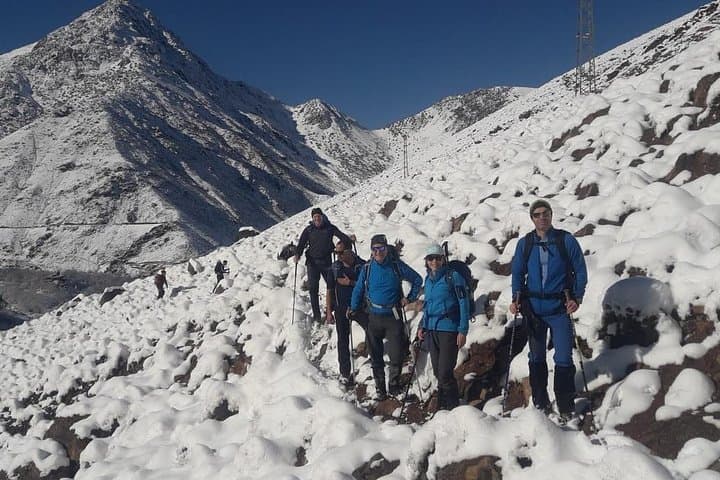

A dawn transfer from Marrakech threads through almond orchards and then the Atlas folds open: a slate-blue ridge, wind sharpening the air, and a caravan of mules picking a narrow track toward Imlil. By late morning the village shrinks behind you and the trail rises through terraced fields to the refuge where snow begins to hold. On summit day the mountain takes hold—steep, compacted slopes demand crampons and an axe; the world narrows to the breath, the pack, and the ridge pulling you toward 4,167 m.
A dawn transfer from Marrakech threads through almond orchards and then the Atlas folds open: a slate-blue ridge, wind sharpening the air, and a caravan of mules picking a narrow track toward Imlil. By late morning the village shrinks behind you and the trail rises through terraced fields to the refuge where snow begins to hold. On summit day the mountain takes hold—steep, compacted slopes demand crampons and an axe; the world narrows to the breath, the pack, and the ridge pulling you toward 4,167 m.
Toubkal is the highest peak in North Africa, carved from uplifted metamorphic rock and glaciers long gone; local Berber communities have guided travelers here for generations. The route follows age-old mule tracks, passes the small shrine at Sidi Chamharouch, and threads terraced villages where language and hospitality reflect Amazigh culture rather than city life.
Expect winter conditions: wind-scoured ridges, variable snowpack, and cold clear air that stretches views across the High Atlas to the Sahara. The guides supplied on this 3-day itinerary handle logistics—mules, refuge beds, meals—while you focus on rhythm and route-finding.
Practical guidance: leave early on summit day to use firmer snow, carry layered insulation and a warm sleeping bag for refuge nights, and be prepared for technical snow travel—basic crampon and ice-axe competency is essential. Hydrate, pace for altitude gain, and trust local guides who read the mountain’s moods. With sensible gear and steady legs, the reward is a wide, winter sky and a view that makes the climb worth every step.