THE ADVENTURE COLLECTIVE® · Independent discovery and booking for outdoor travel

Leave Cairo’s bustle for three days of palm oases, black volcanic ridges, and the chalk monuments of Egypt’s White Desert. This private tour packs geology, local history, and overnight desert camping into a compact, vehicle‑supported journey.
Leave Cairo’s bustle for three days of palm oases, black volcanic ridges, and the chalk monuments of Egypt’s White Desert. This private tour packs geology, local history, and overnight desert camping into a compact, vehicle‑supported journey.
At dawn the highway slides out of Cairo and the city’s heat and traffic loosen like a knot. By mid-morning the landscape flattens into ochre plains, then the palms and mud-brick houses of Bahariya rise ahead — an unexpected green pocket in the Western Desert. Over three days the trip moves from oasis life into the Black Desert’s burnt-volcanic ridges and finally into the White Desert’s moonlike chalk sculptures, where wind has shaped stone into mushroom caps and abstract columns.
Verified experiences and guided adventures in the surrounding area.
Operated by Emo Tours Egypt · Bawiti, Giza Governorate
At dawn the highway slides out of Cairo and the city’s heat and traffic loosen like a knot. By mid-morning the landscape flattens into ochre plains, then the palms and mud-brick houses of Bahariya rise ahead — an unexpected green pocket in the Western Desert. Over three days the trip moves from oasis life into the Black Desert’s burnt-volcanic ridges and finally into the White Desert’s moonlike chalk sculptures, where wind has shaped stone into mushroom caps and abstract columns.
This route threads natural history with human stories: Bahariya’s Greek‑Roman mummies and ancient salt trade, Crystal Mountain’s exposed quartz veins, and the Black Desert’s iron‑stained hills that mark different volcanic and sedimentary layers. Cultural touches — tea with oasis residents, campsite stories under a hard desert sky — underline how people have adapted to this arid world.
Practical guidance is straightforward. Expect long vehicle transfers (Cairo to Bahariya ~4 hours each way) and uneven terrain best navigated on foot or by 4x4; sand walking and short dune climbs are typical. Nights are cold; camps range from basic desert kitchens to canvas shelters. Carry ample water, sun protection, and a warm layer for pre-dawn and night. Respect park boundaries, avoid climbing fragile formations, and follow guide instructions for vehicle routes to limit erosion.
For photographers the sunrise in the White Desert is decisive; for slow walkers the oasis palms and salt lake offer shade and quiet. This is a trip built on contrast: urban Cairo one day, an ancient desert next — straightforward, sensory, and surprisingly accessible for anyone ready for dusty roads and expansive skies.
moderate.
3 days.
Moderate fitness: able to walk on sand and uneven rock for short stretches and handle long vehicle transfers.
Expect roughly 4 hours each way (about 350 km) depending on traffic and road conditions.
Camps are basic desert campsites with sleeping mats/blankets; they offer a clear night sky but modest amenities compared to hotels.
The tour notes include entry fees in inclusions, but confirm with the operator when booking to avoid surprises.
The itinerary is vehicle‑based and marked as suitable for most fitness levels, but it’s not recommended for pregnant travelers or those with serious back or heart conditions.
Bahariya has been a crossroads since antiquity — Greco‑Roman mummies were found in local tombs, and the oasis was part of historical trade routes across the Western Desert.
The White Desert’s chalk formations are fragile; visitors should avoid climbing or chipping rocks, follow vehicle tracks, and carry out all waste to minimize impact.
Emo Tours Egypt operates guided outdoor trips and adventures with an emphasis on safety, stewardship, and memorable experiences.
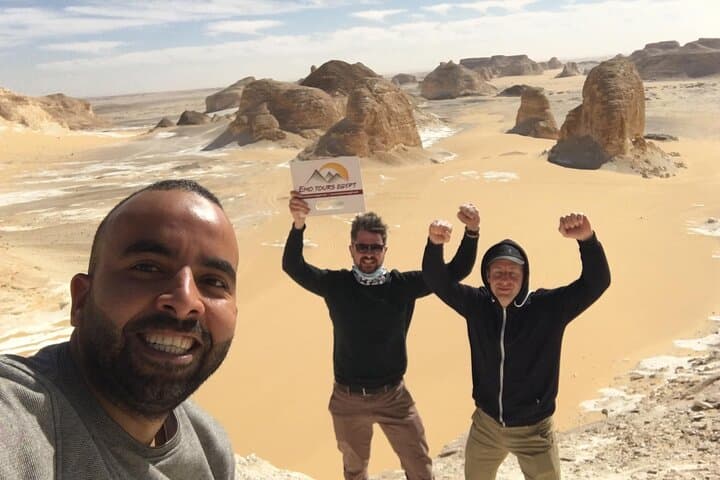
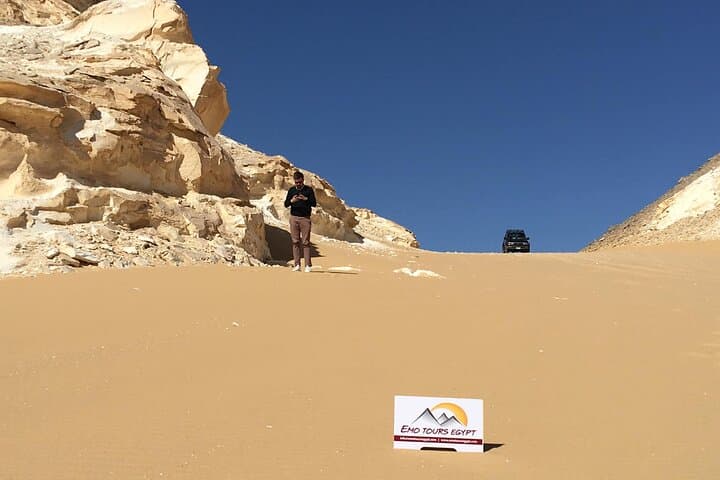
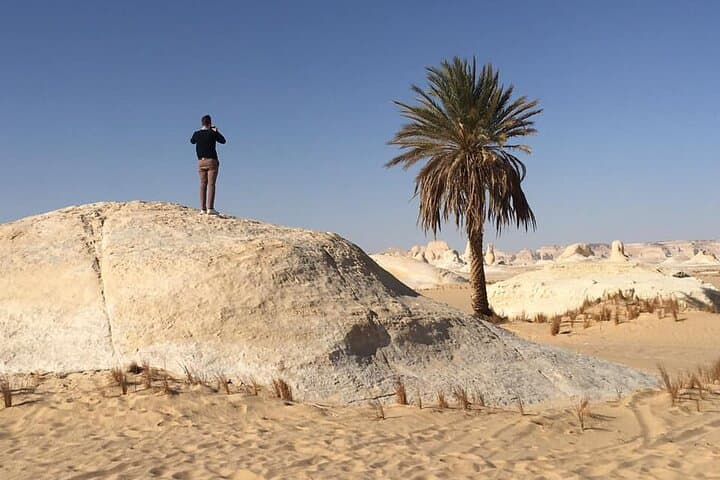
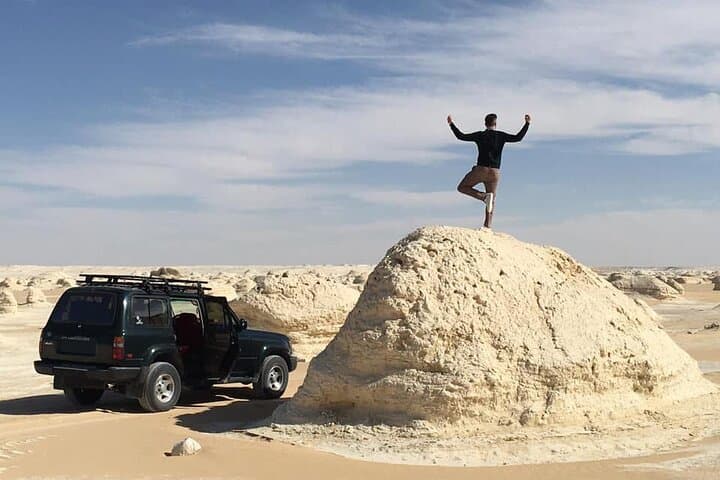
At dawn the highway slides out of Cairo and the city’s heat and traffic loosen like a knot. By mid-morning the landscape flattens into ochre plains, then the palms and mud-brick houses of Bahariya rise ahead — an unexpected green pocket in the Western Desert. Over three days the trip moves from oasis life into the Black Desert’s burnt-volcanic ridges and finally into the White Desert’s moonlike chalk sculptures, where wind has shaped stone into mushroom caps and abstract columns.
At dawn the highway slides out of Cairo and the city’s heat and traffic loosen like a knot. By mid-morning the landscape flattens into ochre plains, then the palms and mud-brick houses of Bahariya rise ahead — an unexpected green pocket in the Western Desert. Over three days the trip moves from oasis life into the Black Desert’s burnt-volcanic ridges and finally into the White Desert’s moonlike chalk sculptures, where wind has shaped stone into mushroom caps and abstract columns.
This route threads natural history with human stories: Bahariya’s Greek‑Roman mummies and ancient salt trade, Crystal Mountain’s exposed quartz veins, and the Black Desert’s iron‑stained hills that mark different volcanic and sedimentary layers. Cultural touches — tea with oasis residents, campsite stories under a hard desert sky — underline how people have adapted to this arid world.
Practical guidance is straightforward. Expect long vehicle transfers (Cairo to Bahariya ~4 hours each way) and uneven terrain best navigated on foot or by 4x4; sand walking and short dune climbs are typical. Nights are cold; camps range from basic desert kitchens to canvas shelters. Carry ample water, sun protection, and a warm layer for pre-dawn and night. Respect park boundaries, avoid climbing fragile formations, and follow guide instructions for vehicle routes to limit erosion.
For photographers the sunrise in the White Desert is decisive; for slow walkers the oasis palms and salt lake offer shade and quiet. This is a trip built on contrast: urban Cairo one day, an ancient desert next — straightforward, sensory, and surprisingly accessible for anyone ready for dusty roads and expansive skies.