THE ADVENTURE COLLECTIVE® · Independent discovery and booking for outdoor travel

Leave Cairo for a three-day 4x4 safari through Bahariya Oasis to the White and Black Deserts. Camp under ink-dark skies, visit Crystal Mountain and Djara Cave, and soak in a desert hot spring.
Leave Cairo for a three-day 4x4 safari through Bahariya Oasis to the White and Black Deserts. Camp under ink-dark skies, visit Crystal Mountain and Djara Cave, and soak in a desert hot spring.
Morning light cuts across the highway as you leave Cairo; air-conditioned comfort gives way to salt-crusted wind and the steady rumble of a 4x4. By mid-afternoon the car drops onto raw desert—black basalt cones rise like volcanic teeth, then chalk-white sculptures of air-eroded limestone appear, the White Desert daring you to walk among them.
Verified experiences and guided adventures in the surrounding area.
Operated by Bastet Travel · Bahariya Oasis, New Valley Governorate
Morning light cuts across the highway as you leave Cairo; air-conditioned comfort gives way to salt-crusted wind and the steady rumble of a 4x4. By mid-afternoon the car drops onto raw desert—black basalt cones rise like volcanic teeth, then chalk-white sculptures of air-eroded limestone appear, the White Desert daring you to walk among them.
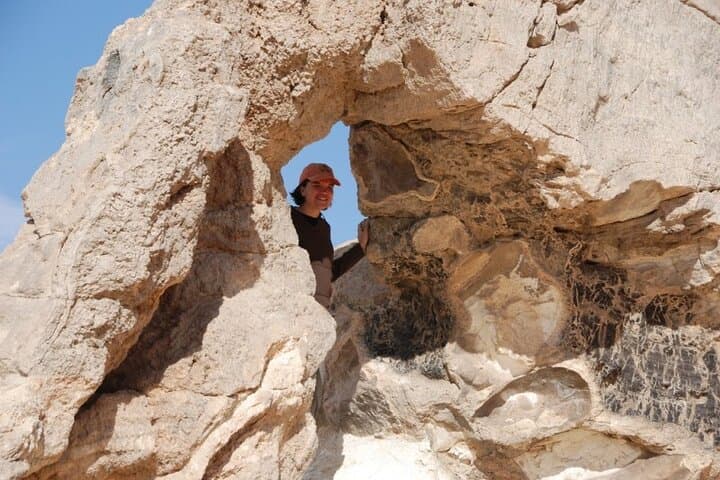
This three-day loop threads Bahariya Oasis and the White Desert National Park, a landscape shaped by ancient seabeds and wind-polished chalk over millions of years. Crystal Mountain (Gebel al-Izzaz) glitters with quartzite seams; Djara Cave preserves Neolithic rock art; Bir Sigam’s hot spring recalls the oasis’ human use as a thermal refuge. The local Bedouin history is visible in tents, simple meals, and the routes that follow old caravan and water lines.
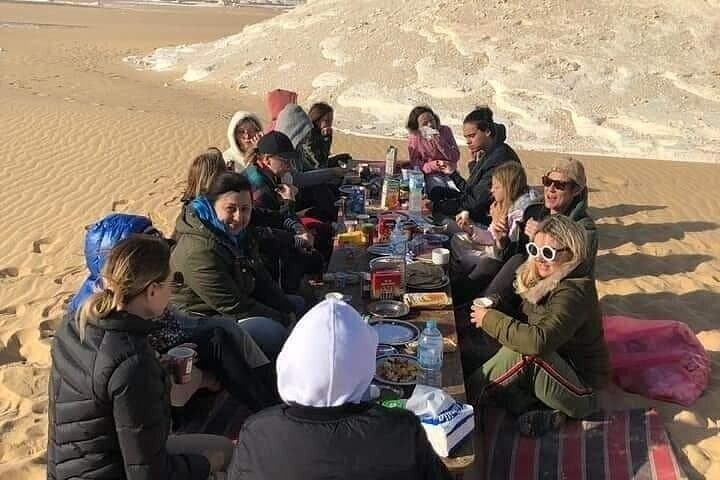
Expect long driving legs—roughly 350 km from Cairo to Bahariya—followed by hours of off-road driving into valleys like Agabat and El-Haize where camps are set beneath huge chalk forms. Nights are cold and very dark; the desert’s scale is the main character: silence, sudden wind, and starfields that rearrange your sense of latitude.
Practical guidance: pack layers for wide temperature swings, enough water for long drives, and sturdy footwear for walking on sand and chalk. Sunrise and sunset are prime photographic windows; a reclining posture and patience will reward you with color and texture the midday sun flattens. Respect Bedouin camps and leave no trace—the desert is fragile and easily scarred.
moderate.
3 days.
Suitable for most fitness levels; expect long vehicle hours and short walks across uneven sand and rock
The road distance is roughly 350 km and takes about 4–5 hours by private vehicle with short stops.
No—tents and camp setup are provided with Bedouin staff handling sleeping arrangements and meals.
Yes; entrance to the White Desert National Park and listed attractions are included in the tour details.
Days can be hot (25–35°C in warmer months) and nights drop sharply (often below 10°C); prepare layers.
This region sits on former Mediterranean seabeds; fossil-bearing limestones and prehistoric rock art attest to human and geological change over millennia.
The White Desert is fragile—stick to established tracks, pack out waste, and minimize fire impact; local operators aim to limit footprints and use local staff to reduce transit pressures.
Bastet Travel operates guided outdoor trips and adventures with an emphasis on safety, stewardship, and memorable experiences.
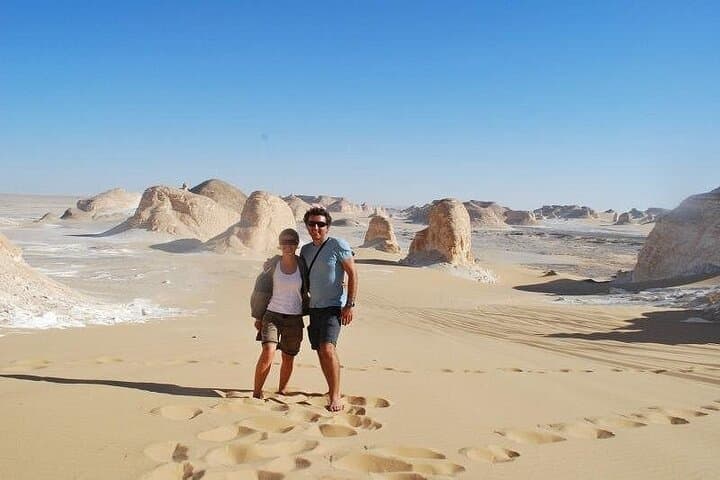
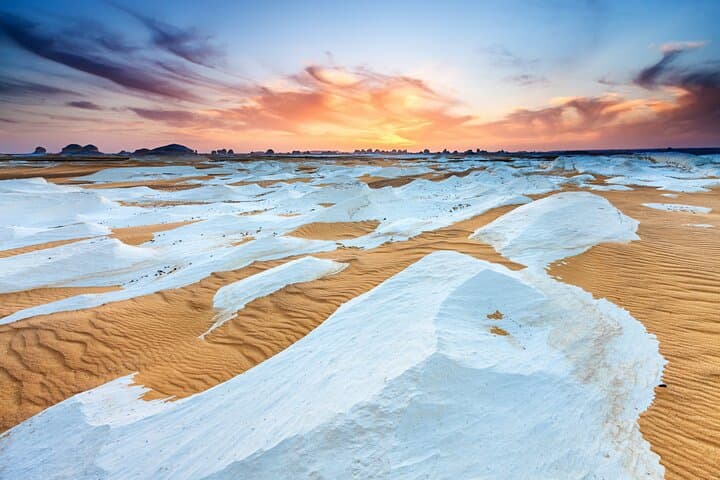
Morning light cuts across the highway as you leave Cairo; air-conditioned comfort gives way to salt-crusted wind and the steady rumble of a 4x4. By mid-afternoon the car drops onto raw desert—black basalt cones rise like volcanic teeth, then chalk-white sculptures of air-eroded limestone appear, the White Desert daring you to walk among them.
Morning light cuts across the highway as you leave Cairo; air-conditioned comfort gives way to salt-crusted wind and the steady rumble of a 4x4. By mid-afternoon the car drops onto raw desert—black basalt cones rise like volcanic teeth, then chalk-white sculptures of air-eroded limestone appear, the White Desert daring you to walk among them.
This three-day loop threads Bahariya Oasis and the White Desert National Park, a landscape shaped by ancient seabeds and wind-polished chalk over millions of years. Crystal Mountain (Gebel al-Izzaz) glitters with quartzite seams; Djara Cave preserves Neolithic rock art; Bir Sigam’s hot spring recalls the oasis’ human use as a thermal refuge. The local Bedouin history is visible in tents, simple meals, and the routes that follow old caravan and water lines.
Expect long driving legs—roughly 350 km from Cairo to Bahariya—followed by hours of off-road driving into valleys like Agabat and El-Haize where camps are set beneath huge chalk forms. Nights are cold and very dark; the desert’s scale is the main character: silence, sudden wind, and starfields that rearrange your sense of latitude.
Practical guidance: pack layers for wide temperature swings, enough water for long drives, and sturdy footwear for walking on sand and chalk. Sunrise and sunset are prime photographic windows; a reclining posture and patience will reward you with color and texture the midday sun flattens. Respect Bedouin camps and leave no trace—the desert is fragile and easily scarred.