THE ADVENTURE COLLECTIVE® · Independent discovery and booking for outdoor travel

A compact 3-day trip from Cairo that pairs Bahariya’s springs and markets with moonlike nights in the White Desert. Expect vehicle transfers, short walks, warm springs and a full night under chalk formations that glow at sunset.
A compact 3-day trip from Cairo that pairs Bahariya’s springs and markets with moonlike nights in the White Desert. Expect vehicle transfers, short walks, warm springs and a full night under chalk formations that glow at sunset.
You arrive from Cairo at first light, tires crunching across ochre sand as palm fronds in Bahariya stir like a slow applause. The oasis opens up — mud-brick lanes, market stalls, and the scent of brewing tea — before the desert itself takes the stage. By afternoon you stand at a warm spring, water pulling at your skin; by night the chalk sculptures of the White Desert read like pages of a book the wind keeps rewriting.
Verified experiences and guided adventures in the surrounding area.
Operated by White desert travel · Bawiti, Giza Governorate
You arrive from Cairo at first light, tires crunching across ochre sand as palm fronds in Bahariya stir like a slow applause. The oasis opens up — mud-brick lanes, market stalls, and the scent of brewing tea — before the desert itself takes the stage. By afternoon you stand at a warm spring, water pulling at your skin; by night the chalk sculptures of the White Desert read like pages of a book the wind keeps rewriting.
Bahariya’s story is layered: a living oasis fed by hundreds of springs, a Greco-Roman and Pharaonic past visible in tombs and old houses, and a more recent geological chapter written in wind-carved chalk and basalt-capped mounds of the Black Desert. The White Desert’s mushroom-shaped chalk formations are sculpted from soft sedimentary rock; nearby Crystal Mountain is an outcrop of quartz and igneous intrusions that contrasts with salt flats and dunes.
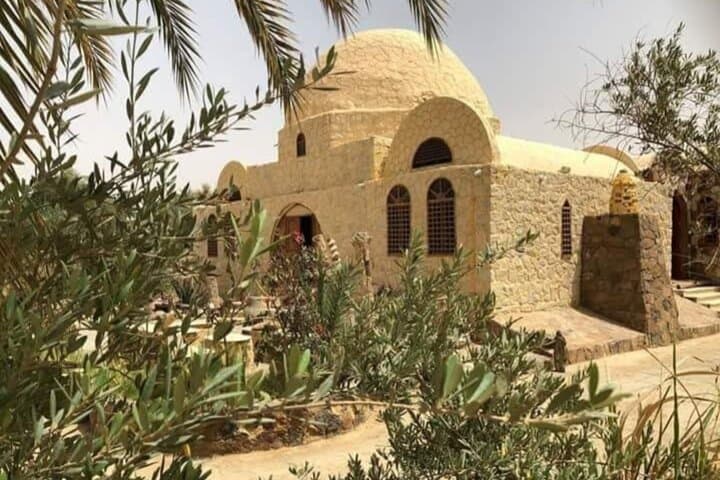
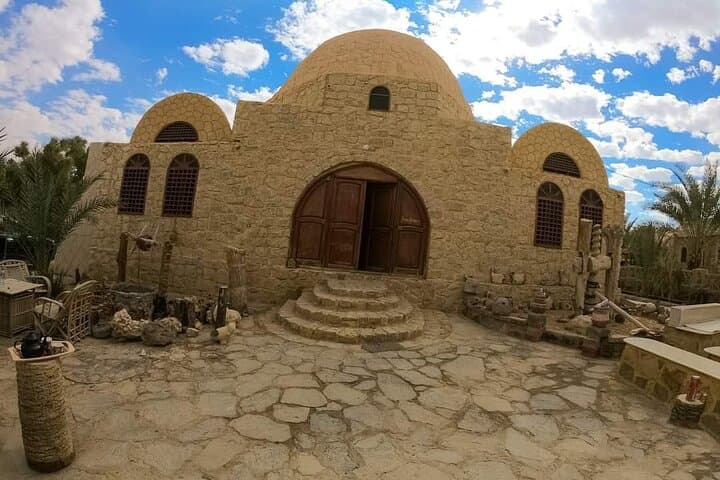
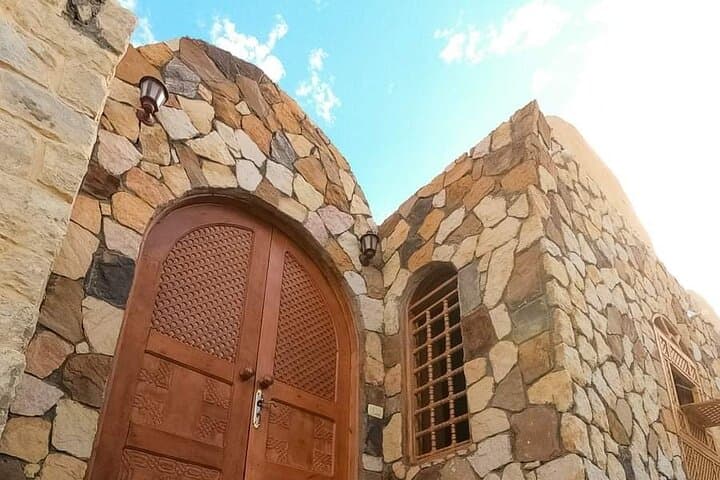
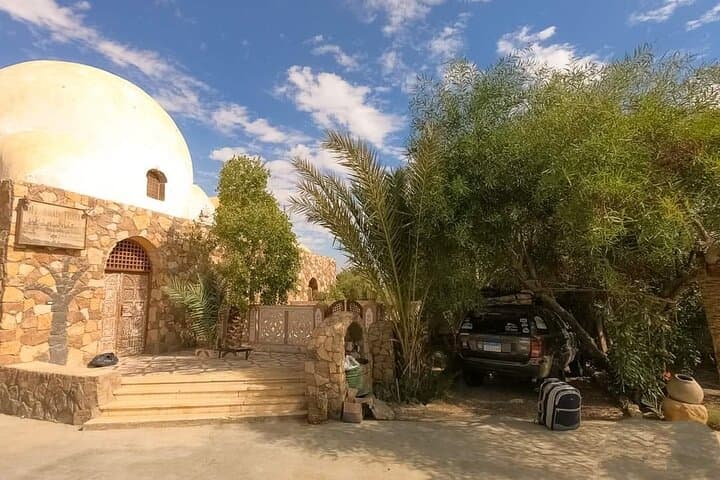
Culturally, Bawiti’s market and old-quarter architecture give a picture of oasis life — date palms, local breads and small coffee shops where drivers and guides compare notes. Wildlife is sparse but present: gazelles and foxes move through the margins at dusk.
Practical guidance: expect long vehicle transfers, sandy short hikes and a cold desert night. Bring layered clothing, sun protection, plenty of water and a headlamp. Respect park rules and camp only where designated; chalk formations are fragile and erosion accelerates with foot traffic. The trip balances quiet desert time with short cultural stops — ideal for travelers looking for a compact, accessible multi-day desert experience.
moderate.
2–3 days.
Suitable for travelers in average fitness; involves vehicle transfers, short walks on uneven sand and brief dune climbs.
No, the tour is guided and camps are organized by the operator, making it suitable for first-time desert campers.
Expect roughly 3–4 hours each way to reach Bahariya by road; times vary with traffic and stops en route.
Camps are basic: expect shared or portable toilets and limited shower facilities; operators often provide hot water when available.
Autumn and spring offer milder days and cooler nights; summer is very hot and winter nights can be cold, so pack accordingly.
Bahariya has been inhabited since Pharaonic and Greco-Roman times; archaeologists have uncovered tombs and mummified remains in the oasis region, and fossils have been found in nearby formations.
White Desert National Park is protected; visitors should stick to marked campsites and avoid touching chalk formations to reduce human-driven erosion.
White desert travel operates guided outdoor trips and adventures with an emphasis on safety, stewardship, and memorable experiences.
You arrive from Cairo at first light, tires crunching across ochre sand as palm fronds in Bahariya stir like a slow applause. The oasis opens up — mud-brick lanes, market stalls, and the scent of brewing tea — before the desert itself takes the stage. By afternoon you stand at a warm spring, water pulling at your skin; by night the chalk sculptures of the White Desert read like pages of a book the wind keeps rewriting.
You arrive from Cairo at first light, tires crunching across ochre sand as palm fronds in Bahariya stir like a slow applause. The oasis opens up — mud-brick lanes, market stalls, and the scent of brewing tea — before the desert itself takes the stage. By afternoon you stand at a warm spring, water pulling at your skin; by night the chalk sculptures of the White Desert read like pages of a book the wind keeps rewriting.
Bahariya’s story is layered: a living oasis fed by hundreds of springs, a Greco-Roman and Pharaonic past visible in tombs and old houses, and a more recent geological chapter written in wind-carved chalk and basalt-capped mounds of the Black Desert. The White Desert’s mushroom-shaped chalk formations are sculpted from soft sedimentary rock; nearby Crystal Mountain is an outcrop of quartz and igneous intrusions that contrasts with salt flats and dunes.
Culturally, Bawiti’s market and old-quarter architecture give a picture of oasis life — date palms, local breads and small coffee shops where drivers and guides compare notes. Wildlife is sparse but present: gazelles and foxes move through the margins at dusk.
Practical guidance: expect long vehicle transfers, sandy short hikes and a cold desert night. Bring layered clothing, sun protection, plenty of water and a headlamp. Respect park rules and camp only where designated; chalk formations are fragile and erosion accelerates with foot traffic. The trip balances quiet desert time with short cultural stops — ideal for travelers looking for a compact, accessible multi-day desert experience.