THE ADVENTURE COLLECTIVE® · Independent discovery and booking for outdoor travel

Traverse the world’s largest salt flat, hike cactus‑dotted Incahuasi, and watch flamingos color high‑altitude lagoons on a compact 3‑day guided circuit across Bolivia’s altiplano. Expect long drives, high elevations and dramatic, otherworldly vistas.
Traverse the world’s largest salt flat, hike cactus‑dotted Incahuasi, and watch flamingos color high‑altitude lagoons on a compact 3‑day guided circuit across Bolivia’s altiplano. Expect long drives, high elevations and dramatic, otherworldly vistas.
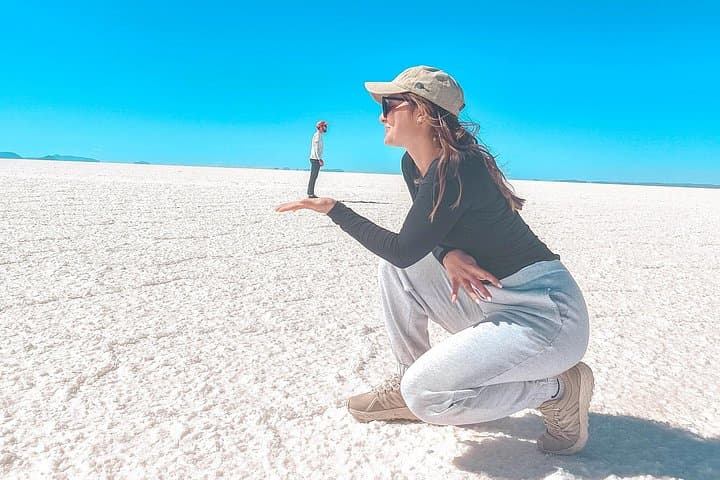
A low sun spills across an impossible white plane as the jeep settles into a steady roll — the Salar de Uyuni seems to dare you to keep your eyes on its horizon. On day one the group moves from rusting locomotives through Colchani’s salt workshops to Incahuasi Island, where giant cacti puncture a sea of crusted salt and offer a short hike with clean, wide views.
Verified experiences and guided adventures in the surrounding area.
Operated by Fer de Lipez – Uyuni Salt Flats Tours · Uyuni, Potosí Department
A low sun spills across an impossible white plane as the jeep settles into a steady roll — the Salar de Uyuni seems to dare you to keep your eyes on its horizon. On day one the group moves from rusting locomotives through Colchani’s salt workshops to Incahuasi Island, where giant cacti puncture a sea of crusted salt and offer a short hike with clean, wide views.
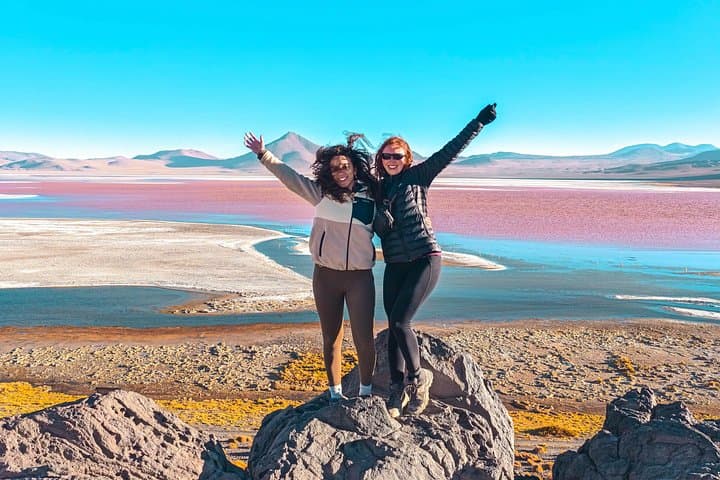
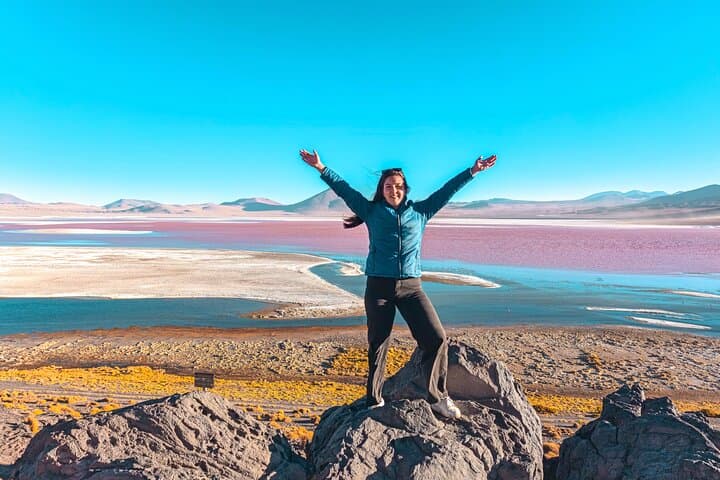
This route traces ancient high‑Andean geology: successive lakes that evaporated and left a salt crust over volcanic beds, now a lithium-rich flat at roughly 3,650 m. Cultural threads run close — Aymara and Quechua communities harvest salt in traditional pans, and small desert settlements sell textiles and crafts. By the second day the tour climbs into Eduardo Avaroa Reserve; vivid lagoons owe their colors to mineral‑rich waters and microbial life, and thousands of flamingos feed where shallow waters concentrate salts.
Expect long drives across high desert (each travel day averages nine hours including stops), short walks on rocky islands and thermal areas, and elevation gain up to roughly 4,300–4,800 m in the reserve. Terrain shifts from hard salt crust to wind‑scoured desert and geyser fields with boiling mud and steam. Practical notes: acclimatize in Uyuni, drink water regularly, and layer for wide temperature swings — sun and wind are relentless by day, and nights drop sharply. Accommodations are basic shared hostels or salt‑built refuges; sleeping bags are typically provided. This three‑day route delivers dramatic photography, close wildlife encounters, and hands‑on cultural moments — all framed by the altiplano’s raw, uncompromising landscape.
moderate.
3 days (approx. 72 hours).
Good aerobic fitness for long vehicle days, short hikes, and coping with high altitude; ability to sit for prolonged periods.
Parts of the itinerary reach 4,300–4,800 m; many travelers feel mild symptoms — headaches or shortness of breath. Acclimatize, hydrate, move slowly, and tell guides if symptoms worsen.
The mirror (reflective) effect happens in the rainy season, typically January–March, after rains flood the flat; dry season (May–Oct) offers better driving conditions and crisper white salt.
Accommodations are basic hostels or salt lodges with shared rooms; sleeping bags are usually supplied, but expect rustic facilities and cold nights.
Yes — this itinerary includes border transfer to San Pedro de Atacama; bring passport and check visa requirements in advance.
The salar sits atop sediments of prehistoric lakes; indigenous communities have harvested salt for generations and Incahuasi Island preserves fossilized corals and giant cacti.
The region is ecologically sensitive — stay on designated paths, avoid disturbing flamingo habitats, and respect local communities that manage limited water and grazing resources.
Fer de Lipez – Uyuni Salt Flats Tours operates guided outdoor trips and adventures with an emphasis on safety, stewardship, and memorable experiences.
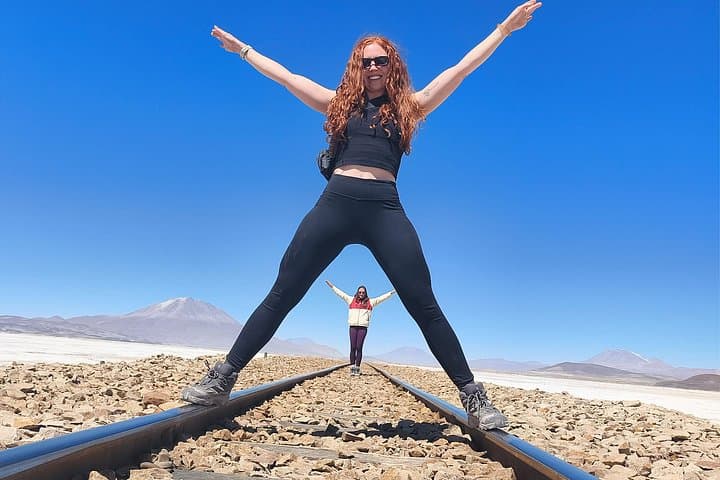
A low sun spills across an impossible white plane as the jeep settles into a steady roll — the Salar de Uyuni seems to dare you to keep your eyes on its horizon. On day one the group moves from rusting locomotives through Colchani’s salt workshops to Incahuasi Island, where giant cacti puncture a sea of crusted salt and offer a short hike with clean, wide views.
A low sun spills across an impossible white plane as the jeep settles into a steady roll — the Salar de Uyuni seems to dare you to keep your eyes on its horizon. On day one the group moves from rusting locomotives through Colchani’s salt workshops to Incahuasi Island, where giant cacti puncture a sea of crusted salt and offer a short hike with clean, wide views.
This route traces ancient high‑Andean geology: successive lakes that evaporated and left a salt crust over volcanic beds, now a lithium-rich flat at roughly 3,650 m. Cultural threads run close — Aymara and Quechua communities harvest salt in traditional pans, and small desert settlements sell textiles and crafts. By the second day the tour climbs into Eduardo Avaroa Reserve; vivid lagoons owe their colors to mineral‑rich waters and microbial life, and thousands of flamingos feed where shallow waters concentrate salts.
Expect long drives across high desert (each travel day averages nine hours including stops), short walks on rocky islands and thermal areas, and elevation gain up to roughly 4,300–4,800 m in the reserve. Terrain shifts from hard salt crust to wind‑scoured desert and geyser fields with boiling mud and steam. Practical notes: acclimatize in Uyuni, drink water regularly, and layer for wide temperature swings — sun and wind are relentless by day, and nights drop sharply. Accommodations are basic shared hostels or salt‑built refuges; sleeping bags are typically provided. This three‑day route delivers dramatic photography, close wildlife encounters, and hands‑on cultural moments — all framed by the altiplano’s raw, uncompromising landscape.