THE ADVENTURE COLLECTIVE® · Independent discovery and booking for outdoor travel

Drive across the world’s largest salt flat, watch flamingos paint high-altitude lagoons, and walk between fumaroles and geysers on a compact 3-day 4x4 circuit. This tour pairs surreal vistas with practical logistics for travelers prepared for altitude and rough roads.
Drive across the world’s largest salt flat, watch flamingos paint high-altitude lagoons, and walk between fumaroles and geysers on a compact 3-day 4x4 circuit. This tour pairs surreal vistas with practical logistics for travelers prepared for altitude and rough roads.
At first light the salt plain looks like an ocean frozen in sugar: endless white under a wide sky, the horizon scrubbing itself bright. Vehicles line up on the crust and a 4x4 nudges forward, the driver threading between salt hummocks as the group slides into this otherworldly expanse.
Verified experiences and guided adventures in the surrounding area.
Operated by Uyuni Salt Flats · Uyuni, Potosí Department
At first light the salt plain looks like an ocean frozen in sugar: endless white under a wide sky, the horizon scrubbing itself bright. Vehicles line up on the crust and a 4x4 nudges forward, the driver threading between salt hummocks as the group slides into this otherworldly expanse.
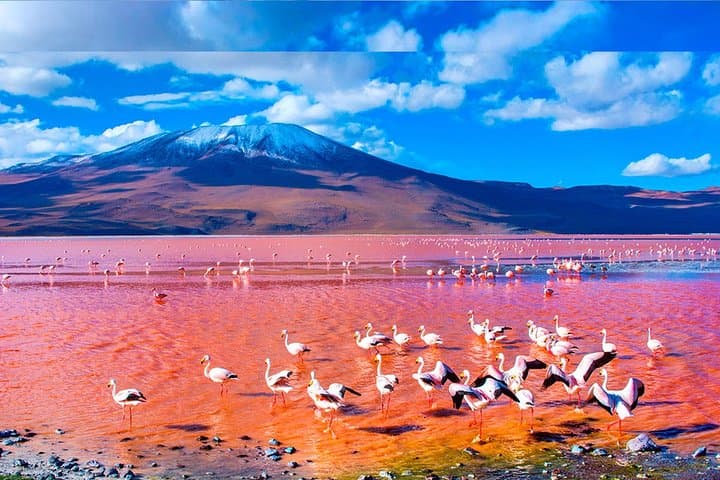
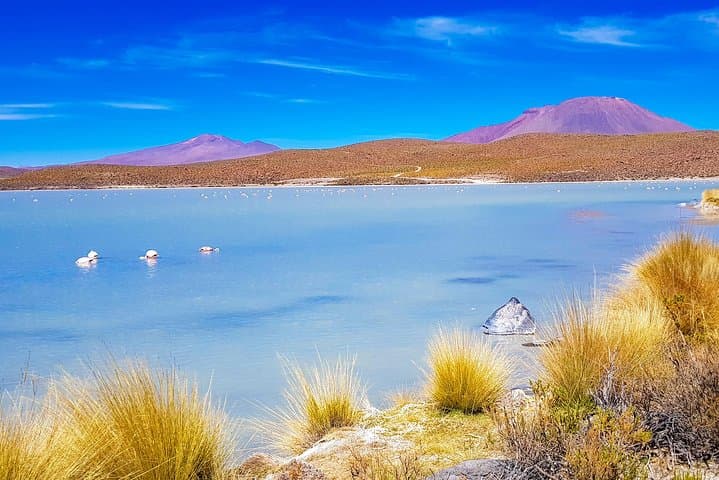
The Salar de Uyuni sits atop the remnant of prehistoric Lake Minchin; beneath the bleached surface lie meters of crystalline salt and a history of indigenous salt extraction still visible in Colchani’s workshops. Southward, the landscape hardens into the Eduardo Avaroa Reserve—volcanic plates, colored lagoons, and the high-altitude drama of the Siloli Desert. Flamingos feed in shallow, mineral-rich lakes while fumaroles near Sol de Mañana steam and hiss, an unmistakable geological heartbeat.
Culturally, the region is shaped by Aymara communities who trade salt crafts and herds of llamas and alpacas; visitors will notice simple hostels and shared dorms that reflect the remote infrastructure.
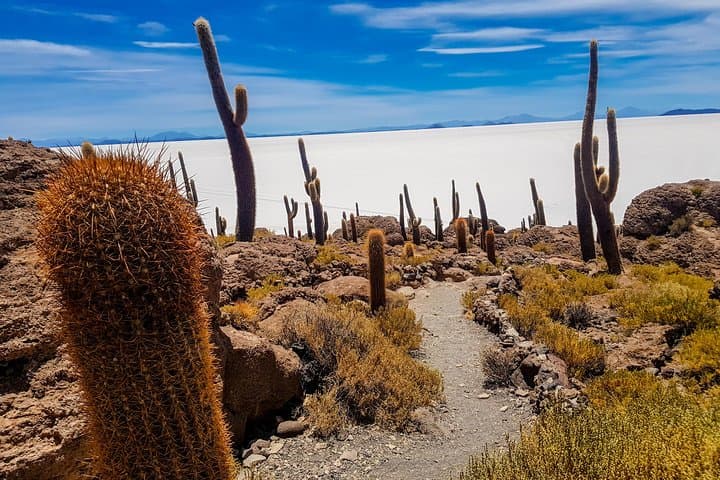
Practical guidance: this is a driving-based, multi-day itinerary that covers high-altitude ground (Uyuni ~3,650 m; some stops approach 5,000 m). Expect early mornings, long dirt sections, and communal accommodations. Hydration and slow pacing help mitigate altitude effects; sun protection is essential—UV intensity is high at altitude. Bring layered clothing for daytime sun and sub-freezing nights, sturdy footwear for short hikes (Isla Incahuasi, geyser trails), and a camera with polarizing filter for glare control. Meals are included in most packages, but carry snacks. Weather and road conditions can alter timing; a flexible mindset and basic cold-weather gear make the trip rewarding rather than punishing.
moderate.
3 days.
Suitable for travelers with basic fitness; able to handle short hikes, long vehicle days, and high altitude with acclimatization.
Yes—parts of the route exceed 4,500–5,000 m. Acclimatize in Uyuni, stay hydrated, avoid alcohol, and notify guides of symptoms; many operators carry basic oxygen.
Accommodation is basic: shared hostels or dorm-style rooms along the route; expect simple facilities and communal bathrooms on nights two and three.
Dry season (May–October) offers clear driving and vast white plains; the rainy season (December–March) creates the mirror effect but can make some roads impassable.
Yes, the thermal pools are generally safe and popular after cold mornings; check with guides about temperatures and enter cautiously.
The salt flats are the exposed bed of a series of prehistoric lakes; salt mining and indigenous trade have shaped local settlements for centuries.
High‑altitude wetlands and flamingo habitats are fragile—stick to tracks, avoid disturbing birds, and minimize waste to protect breeding areas.
Uyuni Salt Flats operates guided outdoor trips and adventures with an emphasis on safety, stewardship, and memorable experiences.
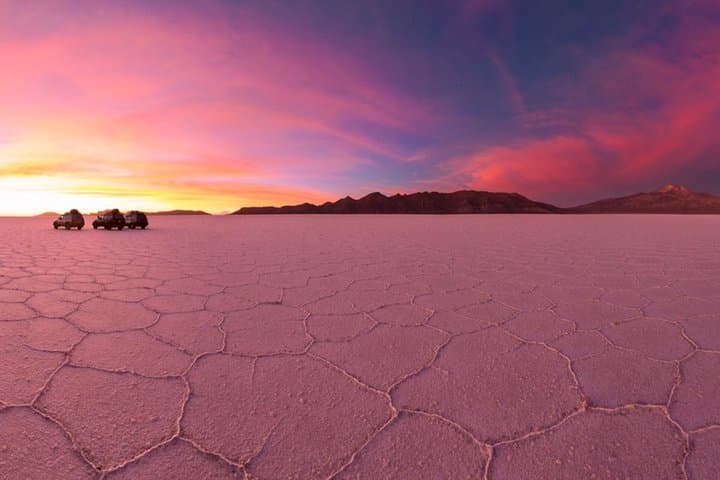
At first light the salt plain looks like an ocean frozen in sugar: endless white under a wide sky, the horizon scrubbing itself bright. Vehicles line up on the crust and a 4x4 nudges forward, the driver threading between salt hummocks as the group slides into this otherworldly expanse.
At first light the salt plain looks like an ocean frozen in sugar: endless white under a wide sky, the horizon scrubbing itself bright. Vehicles line up on the crust and a 4x4 nudges forward, the driver threading between salt hummocks as the group slides into this otherworldly expanse.
The Salar de Uyuni sits atop the remnant of prehistoric Lake Minchin; beneath the bleached surface lie meters of crystalline salt and a history of indigenous salt extraction still visible in Colchani’s workshops. Southward, the landscape hardens into the Eduardo Avaroa Reserve—volcanic plates, colored lagoons, and the high-altitude drama of the Siloli Desert. Flamingos feed in shallow, mineral-rich lakes while fumaroles near Sol de Mañana steam and hiss, an unmistakable geological heartbeat.
Culturally, the region is shaped by Aymara communities who trade salt crafts and herds of llamas and alpacas; visitors will notice simple hostels and shared dorms that reflect the remote infrastructure.
Practical guidance: this is a driving-based, multi-day itinerary that covers high-altitude ground (Uyuni ~3,650 m; some stops approach 5,000 m). Expect early mornings, long dirt sections, and communal accommodations. Hydration and slow pacing help mitigate altitude effects; sun protection is essential—UV intensity is high at altitude. Bring layered clothing for daytime sun and sub-freezing nights, sturdy footwear for short hikes (Isla Incahuasi, geyser trails), and a camera with polarizing filter for glare control. Meals are included in most packages, but carry snacks. Weather and road conditions can alter timing; a flexible mindset and basic cold-weather gear make the trip rewarding rather than punishing.