THE ADVENTURE COLLECTIVE® · Independent discovery and booking for outdoor travel

Cross the world’s largest salt flat, watch the Salar perform its mirror trick at sunset, and continue across volcanic lagoons and wind‑carved deserts on this compact 3‑day circuit. Expect high‑altitude panoramas, flamingos, geysers and a night in a salt hotel.
Cross the world’s largest salt flat, watch the Salar perform its mirror trick at sunset, and continue across volcanic lagoons and wind‑carved deserts on this compact 3‑day circuit. Expect high‑altitude panoramas, flamingos, geysers and a night in a salt hotel.
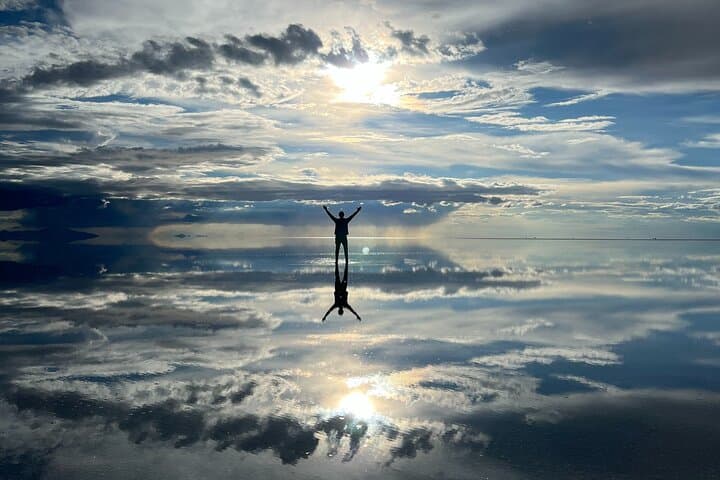
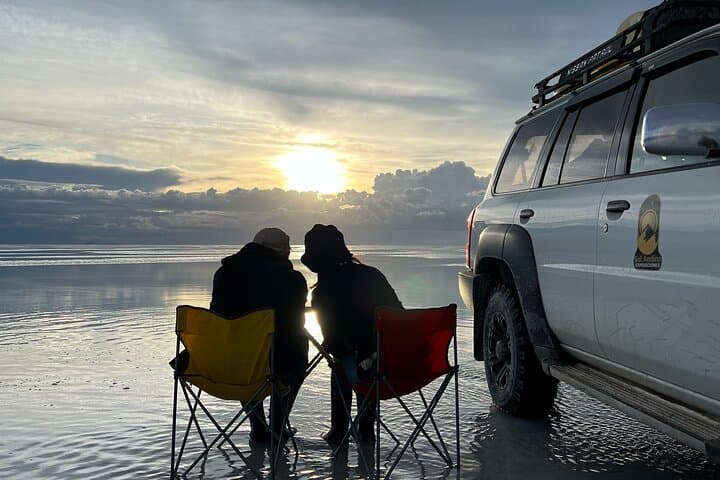
You arrive as the sky leans low and the Salar de Uyuni becomes a shallow, glassy map: clouds, mountains and a lone vehicle fold into one another in the salt’s perfect reflection. The first evening here is about scale — the desert dares you to measure distance with your eyes alone, and the Train Cemetery outside town offers a rusted, human counterpoint to the salt’s otherworldliness.
Verified experiences and guided adventures in the surrounding area.
Operated by Sergio Andres · Uyuni, Potosí
You arrive as the sky leans low and the Salar de Uyuni becomes a shallow, glassy map: clouds, mountains and a lone vehicle fold into one another in the salt’s perfect reflection. The first evening here is about scale — the desert dares you to measure distance with your eyes alone, and the Train Cemetery outside town offers a rusted, human counterpoint to the salt’s otherworldliness.
This three‑day route stitches together high‑Andean geology and human history. The salt plain is the dried bed of prehistoric Lake Tauca; surrounding volcanic peaks and thermal zones speak to the region’s restless earth. Railroads and mining shaped Uyuni’s modern story — the Train Cemetery is a relic of that boom — while indigenous Aymara communities continue seasonal salt and llama‑herding traditions.
Expect dramatic contrasts: the blushing waters of Laguna Colorada and mineral‑rich Laguna Verde sit above 4,200 m, volcanic fumaroles at Sol de Mañana jet steam at ~4,800 m, and the wind has carved the Siloli Desert’s Stone Tree into an uncanny silhouette. Wildlife punctuates the emptiness — flamingos and vicuñas often appear like punctuation marks on the horizon.
Practical edge: altitude is the main challenge — hydrate, pace yourself, and allow time to acclimatize in Uyuni before departure. Days are driven; pack a warm down layer for nights and sun protection for daytime reflections. Bring cash for park fees and modest local purchases, and charge batteries at lodges: the light changes fast and the camera runs out sooner than you expect. Whether you finish back in Uyuni or continue to San Pedro de Atacama, this loop rewards simple attention — to color, to wind, to scale.
moderate.
3 days.
Suitable for travelers in average fitness, but expect long vehicle transfers and effects of high altitude; those with cardiovascular issues should consult a doctor.
Altitudes range from about 3,600 m in Uyuni up to ~4,800 m at Sol de Mañana; altitude can affect breathing and energy levels.
Yes; the tour includes two nights in regional lodges — often a salt hotel on the first night and desert lodges such as Tayka del Desierto — and meals as listed.
Yes; the itinerary finishes in Uyuni with transfer options; many operators can arrange a transfer across the border to San Pedro de Atacama, Chile.
Not recommended for pregnant travelers and those with serious heart or spinal conditions due to high altitudes and long vehicle transfers; check provider restrictions for children.
The Salar de Uyuni is the remnant of prehistoric Lake Tauca; 19th–20th century mining and railway development shaped Uyuni’s modern settlement and the Train Cemetery attraction.
This is a fragile high‑altitude ecosystem and protected areas like Eduardo Avaroa require visitors to stay on designated routes, pack out waste, and avoid disturbing flamingo nesting sites.
Sergio Andres operates guided outdoor trips and adventures with an emphasis on safety, stewardship, and memorable experiences.

You arrive as the sky leans low and the Salar de Uyuni becomes a shallow, glassy map: clouds, mountains and a lone vehicle fold into one another in the salt’s perfect reflection. The first evening here is about scale — the desert dares you to measure distance with your eyes alone, and the Train Cemetery outside town offers a rusted, human counterpoint to the salt’s otherworldliness.
You arrive as the sky leans low and the Salar de Uyuni becomes a shallow, glassy map: clouds, mountains and a lone vehicle fold into one another in the salt’s perfect reflection. The first evening here is about scale — the desert dares you to measure distance with your eyes alone, and the Train Cemetery outside town offers a rusted, human counterpoint to the salt’s otherworldliness.
This three‑day route stitches together high‑Andean geology and human history. The salt plain is the dried bed of prehistoric Lake Tauca; surrounding volcanic peaks and thermal zones speak to the region’s restless earth. Railroads and mining shaped Uyuni’s modern story — the Train Cemetery is a relic of that boom — while indigenous Aymara communities continue seasonal salt and llama‑herding traditions.
Expect dramatic contrasts: the blushing waters of Laguna Colorada and mineral‑rich Laguna Verde sit above 4,200 m, volcanic fumaroles at Sol de Mañana jet steam at ~4,800 m, and the wind has carved the Siloli Desert’s Stone Tree into an uncanny silhouette. Wildlife punctuates the emptiness — flamingos and vicuñas often appear like punctuation marks on the horizon.
Practical edge: altitude is the main challenge — hydrate, pace yourself, and allow time to acclimatize in Uyuni before departure. Days are driven; pack a warm down layer for nights and sun protection for daytime reflections. Bring cash for park fees and modest local purchases, and charge batteries at lodges: the light changes fast and the camera runs out sooner than you expect. Whether you finish back in Uyuni or continue to San Pedro de Atacama, this loop rewards simple attention — to color, to wind, to scale.