THE ADVENTURE COLLECTIVE® · Independent discovery and booking for outdoor travel

A focused three-day circuit from Uyuni that pairs the mirror-white salt flats with high-altitude lagoons, geysers and surreal volcanic deserts. Expect long vehicle days, early starts for sunrise, and striking wildlife sightings like flamingos.
A focused three-day circuit from Uyuni that pairs the mirror-white salt flats with high-altitude lagoons, geysers and surreal volcanic deserts. Expect long vehicle days, early starts for sunrise, and striking wildlife sightings like flamingos.
The morning light on the Salar de Uyuni reads like an experiment in scale: a flat so white the horizon dissolves, and 4x4 tracks that stitch the landscape to the small silhouette of a salt hotel. On day one travelers step out on crystalline salt, practice perspective photography with the Dakar monument and climb the giant cacti island as the sun sharpens shadows.
Verified experiences and guided adventures in the surrounding area.
Operated by On Experiences · Uyuni, Potosí Department
The morning light on the Salar de Uyuni reads like an experiment in scale: a flat so white the horizon dissolves, and 4x4 tracks that stitch the landscape to the small silhouette of a salt hotel. On day one travelers step out on crystalline salt, practice perspective photography with the Dakar monument and climb the giant cacti island as the sun sharpens shadows.
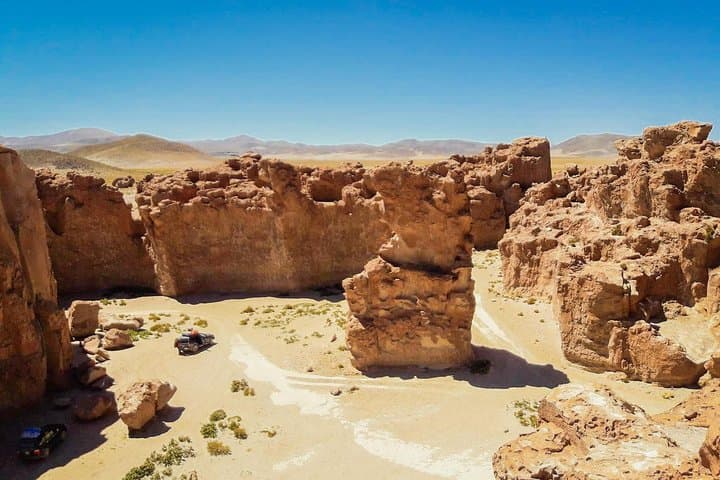
This route threads through the Altiplano — a high, cold plateau shaped by volcanic uplift and Pleistocene lakes. On day two the tour enters Eduardo Abaroa National Reserve, where mineral-rich lagoons stain the land pink and red and wind-carved rocks like the Stone Tree stand at roughly 4,300–5,000 m. Local communities in this region still work salt pans and weave highland textiles; guides will often point out handcrafted goods and explain how the salt trade influenced Uyuni’s railcemetery era.
Practical guidance follows the spectacle: acclimatize in Uyuni town (≈3,656 m), drink plenty of water, and expect thin air on lagoon circuits and geyser fields that sit above 4,500 m. Days are long and mostly vehicle-based, with early starts for geysers and thermal pools; nights are cold—bring serious layers. Footwear should be sturdy for short walks on uneven volcanic and salt surfaces. Cameras, sunscreen, and spare batteries are essential at altitude where cold drains power.
This three-day loop balances surreal visuals with straightforward logistics: basic hostels, guided 4WD transit, and regular stops for food and rest—an intense but accessible introduction to Bolivia’s high desert.
moderate.
3 days.
Suitable for people in good general health; must tolerate long vehicle days and short hikes at high altitude
Uyuni town sits around 3,650 m; many lagoons and geysers visited reach 4,300–4,800 m—plan for altitude effects.
Yes — nights are in basic shared hostels and a salt-hotel dorm; expect simple facilities and communal bathrooms.
The tour is vehicle-based with short walks, but high altitude makes it unsuitable for those with serious heart, lung, or spinal conditions and is not recommended for pregnant travelers.
The rainy season (Dec–Feb) creates thin water layers that produce the mirror effect, but some roads may be affected by mud.
Uyuni grew as a railway hub in the late 19th–early 20th century tied to mining and salt transport; abandoned locomotives near town reflect that industrial past.
The Eduardo Abaroa Reserve protects fragile high‑altitude wetlands and flamingo habitat; visitors should avoid disturbing wildlife, pack out waste, and stick to established tracks to limit erosion.
On Experiences operates guided outdoor trips and adventures with an emphasis on safety, stewardship, and memorable experiences.
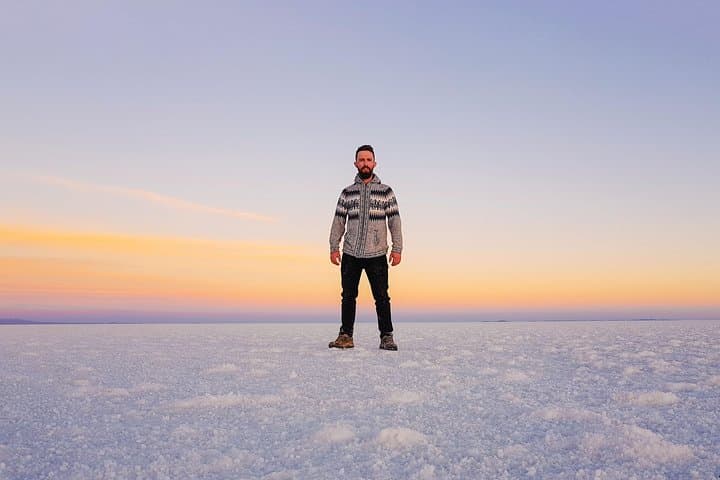
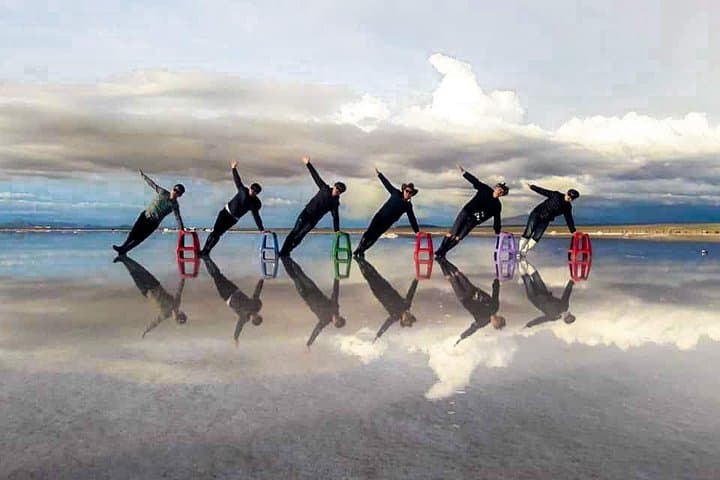
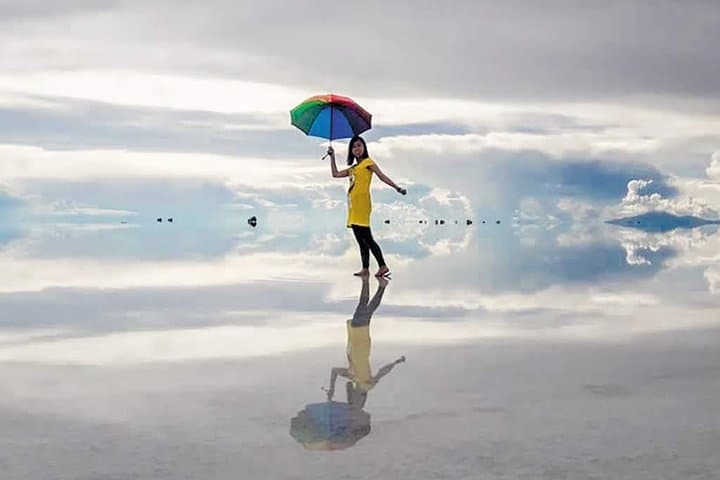
The morning light on the Salar de Uyuni reads like an experiment in scale: a flat so white the horizon dissolves, and 4x4 tracks that stitch the landscape to the small silhouette of a salt hotel. On day one travelers step out on crystalline salt, practice perspective photography with the Dakar monument and climb the giant cacti island as the sun sharpens shadows.
The morning light on the Salar de Uyuni reads like an experiment in scale: a flat so white the horizon dissolves, and 4x4 tracks that stitch the landscape to the small silhouette of a salt hotel. On day one travelers step out on crystalline salt, practice perspective photography with the Dakar monument and climb the giant cacti island as the sun sharpens shadows.
This route threads through the Altiplano — a high, cold plateau shaped by volcanic uplift and Pleistocene lakes. On day two the tour enters Eduardo Abaroa National Reserve, where mineral-rich lagoons stain the land pink and red and wind-carved rocks like the Stone Tree stand at roughly 4,300–5,000 m. Local communities in this region still work salt pans and weave highland textiles; guides will often point out handcrafted goods and explain how the salt trade influenced Uyuni’s railcemetery era.
Practical guidance follows the spectacle: acclimatize in Uyuni town (≈3,656 m), drink plenty of water, and expect thin air on lagoon circuits and geyser fields that sit above 4,500 m. Days are long and mostly vehicle-based, with early starts for geysers and thermal pools; nights are cold—bring serious layers. Footwear should be sturdy for short walks on uneven volcanic and salt surfaces. Cameras, sunscreen, and spare batteries are essential at altitude where cold drains power.
This three-day loop balances surreal visuals with straightforward logistics: basic hostels, guided 4WD transit, and regular stops for food and rest—an intense but accessible introduction to Bolivia’s high desert.