THE ADVENTURE COLLECTIVE® · Independent discovery and booking for outdoor travel

Spend three days crossing Tunisia’s desert between Bedouin tent camps and a Berber gîte—watch sunrises over sand seas, bathe in a hot spring at Ksar Ghilane, and explore troglodyte Matmata. This hands-on itinerary balances cultural visits with optional camel or quad rides.
Spend three days crossing Tunisia’s desert between Bedouin tent camps and a Berber gîte—watch sunrises over sand seas, bathe in a hot spring at Ksar Ghilane, and explore troglodyte Matmata. This hands-on itinerary balances cultural visits with optional camel or quad rides.
Sun slides down a ridgeline of ochre dunes, the campfire hissing as a kettle cools and a lone camel silhouette cuts the horizon. In Sabria the sand holds heat long after sunset; the Milky Way drops low and bright over a ring of canvas tents where evenings are measured in footsteps on shifting sand and stories traded with a local guide.
Verified experiences and guided adventures in the surrounding area.
Operated by Tunisia Travel Guide · Djerba, Medenine Governorate
Sun slides down a ridgeline of ochre dunes, the campfire hissing as a kettle cools and a lone camel silhouette cuts the horizon. In Sabria the sand holds heat long after sunset; the Milky Way drops low and bright over a ring of canvas tents where evenings are measured in footsteps on shifting sand and stories traded with a local guide.
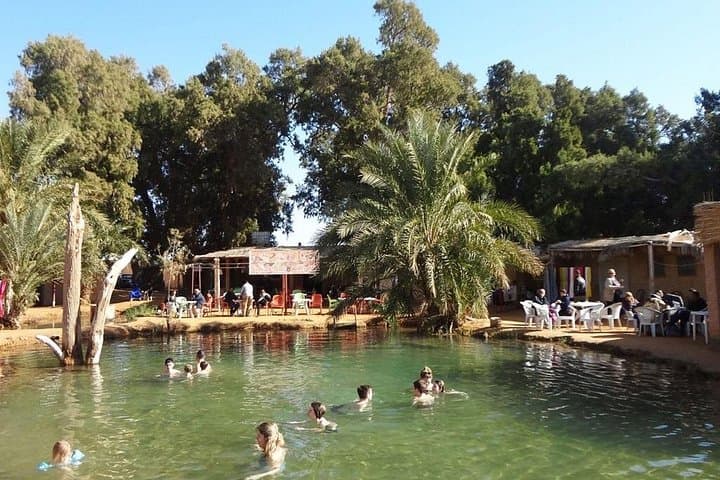
This three-day route threads historic troglodyte villages, salt flats and a palm-lined oasis. Matmata’s underground homes—hollowed from soft rock by Berber families centuries ago—reveal practical architecture born of heat and scarcity; nearby Ksar Ghilane offers a thermal spring that has drawn travelers and nomads to its warm water for generations. The region’s geology alternates between erg (dune seas) and rocky hamada, producing striking color changes from pale whites near Douz to ocher tones around Ghilane.
Cultural moments are direct: sand-baked bread demonstrations, visits to a Berber gîte in Douiret, and markets in Tataouine selling traditional pastries. Expect multilingual guides, air-conditioned transfers between stops, and optional camel or quad rides (extra cost).
Practical guidance: travel light but bring layered clothing—days can be hot and nights cold—plus sun protection, 2–3 liters of water per day, and sturdy closed-toe shoes for dune walking. Be prepared for bumpy roads; motion sensitivity or back issues are a concern. Respect private family spaces when visiting homes and ask before photographing people. Book with flexible timing to catch sunrise or sunset on the dunes—those hours are when the desert reveals its best angles.
moderate.
3 days.
Suitable for travelers in general good health; some walking on soft sand and short climbs in villages, not strenuous but expect long vehicle transfers.
No, camel and quad rides at Sabria and Ksar Ghilane are optional and payable on site.
The tour notes stroller and wheelchair accessibility for some transfers but visits to troglodyte homes and dunes involve uneven terrain and are not recommended for those with significant mobility limitations.
Guides typically speak French and English; confirm language needs when booking if you require another language.
The itinerary offers half-board meals and can accommodate vegetarians; inform the operator of dietary restrictions at booking.
Matmata and other troglodyte settlements reflect millennia of Berber adaptation to arid conditions; the region later attracted film crews, including Star Wars productions, for its dramatic landscapes.
Water is scarce—use supplied water conservatively and avoid single-use plastics; stick to marked paths to protect fragile dune plants and archaeological sites.
Tunisia Travel Guide operates guided outdoor trips and adventures with an emphasis on safety, stewardship, and memorable experiences.
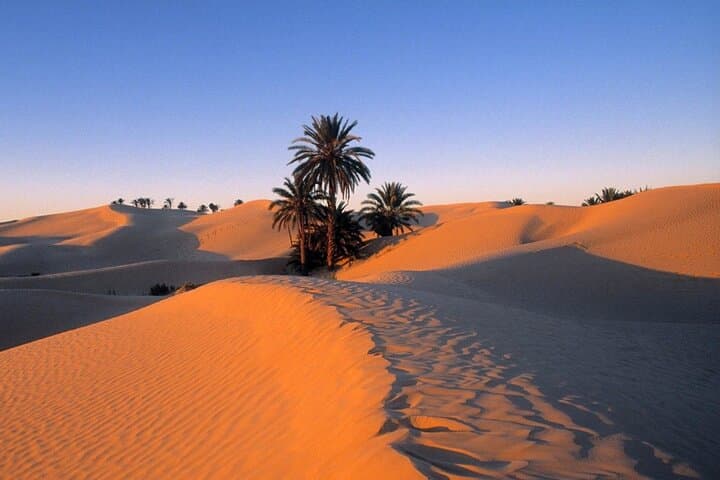
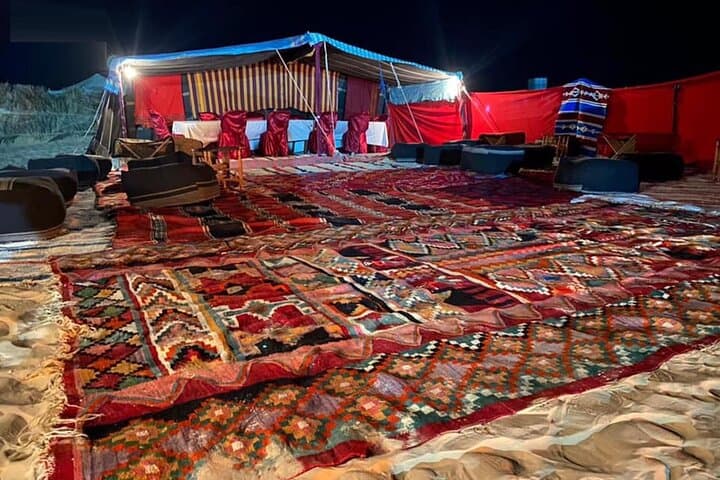
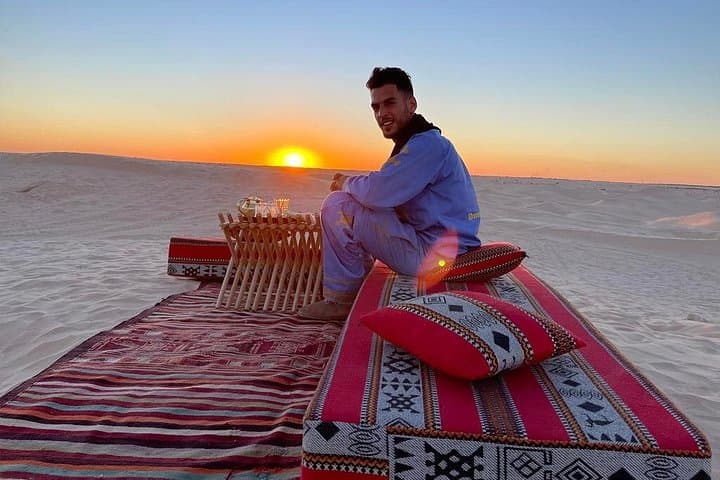
Sun slides down a ridgeline of ochre dunes, the campfire hissing as a kettle cools and a lone camel silhouette cuts the horizon. In Sabria the sand holds heat long after sunset; the Milky Way drops low and bright over a ring of canvas tents where evenings are measured in footsteps on shifting sand and stories traded with a local guide.
Sun slides down a ridgeline of ochre dunes, the campfire hissing as a kettle cools and a lone camel silhouette cuts the horizon. In Sabria the sand holds heat long after sunset; the Milky Way drops low and bright over a ring of canvas tents where evenings are measured in footsteps on shifting sand and stories traded with a local guide.
This three-day route threads historic troglodyte villages, salt flats and a palm-lined oasis. Matmata’s underground homes—hollowed from soft rock by Berber families centuries ago—reveal practical architecture born of heat and scarcity; nearby Ksar Ghilane offers a thermal spring that has drawn travelers and nomads to its warm water for generations. The region’s geology alternates between erg (dune seas) and rocky hamada, producing striking color changes from pale whites near Douz to ocher tones around Ghilane.
Cultural moments are direct: sand-baked bread demonstrations, visits to a Berber gîte in Douiret, and markets in Tataouine selling traditional pastries. Expect multilingual guides, air-conditioned transfers between stops, and optional camel or quad rides (extra cost).
Practical guidance: travel light but bring layered clothing—days can be hot and nights cold—plus sun protection, 2–3 liters of water per day, and sturdy closed-toe shoes for dune walking. Be prepared for bumpy roads; motion sensitivity or back issues are a concern. Respect private family spaces when visiting homes and ask before photographing people. Book with flexible timing to catch sunrise or sunset on the dunes—those hours are when the desert reveals its best angles.