THE ADVENTURE COLLECTIVE® · Independent discovery and booking for outdoor travel

Combine the haunting silhouettes of the Avenue of the Baobabs with the cathedral-like limestone pinnacles of Tsingy de Bemaraha on a compact 3-day adventure from Morondava. Expect full-day overland transfers, suspension bridges, and unique endemic wildlife.
Combine the haunting silhouettes of the Avenue of the Baobabs with the cathedral-like limestone pinnacles of Tsingy de Bemaraha on a compact 3-day adventure from Morondava. Expect full-day overland transfers, suspension bridges, and unique endemic wildlife.
You arrive in western Madagascar to a horizon ruled by giants: the Avenue of the Baobabs slices a dirt track with silhouettes of Adansonia grandidieri towering like ancient columns. Dust lifts under the 4x4 as the sun leans toward evening; locals and photographers gather, the trunks throwing long shadows that feel older than the island itself.
Verified experiences and guided adventures in the surrounding area.
Operated by TSINGY TOURS · Morondava, Menabe
You arrive in western Madagascar to a horizon ruled by giants: the Avenue of the Baobabs slices a dirt track with silhouettes of Adansonia grandidieri towering like ancient columns. Dust lifts under the 4x4 as the sun leans toward evening; locals and photographers gather, the trunks throwing long shadows that feel older than the island itself.
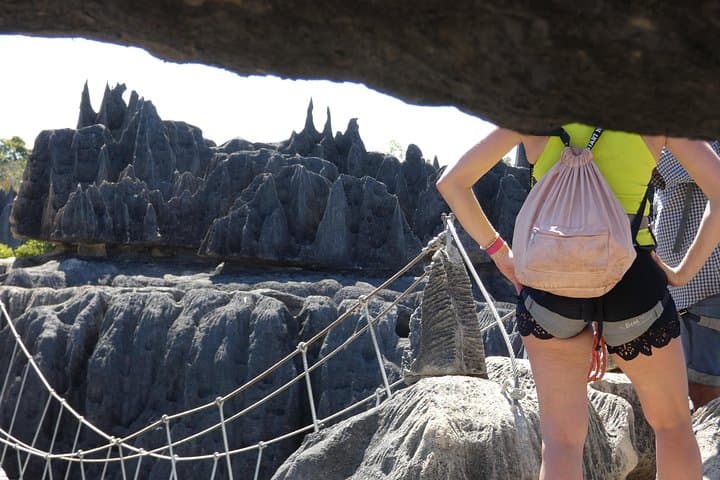
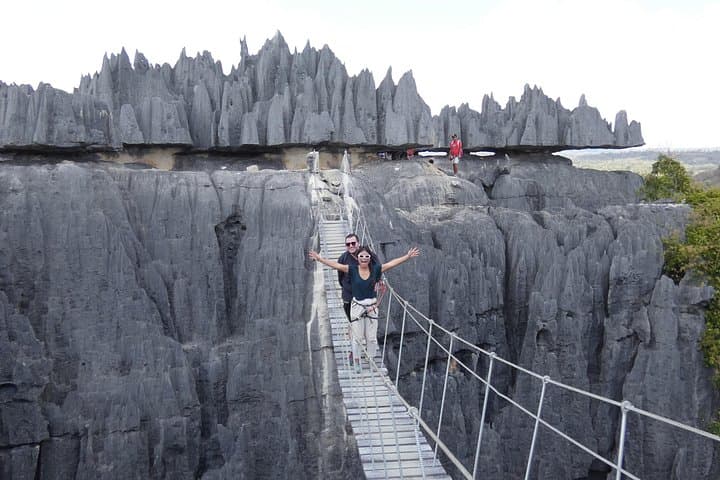
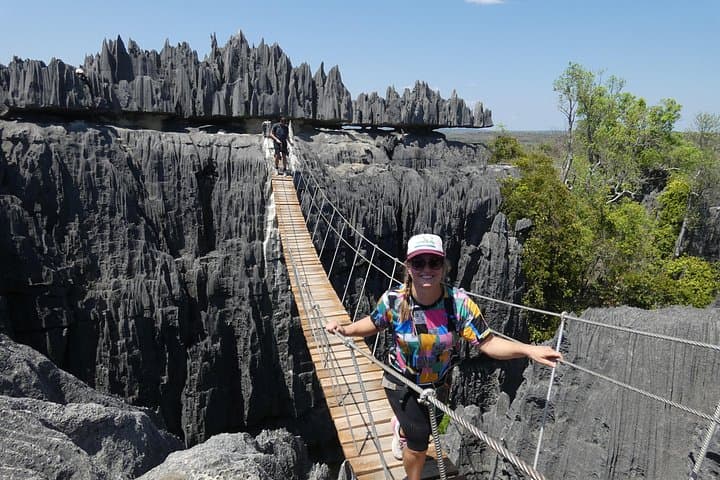
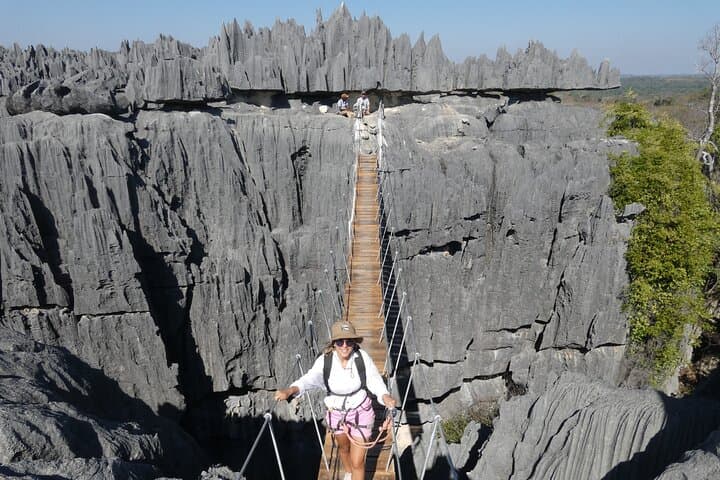
Over the next days the landscape tightens and sharpens. The Tsingy de Bemaraha is limestone pushed and dissolved into a forest of stone—needle-like pinnacles, tight canyons, and suspended footbridges that demand attention. Geologically, the tsingy are karst formations sculpted by rain and groundwater over millions of years; culturally they sit near villages whose Malagasy traditions reference these places as sources of endemic life and local legend. Tsingy is also a UNESCO World Heritage Site and home to species found only here, like Decken’s sifaka.
Practical guidance: the trip runs out of Morondava with roughly 200 km of largely unpaved road to Bekopaka—plan for a full day of travel (8–12 hours) including river crossings and rough tracks. Trails inside Grand and Petit Tsingy circuits typically take 2–4 hours each and include ladders, cables, and narrow traverses; a local guide and basic scrambling ability are necessary. Bring sturdy hiking shoes, at least 2–3 liters of water per day, sun protection, and a light rain layer in the wet season. Time your visit for the dry months (May–October) for easier access, and don’t miss sunset back at the baobabs—an elemental, unforgettable close to each day.
moderate.
3 days.
Suitable for hikers with moderate fitness who can handle uneven trails and short scrambling sections; not recommended for serious mobility issues.
Expect about 8–12 hours on largely unpaved roads; river crossings and slow sections make the journey a full-day affair.
With a certified local guide most visitors with reasonable fitness can do the main circuits, though some routes include ladders and cables requiring sure-footedness.
The dry season (May–October) offers the most reliable access; the rainy season can make roads impassable and trails slippery.
Older children used to hikes can participate, but very young kids or those with mobility limits will struggle on the steeper Tsingy sections and long transfers.
The Avenue of the Baobabs marks remnants of a once-denser forest; Tsingy de Bemaraha was inscribed as a UNESCO World Heritage Site for its unique karst landscapes and biodiversity.
Tsingy’s karst is fragile—stay on marked routes, avoid removing plants or rocks, and support local guides whose work helps fund protection.
TSINGY TOURS operates guided outdoor trips and adventures with an emphasis on safety, stewardship, and memorable experiences.
You arrive in western Madagascar to a horizon ruled by giants: the Avenue of the Baobabs slices a dirt track with silhouettes of Adansonia grandidieri towering like ancient columns. Dust lifts under the 4x4 as the sun leans toward evening; locals and photographers gather, the trunks throwing long shadows that feel older than the island itself.
You arrive in western Madagascar to a horizon ruled by giants: the Avenue of the Baobabs slices a dirt track with silhouettes of Adansonia grandidieri towering like ancient columns. Dust lifts under the 4x4 as the sun leans toward evening; locals and photographers gather, the trunks throwing long shadows that feel older than the island itself.
Over the next days the landscape tightens and sharpens. The Tsingy de Bemaraha is limestone pushed and dissolved into a forest of stone—needle-like pinnacles, tight canyons, and suspended footbridges that demand attention. Geologically, the tsingy are karst formations sculpted by rain and groundwater over millions of years; culturally they sit near villages whose Malagasy traditions reference these places as sources of endemic life and local legend. Tsingy is also a UNESCO World Heritage Site and home to species found only here, like Decken’s sifaka.
Practical guidance: the trip runs out of Morondava with roughly 200 km of largely unpaved road to Bekopaka—plan for a full day of travel (8–12 hours) including river crossings and rough tracks. Trails inside Grand and Petit Tsingy circuits typically take 2–4 hours each and include ladders, cables, and narrow traverses; a local guide and basic scrambling ability are necessary. Bring sturdy hiking shoes, at least 2–3 liters of water per day, sun protection, and a light rain layer in the wet season. Time your visit for the dry months (May–October) for easier access, and don’t miss sunset back at the baobabs—an elemental, unforgettable close to each day.