THE ADVENTURE COLLECTIVE® · Independent discovery and booking for outdoor travel

Three days of camping across the Namib deliver dune sunrises, the stark white of Dead Vlei, and a walk through Sesriem Canyon. This budget-friendly safari from Windhoek to Swakopmund focuses time where it matters: in the sand and under the stars.
Three days of camping across the Namib deliver dune sunrises, the stark white of Dead Vlei, and a walk through Sesriem Canyon. This budget-friendly safari from Windhoek to Swakopmund focuses time where it matters: in the sand and under the stars.
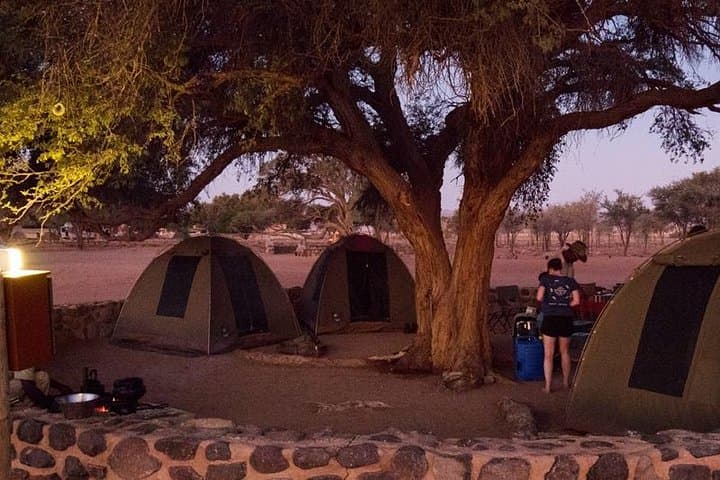
The desert announces itself before you see it: a long, low hum of wind and the subtle, shifting geometry of sand. On day one the vehicle climbs from Windhoek’s plateau and the landscape opens into broad plains punctuated by inselbergs, until the first red shoulders of the Namib appear on the horizon. Camp is pitched beneath a camelthorn tree; the air cools fast and the dunes begin to change color as if negotiating the light.
Verified experiences and guided adventures in the surrounding area.
Operated by Chameleon Safaris · Sesriem, Hardap
The desert announces itself before you see it: a long, low hum of wind and the subtle, shifting geometry of sand. On day one the vehicle climbs from Windhoek’s plateau and the landscape opens into broad plains punctuated by inselbergs, until the first red shoulders of the Namib appear on the horizon. Camp is pitched beneath a camelthorn tree; the air cools fast and the dunes begin to change color as if negotiating the light.
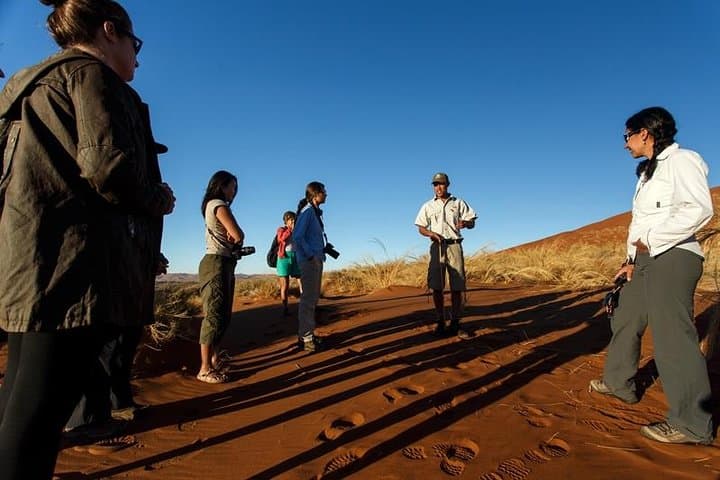
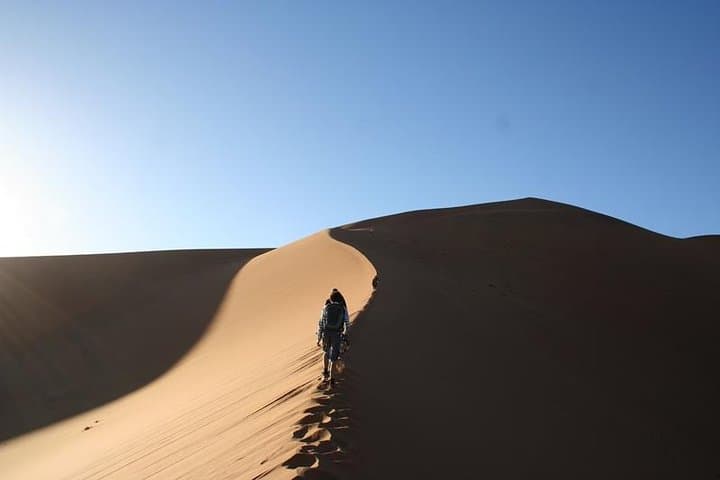
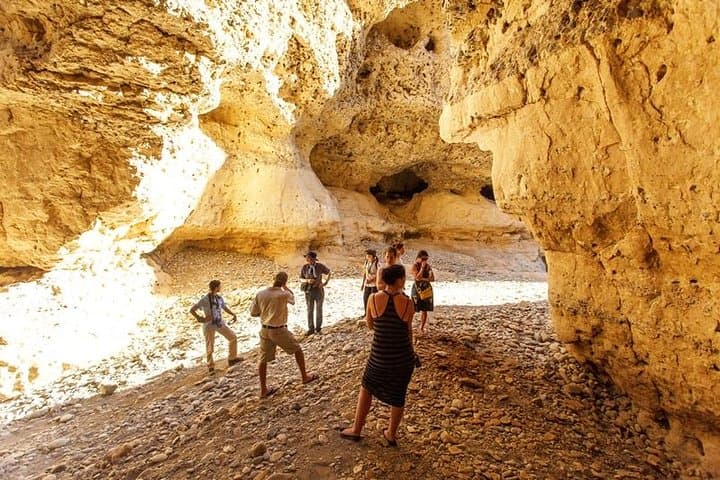
This three-day budget camping safari moves at a steady, practical pace — long drives bookending focused moments in the sand. The itinerary threads together geological high points: Dune 45 for sunrise, the dry, cracked clay pan of Dead Vlei with its sculptural dead camelthorn trees, and the narrow, water-carved Sesriem Canyon. The dunes themselves are ancient — part of the Namib, often called the world’s oldest desert — where wind and time have stacked and re-stacked mountains of sand for millions of years. The contrast between white clay, black tree skeletons and the warm reds of the dunes is abrupt and cinematic.
Culturally, the route crosses land used for centuries by Nama and Herero communities; passing small settlements and the lonely turn-off at the Tropic of Capricorn, guides often share stories about desert life, including traditional uses for plants like the camelthorn. Ecology here is minimalist but alive: lichen, tenacious grasses, and endemic beetles and reptiles survive on scarce moisture and fog that travels inland from the Atlantic.
Practicalities are straightforward. Expect early starts — pre-dawn departures are essential for catching sunrise light and avoiding midday heat in the sand. Camping is basic but comfortable: sleeping under the stars with communal meals cooked over flames. The vehicles are 4x4-capable and the trip includes park access and guided walks; physical demands are moderate but expect dune climbs and long transfers.
For travelers: bring layered clothing for cold pre-dawn hours and hot afternoons, a sun hat, quality sunscreen, and a sturdy pair of shoes for traction on sand. Hydration matters — carry more water than you think. Photography gear is best protected from sand with ziplocks or sealed bags. If you’re sensitive to long drives, request pickup details in Windhoek and plan rest stops accordingly.
This itinerary is geared toward value-minded travelers who want maximum time in the dunes without luxury price tags. The reward is elemental: a desert that changes its face every hour, where silence is a presence and the landscape keeps nudging you forward — climb a dune, turn, and the desert will be waiting.
moderate.
3 days (approx. 72 hours).
Should be comfortable walking on loose sand and able to climb dunes and manage overnight camping routines.
Moderate — you’ll do short hikes and climb dunes, but no technical climbing; basic mobility and stamina for sand walking are enough.
Meals (breakfasts, lunches, dinners specified), park access, camping equipment setup at the group site, guides, and transport between Windhoek and Swakopmund as listed.
Yes — booking questions include special requirements; notify operators ahead so camp cooks can accommodate allergies or dietary preferences.
Basic camping equipment is typically provided (tents, mattresses), but check with the operator if you prefer your own sleeping bag or pad.
Bring dust-sealing bags, spare batteries (cold mornings drain batteries fast), and a tripod for low-light dune sunrises and night-sky shots.
It depends — long drives and early starts can be challenging; confirm age restrictions and consider your child’s tolerance for camping and desert conditions.
The Namib is one of the planet’s oldest deserts; local Nama and Herero communities have lived at its margins for centuries and their pastoral traditions shaped routes and watering places.
The area is part of Namib-Naukluft National Park with strict rules on stay durations and vehicle access; minimizing waste and sticking to paths helps protect fragile dune ecosystems.
Chameleon Safaris operates guided outdoor trips and adventures with an emphasis on safety, stewardship, and memorable experiences.
The desert announces itself before you see it: a long, low hum of wind and the subtle, shifting geometry of sand. On day one the vehicle climbs from Windhoek’s plateau and the landscape opens into broad plains punctuated by inselbergs, until the first red shoulders of the Namib appear on the horizon. Camp is pitched beneath a camelthorn tree; the air cools fast and the dunes begin to change color as if negotiating the light.
The desert announces itself before you see it: a long, low hum of wind and the subtle, shifting geometry of sand. On day one the vehicle climbs from Windhoek’s plateau and the landscape opens into broad plains punctuated by inselbergs, until the first red shoulders of the Namib appear on the horizon. Camp is pitched beneath a camelthorn tree; the air cools fast and the dunes begin to change color as if negotiating the light.
This three-day budget camping safari moves at a steady, practical pace — long drives bookending focused moments in the sand. The itinerary threads together geological high points: Dune 45 for sunrise, the dry, cracked clay pan of Dead Vlei with its sculptural dead camelthorn trees, and the narrow, water-carved Sesriem Canyon. The dunes themselves are ancient — part of the Namib, often called the world’s oldest desert — where wind and time have stacked and re-stacked mountains of sand for millions of years. The contrast between white clay, black tree skeletons and the warm reds of the dunes is abrupt and cinematic.
Culturally, the route crosses land used for centuries by Nama and Herero communities; passing small settlements and the lonely turn-off at the Tropic of Capricorn, guides often share stories about desert life, including traditional uses for plants like the camelthorn. Ecology here is minimalist but alive: lichen, tenacious grasses, and endemic beetles and reptiles survive on scarce moisture and fog that travels inland from the Atlantic.
Practicalities are straightforward. Expect early starts — pre-dawn departures are essential for catching sunrise light and avoiding midday heat in the sand. Camping is basic but comfortable: sleeping under the stars with communal meals cooked over flames. The vehicles are 4x4-capable and the trip includes park access and guided walks; physical demands are moderate but expect dune climbs and long transfers.
For travelers: bring layered clothing for cold pre-dawn hours and hot afternoons, a sun hat, quality sunscreen, and a sturdy pair of shoes for traction on sand. Hydration matters — carry more water than you think. Photography gear is best protected from sand with ziplocks or sealed bags. If you’re sensitive to long drives, request pickup details in Windhoek and plan rest stops accordingly.
This itinerary is geared toward value-minded travelers who want maximum time in the dunes without luxury price tags. The reward is elemental: a desert that changes its face every hour, where silence is a presence and the landscape keeps nudging you forward — climb a dune, turn, and the desert will be waiting.