THE ADVENTURE COLLECTIVE® · Independent discovery and booking for outdoor travel

Three days in the Maasai Mara with a small group (max 8) delivers concentrated wildlife viewing, budget-comfort camps, and multilingual guides. Expect dawn and dusk game drives, rugged roads, and close encounters with the reserve’s big mammals.
Three days in the Maasai Mara with a small group (max 8) delivers concentrated wildlife viewing, budget-comfort camps, and multilingual guides. Expect dawn and dusk game drives, rugged roads, and close encounters with the reserve’s big mammals.
The sun breaks over wide grassland and a Land Cruiser threads a dusty track toward a distant acacia ridge. On a three-day small-group safari to the Maasai Mara, up to eight travelers move with purpose—early starts, long golden hours, and repeated close-ups of wildlife in motion. Vehicles pull to the side as a pride stretches, and the Mara’s wind carries the metallic cry of a single-vulture rising.
Verified experiences and guided adventures in the surrounding area.
The sun breaks over wide grassland and a Land Cruiser threads a dusty track toward a distant acacia ridge. On a three-day small-group safari to the Maasai Mara, up to eight travelers move with purpose—early starts, long golden hours, and repeated close-ups of wildlife in motion. Vehicles pull to the side as a pride stretches, and the Mara’s wind carries the metallic cry of a single-vulture rising.
Geology here is simple and honest: rolling savanna carved where seasonal rivers slice into basalt and sediment, with the steep Oloololo escarpment forming a western rim. Maasai culture is immediate—pastoral families grazing cattle nearby, age-set traditions that shape both landscape use and local tourism partnerships. The reserve’s history includes colonial-era hunting grounds turned protected area, and today community conservancies buffer the park while supporting lodges and camps.
Travelers should expect two full days of game drives (dawn and dusk are richest), basic but comfortable tented or bush-camp accommodations like Rhino Tourist Camp, and multilingual guides who facilitate interpretation in several foreign languages. The trip is not physically demanding but requires tolerance for bumpy roads, early wake-ups and long stretches in a vehicle.
Practical guidance: pack neutral clothing and binoculars, carry sunscreen and reusable water, and take malaria precautions. Timing matters—June–October brings dryer conditions and higher wildlife concentrations; March–May are lush but wetter. Book with flexible plans to allow for road delays and the serendipity of wildlife encounters.
moderate.
3 days (72 hours).
Light–moderate: suitable for travelers who can sit for multi-hour drives and handle short walks on uneven ground
Expect roughly 4–6 hours by road depending on traffic and the access gate—some operators also offer optional flights into nearby airstrips.
Regular sightings include lion, elephant, buffalo, giraffe, zebra and many antelope species; sightings depend on season and luck.
This trip uses budget-comfort camps (e.g., Rhino Tourist Camp or similar) offering basic but clean tented/bush-style lodging and shared facilities.
Small-group safaris can suit families with older children who tolerate early mornings and long drives; check operator age policies and bring appropriate car seats if needed.
The Maasai Mara evolved from colonial hunting country into a protected reserve; Maasai pastoralists have long shaped land use through grazing traditions and today participate in conservancy models.
Community conservancies and anti-poaching units play a central role; visitors help by choosing operators that support local conservation and minimizing waste and disturbance.
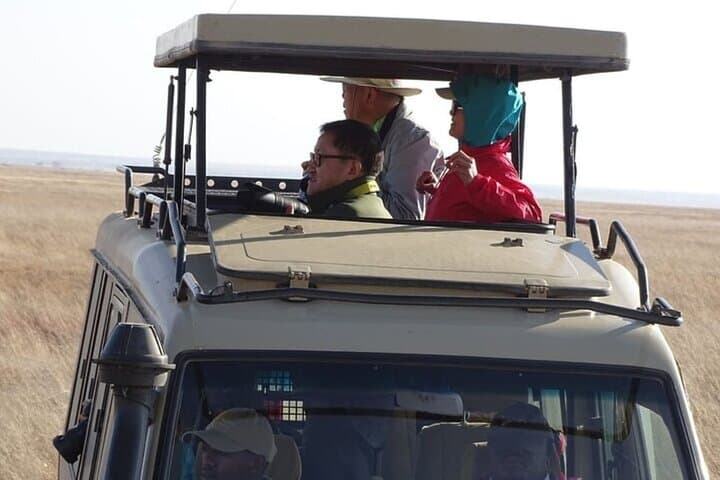
The sun breaks over wide grassland and a Land Cruiser threads a dusty track toward a distant acacia ridge. On a three-day small-group safari to the Maasai Mara, up to eight travelers move with purpose—early starts, long golden hours, and repeated close-ups of wildlife in motion. Vehicles pull to the side as a pride stretches, and the Mara’s wind carries the metallic cry of a single-vulture rising.
The sun breaks over wide grassland and a Land Cruiser threads a dusty track toward a distant acacia ridge. On a three-day small-group safari to the Maasai Mara, up to eight travelers move with purpose—early starts, long golden hours, and repeated close-ups of wildlife in motion. Vehicles pull to the side as a pride stretches, and the Mara’s wind carries the metallic cry of a single-vulture rising.
Geology here is simple and honest: rolling savanna carved where seasonal rivers slice into basalt and sediment, with the steep Oloololo escarpment forming a western rim. Maasai culture is immediate—pastoral families grazing cattle nearby, age-set traditions that shape both landscape use and local tourism partnerships. The reserve’s history includes colonial-era hunting grounds turned protected area, and today community conservancies buffer the park while supporting lodges and camps.
Travelers should expect two full days of game drives (dawn and dusk are richest), basic but comfortable tented or bush-camp accommodations like Rhino Tourist Camp, and multilingual guides who facilitate interpretation in several foreign languages. The trip is not physically demanding but requires tolerance for bumpy roads, early wake-ups and long stretches in a vehicle.
Practical guidance: pack neutral clothing and binoculars, carry sunscreen and reusable water, and take malaria precautions. Timing matters—June–October brings dryer conditions and higher wildlife concentrations; March–May are lush but wetter. Book with flexible plans to allow for road delays and the serendipity of wildlife encounters.