THE ADVENTURE COLLECTIVE® · Independent discovery and booking for outdoor travel

Take the overnight sleeper train from Cairo to Luxor and spend a full day exploring the East and West Banks with a licensed Egyptologist. This 3‑day itinerary pairs high‑impact sites—Valley of the Kings, Hatshepsut, Karnak—with onboard sleeper accommodations and a Nile felucca lunch.
Take the overnight sleeper train from Cairo to Luxor and spend a full day exploring the East and West Banks with a licensed Egyptologist. This 3‑day itinerary pairs high‑impact sites—Valley of the Kings, Hatshepsut, Karnak—with onboard sleeper accommodations and a Nile felucca lunch.
Dawn on the sleeper train slides past desert lowlands as the Nile’s rim light eases into Luxor’s palm-fringed skyline. Arriving at the station, visitors step into a landscape where sandstone cliffs and cultivated floodplain frame monuments that once defined a civilization.
Verified experiences and guided adventures in the surrounding area.
Operated by Egypt Travel Line · Luxor, Luxor Governorate
Dawn on the sleeper train slides past desert lowlands as the Nile’s rim light eases into Luxor’s palm-fringed skyline. Arriving at the station, visitors step into a landscape where sandstone cliffs and cultivated floodplain frame monuments that once defined a civilization.
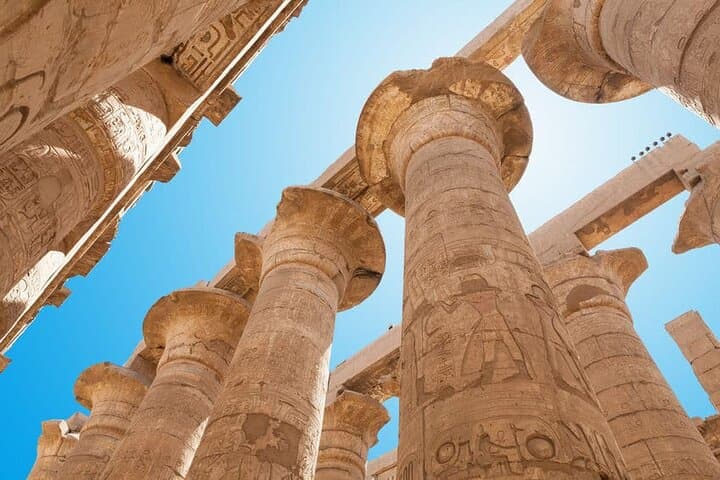
The tour crosses both banks of ancient Thebes: the West’s funerary necropolis—Valley of the Kings, Hatshepsut’s terraces, the silent Colossi of Memnon—and the East’s living cult centers at Karnak and Luxor Temples. Geologically, these sites sit on Nile alluvium beside Upper Egypt’s limestone escarpments; tombs are cut into the softer bedrock of the valley and preserve art on relatively stable stone, but are sensitive to humidity and sunlight.
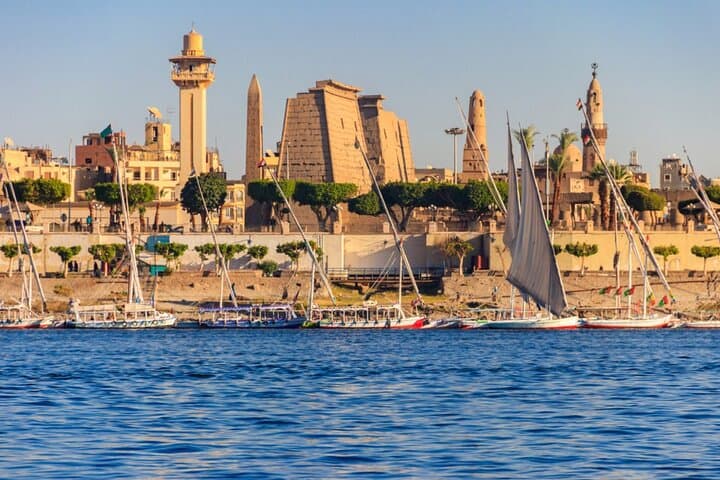
Culturally, guides (qualified Egyptologists on this itinerary) connect hieroglyphic narratives to pharaonic politics and everyday life; a felucca lunch on the Nile offers a quieter local rhythm between big monuments. Expect crowds at peak hours and a mixture of modern market stalls and traditional craft sellers in nearby streets.
Practical guidance: plan early starts to avoid midday heat, carry a refillable water bottle and sun protection, and wear shoes suitable for uneven temple steps and sandy approaches. The itinerary includes sleeper train accommodation both ways, entrance to scheduled sites, a camel ride, and transport between sites—confirm passport details and pickup information when booking. For those wanting to move at a slower pace, request extra time at key stops when meeting the guide; accessibility options are available but vary by site.
easy.
3 days (including overnight train travel).
Suitable for travelers in average physical condition; requires walking on uneven surfaces and short stair climbs.
The overnight sleeper train covers roughly 9–11 hours depending on schedule; you sleep onboard and arrive in Luxor early to start sightseeing.
This itinerary states that all listed sights are included—confirm specific tomb entry choices (some tombs require extra tickets) with your operator before arrival.
The tour is advertised as wheelchair accessible for transport, but many ancient sites have stairs and uneven ground—contact the operator to arrange accommodations and site accessibility details.
October through April offers milder temperatures and more comfortable touring; summers are very hot and can limit mid‑day activity.
Luxor occupies ancient Thebes, a political and religious capital of New Kingdom Egypt; Karnak and Luxor Temples evolved over 1,500 years of construction.
Tomb interiors are sensitive to humidity and visitor traffic—follow guide instructions, avoid flash photography, and minimize plastic waste to help preserve the sites.
Egypt Travel Line operates guided outdoor trips and adventures with an emphasis on safety, stewardship, and memorable experiences.


Dawn on the sleeper train slides past desert lowlands as the Nile’s rim light eases into Luxor’s palm-fringed skyline. Arriving at the station, visitors step into a landscape where sandstone cliffs and cultivated floodplain frame monuments that once defined a civilization.
Dawn on the sleeper train slides past desert lowlands as the Nile’s rim light eases into Luxor’s palm-fringed skyline. Arriving at the station, visitors step into a landscape where sandstone cliffs and cultivated floodplain frame monuments that once defined a civilization.
The tour crosses both banks of ancient Thebes: the West’s funerary necropolis—Valley of the Kings, Hatshepsut’s terraces, the silent Colossi of Memnon—and the East’s living cult centers at Karnak and Luxor Temples. Geologically, these sites sit on Nile alluvium beside Upper Egypt’s limestone escarpments; tombs are cut into the softer bedrock of the valley and preserve art on relatively stable stone, but are sensitive to humidity and sunlight.
Culturally, guides (qualified Egyptologists on this itinerary) connect hieroglyphic narratives to pharaonic politics and everyday life; a felucca lunch on the Nile offers a quieter local rhythm between big monuments. Expect crowds at peak hours and a mixture of modern market stalls and traditional craft sellers in nearby streets.
Practical guidance: plan early starts to avoid midday heat, carry a refillable water bottle and sun protection, and wear shoes suitable for uneven temple steps and sandy approaches. The itinerary includes sleeper train accommodation both ways, entrance to scheduled sites, a camel ride, and transport between sites—confirm passport details and pickup information when booking. For those wanting to move at a slower pace, request extra time at key stops when meeting the guide; accessibility options are available but vary by site.