THE ADVENTURE COLLECTIVE® · Independent discovery and booking for outdoor travel

Fly from Hanoi into the Muong Thanh valley for a compact, immersive 3-day tour of Dien Bien Phu’s battlefields, ethnic villages and highland lakes. Expect short historical walks, a homestay with herbal bath and panoramic viewpoints across terraced fields.
Fly from Hanoi into the Muong Thanh valley for a compact, immersive 3-day tour of Dien Bien Phu’s battlefields, ethnic villages and highland lakes. Expect short historical walks, a homestay with herbal bath and panoramic viewpoints across terraced fields.
Dawn light cuts across the Muong Thanh valley as the small plane drops toward Dien Bien Phu, the basin framed by serrated ridgelines and tiered rice paddies. Travelers step from the airport into a landscape where geology and history press close: steep hills that channeled artillery and the wide, flat plain that once held encircled battalions.
Verified experiences and guided adventures in the surrounding area.
Operated by Local Tours Around Viet Nam · Dien Bien Phu, Dien Bien
Dawn light cuts across the Muong Thanh valley as the small plane drops toward Dien Bien Phu, the basin framed by serrated ridgelines and tiered rice paddies. Travelers step from the airport into a landscape where geology and history press close: steep hills that channeled artillery and the wide, flat plain that once held encircled battalions.
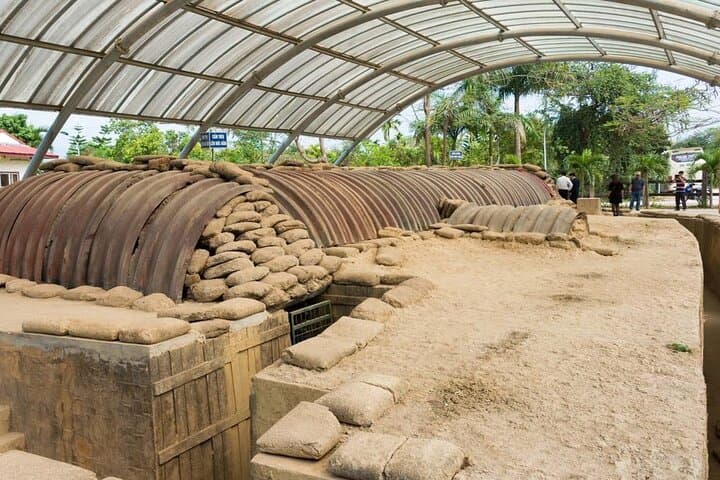
The 1954 Battle of Dien Bien Phu is the central narrative—sites like De Castries’ bunker, A1 Hill (Eliane 2) and the Victory Monument map the final French stronghold and its fall. Beyond the war museums, the region’s identity is woven from Thai, Hmong and Khmu traditions seen in local markets, black-ink manuscript craft and homestay kitchens. Pa Khoang Lake and the forested slopes around Muong Phang offer a quieter counterpoint: freshwater shores, misty mornings and views across terraced fields shaped by centuries of upland farming.
Practically, the tour mixes short historical walks, cultural visits and a homestay with an herbal bath; expect uneven paths, concrete bunkers and short hikes between memorials. Travel time is largely by short flight from Hanoi and local vehicle transfers. Climate can swing from cool mornings to humid afternoons so layered clothing helps. Carry cash for markets, show respect at memorials and plan for basic hotel or homestay facilities — rooms are functional rather than luxurious. For an immersive three-day route, the payoff is direct: living history, highland scenery and an up-close look at communities who keep northern Vietnam’s traditions alive.
moderate.
3 days.
Light to moderate fitness for short walks and standing at sites; not strenuous but mobility on uneven ground helps
The tour includes round-trip air tickets between Hanoi and Dien Bien Phu; flights are short (about 1–1.5 hours) and transfers are arranged on arrival.
No—walks are short and accessible, suitable for most fitness levels, but expect some uneven ground and short uphill sections at viewpoints.
The itinerary includes airport transfers, 3 lunches, 2 dinners, 2 breakfasts, a 2-star hotel night and a homestay with herbal bath—meals typically feature local cuisine.
Families can join, but the tour is not recommended for travelers with serious back, heart or pregnancy concerns; check specifics with the operator before booking.
Dien Bien Phu’s 1954 victory ended major French military presence in Indochina and reshaped post-colonial Southeast Asia—many battlefield sites remain preserved as public memorials.
Visitors should minimize trail erosion by staying on marked routes, avoid disturbing local wildlife and support homestays and markets to benefit community-based tourism.
Local Tours Around Viet Nam operates guided outdoor trips and adventures with an emphasis on safety, stewardship, and memorable experiences.

Dawn light cuts across the Muong Thanh valley as the small plane drops toward Dien Bien Phu, the basin framed by serrated ridgelines and tiered rice paddies. Travelers step from the airport into a landscape where geology and history press close: steep hills that channeled artillery and the wide, flat plain that once held encircled battalions.
Dawn light cuts across the Muong Thanh valley as the small plane drops toward Dien Bien Phu, the basin framed by serrated ridgelines and tiered rice paddies. Travelers step from the airport into a landscape where geology and history press close: steep hills that channeled artillery and the wide, flat plain that once held encircled battalions.
The 1954 Battle of Dien Bien Phu is the central narrative—sites like De Castries’ bunker, A1 Hill (Eliane 2) and the Victory Monument map the final French stronghold and its fall. Beyond the war museums, the region’s identity is woven from Thai, Hmong and Khmu traditions seen in local markets, black-ink manuscript craft and homestay kitchens. Pa Khoang Lake and the forested slopes around Muong Phang offer a quieter counterpoint: freshwater shores, misty mornings and views across terraced fields shaped by centuries of upland farming.
Practically, the tour mixes short historical walks, cultural visits and a homestay with an herbal bath; expect uneven paths, concrete bunkers and short hikes between memorials. Travel time is largely by short flight from Hanoi and local vehicle transfers. Climate can swing from cool mornings to humid afternoons so layered clothing helps. Carry cash for markets, show respect at memorials and plan for basic hotel or homestay facilities — rooms are functional rather than luxurious. For an immersive three-day route, the payoff is direct: living history, highland scenery and an up-close look at communities who keep northern Vietnam’s traditions alive.