THE ADVENTURE COLLECTIVE® · Independent discovery and booking for outdoor travel

Witness Angkor Wat at sunrise, trace Khmer history through Bayon and Ta Prohm, cool off beneath Kulen's waterfall, and float through the stilted village of Kompong Phluk. This private 3-day loop pairs iconic temples with Tonle Sap’s living landscape.
Witness Angkor Wat at sunrise, trace Khmer history through Bayon and Ta Prohm, cool off beneath Kulen's waterfall, and float through the stilted village of Kompong Phluk. This private 3-day loop pairs iconic temples with Tonle Sap’s living landscape.
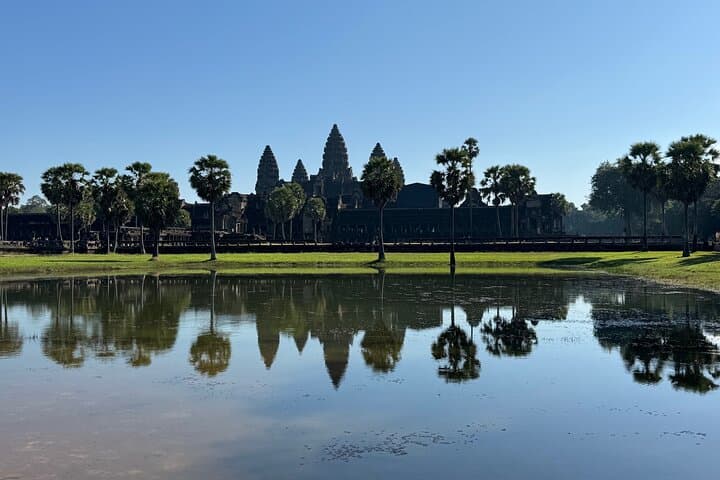
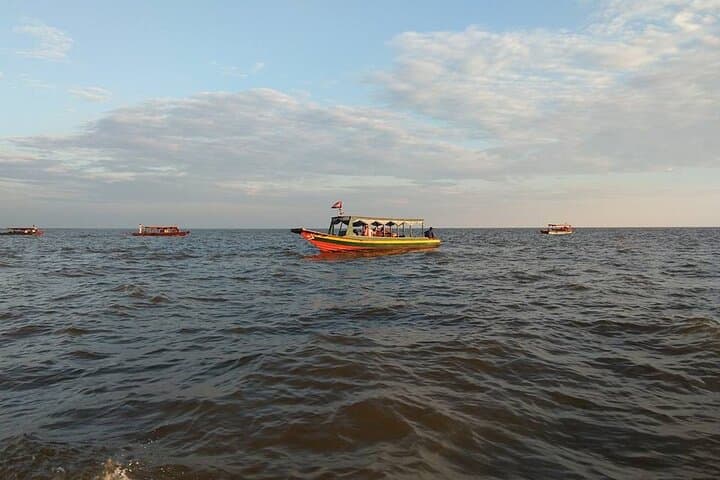
You stand at the edge of a still reflecting pool as dawn unspools across Angkor Wat: carved towers emerge like islands, the sky tipping from bruise to copper while a hush descends over stone and water. Over three days this private tour moves from that ritual sunrise through jungle-choked sanctuaries on Phnom Kulen to the rising and falling world of Tonle Sap, where stilt houses and mangroves adapt to the lake’s moods.
Verified experiences and guided adventures in the surrounding area.
Operated by Inspire the Journeys · Siem Reap, Siem Reap Province
You stand at the edge of a still reflecting pool as dawn unspools across Angkor Wat: carved towers emerge like islands, the sky tipping from bruise to copper while a hush descends over stone and water. Over three days this private tour moves from that ritual sunrise through jungle-choked sanctuaries on Phnom Kulen to the rising and falling world of Tonle Sap, where stilt houses and mangroves adapt to the lake’s moods.
Angkor’s temples are living geology — sandstone blocks quarried and transported by an empire whose hydraulic engineering reshaped the plain. Bayon’s smiling faces and Ta Prohm’s roots record a 12th-century Khmer court and Buddhist faith; Banteay Srei’s pink sandstone preserves carvings so fine they read like manuscripts. Phnom Kulen adds a different pulse: waterfalls, riverbed lingas carved into stone and a reclining Buddha set within dense dipterocarp forest. Tonle Sap’s floodplain, meanwhile, breathes with seasonal extremes, pushing boats into flooded trees and pulling fish into the shallow lagoons.
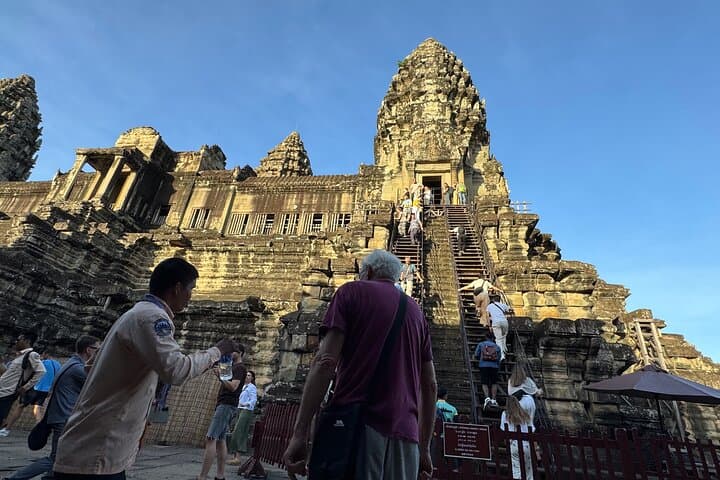
Practically, expect early starts, a lot of walking on uneven stone, and hot, humid afternoons. Angkor Park requires an entrance pass (not included) and crowds concentrate at sunrise and hilltop sunset spots. Pack sun protection, quick-dry layers, cash for local vendors and temple donations, and a light rain shell for sudden showers. Boat trips on Tonle Sap are sheltered but bring a hat and motion-sickness preparedness; Phnom Kulen’s paths can be slippery after rain.
This itinerary blends cultural immersion with accessible adventure — a compact, three-day pulse through Cambodia’s archaeological heart and living waterways.
easy.
3 days.
Suitable for travelers with basic fitness—expect several hours of walking each day on uneven, sometimes steep stone surfaces.
No; the Angkor Archaeological Park pass is not included. Buy a 1-, 3-, or 7-day pass at the official ticket center in Siem Reap before visiting.
Walking involves uneven stone, stairs and short climbs but is not technical—reasonable mobility and comfortable footwear are sufficient.
Boat trips are standard tourist launches; children should wear life jackets and be supervised—inform the operator of ages at booking.
Yes, the tour includes hotel pickup and drop-off in Siem Reap using air-conditioned transport.
Angkor was the political and hydraulic heart of the Khmer Empire (9th–15th centuries), whose temple-mountains and baray reservoirs shaped the region’s landscape and culture.
Tonle Sap is a critical freshwater ecosystem supporting fisheries and communities; visitors should avoid single-use plastics and respect local fishing practices and protected zones.
Inspire the Journeys operates guided outdoor trips and adventures with an emphasis on safety, stewardship, and memorable experiences.
You stand at the edge of a still reflecting pool as dawn unspools across Angkor Wat: carved towers emerge like islands, the sky tipping from bruise to copper while a hush descends over stone and water. Over three days this private tour moves from that ritual sunrise through jungle-choked sanctuaries on Phnom Kulen to the rising and falling world of Tonle Sap, where stilt houses and mangroves adapt to the lake’s moods.
You stand at the edge of a still reflecting pool as dawn unspools across Angkor Wat: carved towers emerge like islands, the sky tipping from bruise to copper while a hush descends over stone and water. Over three days this private tour moves from that ritual sunrise through jungle-choked sanctuaries on Phnom Kulen to the rising and falling world of Tonle Sap, where stilt houses and mangroves adapt to the lake’s moods.
Angkor’s temples are living geology — sandstone blocks quarried and transported by an empire whose hydraulic engineering reshaped the plain. Bayon’s smiling faces and Ta Prohm’s roots record a 12th-century Khmer court and Buddhist faith; Banteay Srei’s pink sandstone preserves carvings so fine they read like manuscripts. Phnom Kulen adds a different pulse: waterfalls, riverbed lingas carved into stone and a reclining Buddha set within dense dipterocarp forest. Tonle Sap’s floodplain, meanwhile, breathes with seasonal extremes, pushing boats into flooded trees and pulling fish into the shallow lagoons.
Practically, expect early starts, a lot of walking on uneven stone, and hot, humid afternoons. Angkor Park requires an entrance pass (not included) and crowds concentrate at sunrise and hilltop sunset spots. Pack sun protection, quick-dry layers, cash for local vendors and temple donations, and a light rain shell for sudden showers. Boat trips on Tonle Sap are sheltered but bring a hat and motion-sickness preparedness; Phnom Kulen’s paths can be slippery after rain.
This itinerary blends cultural immersion with accessible adventure — a compact, three-day pulse through Cambodia’s archaeological heart and living waterways.