THE ADVENTURE COLLECTIVE® · Independent discovery and booking for outdoor travel

A compact, three-day loop from Arusha into Serengeti and Ngorongoro that packs sunrise game drives, a crater descent, and chances to see the Big Five into an affordable, shared camping-style safari. Expect long drives, early mornings, and unforgettable wildlife encounters.
A compact, three-day loop from Arusha into Serengeti and Ngorongoro that packs sunrise game drives, a crater descent, and chances to see the Big Five into an affordable, shared camping-style safari. Expect long drives, early mornings, and unforgettable wildlife encounters.
Dawn spills across the Serengeti in a wash of gold; the open-sided 4x4 hums forward and the flat horizon seems to breathe. You smell dust and sun-heated grass as the vehicle slows for a pride of lions, and later you’ll stand at the rim of a vast caldera watching vultures wheel over a mirror-flat hippo pool.
Verified experiences and guided adventures in the surrounding area.
Operated by Wajefya Expeditions · Seronera (Serengeti), Mara Region
Dawn spills across the Serengeti in a wash of gold; the open-sided 4x4 hums forward and the flat horizon seems to breathe. You smell dust and sun-heated grass as the vehicle slows for a pride of lions, and later you’ll stand at the rim of a vast caldera watching vultures wheel over a mirror-flat hippo pool.
This itinerary threads three of Tanzania’s signature landscapes. The drive from Arusha crosses the Great Rift Valley and the Ngorongoro Highlands, a geological seam where tectonics carved craters and uplifted escarpments. The Serengeti’s grassy plains—shaped by volcanic ash and seasonal rivers—support the continent’s most famous migration, while Ngorongoro’s 600-meter-deep caldera forms a contained ecosystem rich in density and diversity.
Maasai pastoralists have grazed these slopes for centuries, their cultural presence evident at market towns and along conserved grazing corridors. Parks here balance tourism with protection: Serengeti and Ngorongoro are managed to minimize disturbance while allowing guided vehicle access.
Practically, expect long drives (6–7 hours on day one) with game drives timed at sunrise and late afternoon. Vehicles with pop-up roofs give the best views; early starts catch predators before heat slows them. Nights are at basic camps or rest houses—bring earplugs for wildlife soundscapes. Hydration, sun protection, and comfortable walking shoes for short crater descents are essential. Camera gear with a mid-to-long telephoto and binoculars will dramatically improve sightings. Respect park rules—stay in the vehicle except at designated stops, and follow your guide’s lead for the safest, most rewarding safari experience.
moderate.
3 days.
Suitable for travelers in average fitness—long periods seated with short, easy walks; able to handle uneven ground during crater descent.
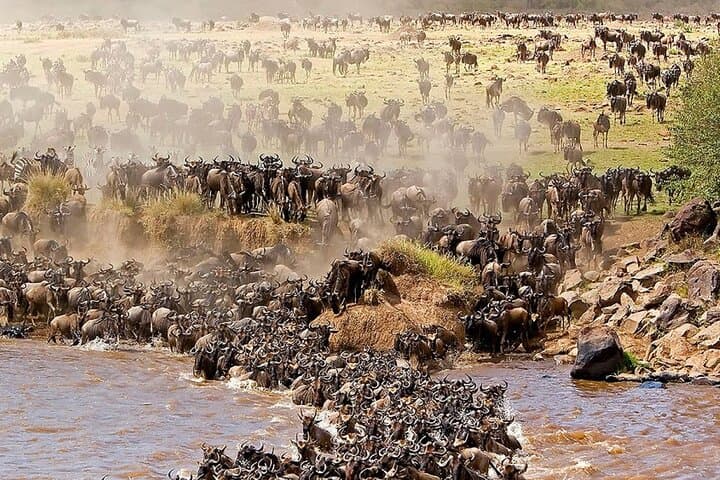
Timing depends on the annual cycle: calving is often around Ndutu (Dec–Mar) while river crossings near the Mara usually occur mid-year; ask guides about current migration locations.
This tour typically includes government entry fees and most meals listed in the itinerary—confirm specifics at booking for any extras like optional activities or drinks.
Yellow fever vaccination may be required depending on travel origin; routine vaccinations and malaria prophylaxis are commonly recommended—check with a travel clinic and Tanzanian visa rules before travel.
The descent is steep but short (roughly 600m/2,000ft vertical); reasonable mobility is sufficient, and guides will advise on safe movement and vehicle access points.
Ngorongoro Crater is a collapsed volcanic caldera that later became a protected conservation area; the Serengeti region has been a focal point of wildlife research and conservation since the mid-20th century.
Both parks operate under strict conservation rules—stay on designated tracks, avoid littering, and follow your guide to minimize disturbance and support anti-poaching efforts.
Wajefya Expeditions operates guided outdoor trips and adventures with an emphasis on safety, stewardship, and memorable experiences.

Dawn spills across the Serengeti in a wash of gold; the open-sided 4x4 hums forward and the flat horizon seems to breathe. You smell dust and sun-heated grass as the vehicle slows for a pride of lions, and later you’ll stand at the rim of a vast caldera watching vultures wheel over a mirror-flat hippo pool.
Dawn spills across the Serengeti in a wash of gold; the open-sided 4x4 hums forward and the flat horizon seems to breathe. You smell dust and sun-heated grass as the vehicle slows for a pride of lions, and later you’ll stand at the rim of a vast caldera watching vultures wheel over a mirror-flat hippo pool.
This itinerary threads three of Tanzania’s signature landscapes. The drive from Arusha crosses the Great Rift Valley and the Ngorongoro Highlands, a geological seam where tectonics carved craters and uplifted escarpments. The Serengeti’s grassy plains—shaped by volcanic ash and seasonal rivers—support the continent’s most famous migration, while Ngorongoro’s 600-meter-deep caldera forms a contained ecosystem rich in density and diversity.
Maasai pastoralists have grazed these slopes for centuries, their cultural presence evident at market towns and along conserved grazing corridors. Parks here balance tourism with protection: Serengeti and Ngorongoro are managed to minimize disturbance while allowing guided vehicle access.
Practically, expect long drives (6–7 hours on day one) with game drives timed at sunrise and late afternoon. Vehicles with pop-up roofs give the best views; early starts catch predators before heat slows them. Nights are at basic camps or rest houses—bring earplugs for wildlife soundscapes. Hydration, sun protection, and comfortable walking shoes for short crater descents are essential. Camera gear with a mid-to-long telephoto and binoculars will dramatically improve sightings. Respect park rules—stay in the vehicle except at designated stops, and follow your guide’s lead for the safest, most rewarding safari experience.