THE ADVENTURE COLLECTIVE® · Independent discovery and booking for outdoor travel

Cross the channel and spend three days experiencing San Cristóbal from inlet to highland: freshwater lagoons, tortoise conservation, and a 360° boat loop that circles Kicker Rock and turtle-rich bays. Practical, wildlife-forward, and paced for travelers who want land hikes and ocean snorkels in one trip.
Cross the channel and spend three days experiencing San Cristóbal from inlet to highland: freshwater lagoons, tortoise conservation, and a 360° boat loop that circles Kicker Rock and turtle-rich bays. Practical, wildlife-forward, and paced for travelers who want land hikes and ocean snorkels in one trip.
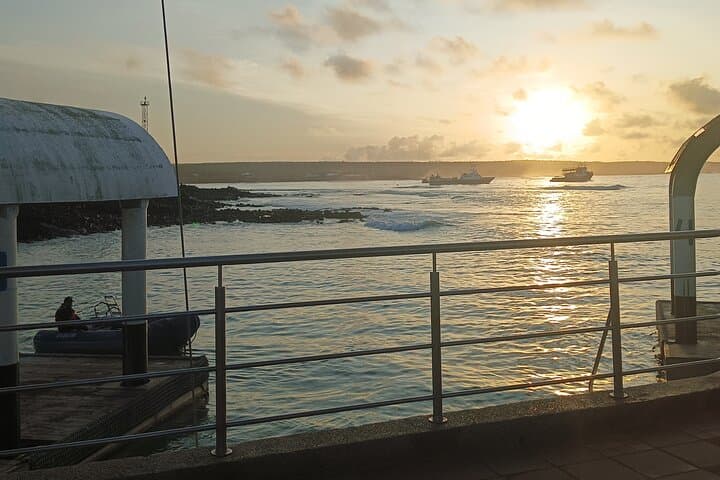
The ferry thuds against Puerto Baquerizo Moreno’s dock and the salt air shoves you forward—slow, insistently—toward the island’s basalt rim. On day one you leave the bustle of Santa Cruz and cross a line where the horizon sharpens: San Cristóbal’s cliffs loom, gulls punctuating the sky like commas. A guide meets you at the hotel the next morning and the itinerary loosens into a rhythm of land and sea—an inland loop through laurisilva and volcanic ridges, then a full-day boat circuit that turns the island inside out.
Verified experiences and guided adventures in the surrounding area.
Operated by Perfect Destiny · Puerto Baquerizo Moreno, Galápagos Province
The ferry thuds against Puerto Baquerizo Moreno’s dock and the salt air shoves you forward—slow, insistently—toward the island’s basalt rim. On day one you leave the bustle of Santa Cruz and cross a line where the horizon sharpens: San Cristóbal’s cliffs loom, gulls punctuating the sky like commas. A guide meets you at the hotel the next morning and the itinerary loosens into a rhythm of land and sea—an inland loop through laurisilva and volcanic ridges, then a full-day boat circuit that turns the island inside out.
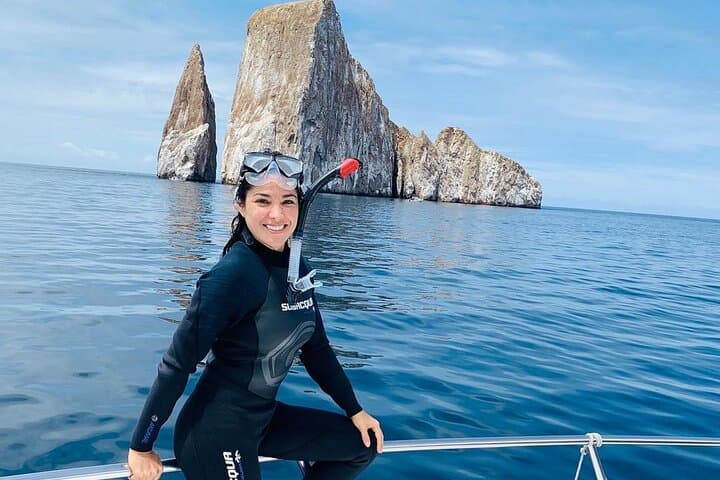
San Cristóbal is one of the older parts of the archipelago; its rocks are the language of eruptions and erosion. Kicker Rock—León Dormido—rises from the Pacific as a vertical remnant of a tuff cone, a fossilized shout from the island’s volcanic youth. El Junco, the freshwater lagoon in the highlands, is a rare pool of rain in a mostly arid chain and has been an essential water source for sailors and settlers. Human histories here run parallel to natural ones: whalers and 19th-century settlers left a loose, utilitarian footprint; modern communities balance tourism with fragile ecosystems.
The 360-degree boat day is the tour’s headline: Rosa Blanca’s low dunes and crystalline shallows, Sardina Bay’s turtle-rich hideaways, and the dramatic walls around Kicker Rock where blue-footed boobies angle their wings and sea lions patrol the shallows. Underwater, currents encourage movement—fish and rays performing in the clear light. On land, tortoise conservation at La Galapaguera offers a quieter counterpoint: slow, deliberate lives that anchor the island’s sense of time.
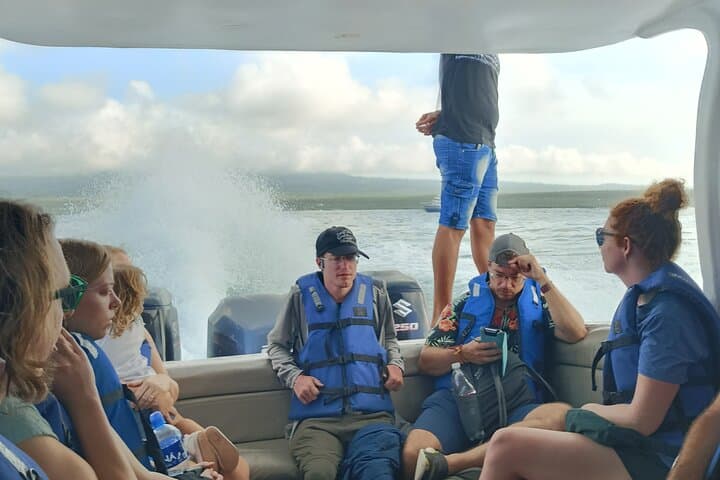
Practical planning keeps the trip smooth. Expect open-boat conditions on the 360° day—spray, wind, and sun. Seas can be calm or choppy; bring seasickness remedies if you’re sensitive. The itinerary includes two nights on San Cristóbal with transfers between islands; carry local currency for small fees (pier use and sea taxi costs are paid on-site). Snorkeling masks and fins are provided, but wetsuits are not—rent locally if you need thermal protection for cooler months.
Footwear should be sturdy but light: reef shoes for beach entries and trainers for the highland walks. Hydrate frequently—Galápagos sun is efficient at sapping energy—and pack reef-safe sunscreen to protect both your skin and the corals below. Aim to time the boat day for early morning departures; wildlife is often most active then and the sea is typically calmer.
This three-day loop doesn’t rush the islands but compresses a wide, living landscape into approachable segments—highland lagoon, conservation sites, and marine spectaculars—so you return with both photos and a clearer sense of why the Galápagos remains one of the world’s most precise classrooms of evolution and conservation.
moderate.
3 days.
Moderate fitness recommended—comfortable walking for a few hours, and ability to get on/off small boats.
Mask and fins are included; wetsuits are not—rent locally if you expect cooler water or sensitivity to chill.
The highland visits involve short, moderate walks (1–3 hours) on uneven paths—good mobility and steady footing are helpful.
You may see Galápagos sharks and, seasonally, hammerheads; sightings aren’t guaranteed but the site is one of the region’s top marine habitats.
The guide offers pickup from the airport with a sign; confirm your flight details at booking so they can meet you on arrival.
Crossings can be rough; bring or take motion-sickness medication in advance and choose stable seating amidships when possible.
Not recommended for travelers with serious cardiovascular conditions or pregnant travelers; children must be accompanied by an adult.
San Cristóbal historically served as a provisioning and whaling stop; its highland freshwater source, El Junco, was critical for early sailors and settlers.
The islands operate strict visitor guidelines—pay local pier and sea-taxi fees, use reef-safe sunscreen, and follow guide instructions to minimize disturbance to wildlife.
Perfect Destiny operates guided outdoor trips and adventures with an emphasis on safety, stewardship, and memorable experiences.
The ferry thuds against Puerto Baquerizo Moreno’s dock and the salt air shoves you forward—slow, insistently—toward the island’s basalt rim. On day one you leave the bustle of Santa Cruz and cross a line where the horizon sharpens: San Cristóbal’s cliffs loom, gulls punctuating the sky like commas. A guide meets you at the hotel the next morning and the itinerary loosens into a rhythm of land and sea—an inland loop through laurisilva and volcanic ridges, then a full-day boat circuit that turns the island inside out.
The ferry thuds against Puerto Baquerizo Moreno’s dock and the salt air shoves you forward—slow, insistently—toward the island’s basalt rim. On day one you leave the bustle of Santa Cruz and cross a line where the horizon sharpens: San Cristóbal’s cliffs loom, gulls punctuating the sky like commas. A guide meets you at the hotel the next morning and the itinerary loosens into a rhythm of land and sea—an inland loop through laurisilva and volcanic ridges, then a full-day boat circuit that turns the island inside out.
San Cristóbal is one of the older parts of the archipelago; its rocks are the language of eruptions and erosion. Kicker Rock—León Dormido—rises from the Pacific as a vertical remnant of a tuff cone, a fossilized shout from the island’s volcanic youth. El Junco, the freshwater lagoon in the highlands, is a rare pool of rain in a mostly arid chain and has been an essential water source for sailors and settlers. Human histories here run parallel to natural ones: whalers and 19th-century settlers left a loose, utilitarian footprint; modern communities balance tourism with fragile ecosystems.
The 360-degree boat day is the tour’s headline: Rosa Blanca’s low dunes and crystalline shallows, Sardina Bay’s turtle-rich hideaways, and the dramatic walls around Kicker Rock where blue-footed boobies angle their wings and sea lions patrol the shallows. Underwater, currents encourage movement—fish and rays performing in the clear light. On land, tortoise conservation at La Galapaguera offers a quieter counterpoint: slow, deliberate lives that anchor the island’s sense of time.
Practical planning keeps the trip smooth. Expect open-boat conditions on the 360° day—spray, wind, and sun. Seas can be calm or choppy; bring seasickness remedies if you’re sensitive. The itinerary includes two nights on San Cristóbal with transfers between islands; carry local currency for small fees (pier use and sea taxi costs are paid on-site). Snorkeling masks and fins are provided, but wetsuits are not—rent locally if you need thermal protection for cooler months.
Footwear should be sturdy but light: reef shoes for beach entries and trainers for the highland walks. Hydrate frequently—Galápagos sun is efficient at sapping energy—and pack reef-safe sunscreen to protect both your skin and the corals below. Aim to time the boat day for early morning departures; wildlife is often most active then and the sea is typically calmer.
This three-day loop doesn’t rush the islands but compresses a wide, living landscape into approachable segments—highland lagoon, conservation sites, and marine spectaculars—so you return with both photos and a clearer sense of why the Galápagos remains one of the world’s most precise classrooms of evolution and conservation.