
3-Day Sahara Tour from Marrakech to Merzouga — Camel Rides, Dunes & Luxury Camps
Cross the High Atlas, walk through Ait Ben Haddou, and ride a camel into the sunlit dunes of Merzouga on this three-day Sahara circuit from Marrakech. Expect long drives, a guided camel trek, luxury tents, and dramatic canyon scenery.
An Adventure In Marrakech.
Cross the High Atlas, walk through Ait Ben Haddou, and ride a camel into the sunlit dunes of Merzouga on this three-day Sahara circuit from Marrakech. Expect long drives, a guided camel trek, luxury tents, and dramatic canyon scenery.
Read the full experience
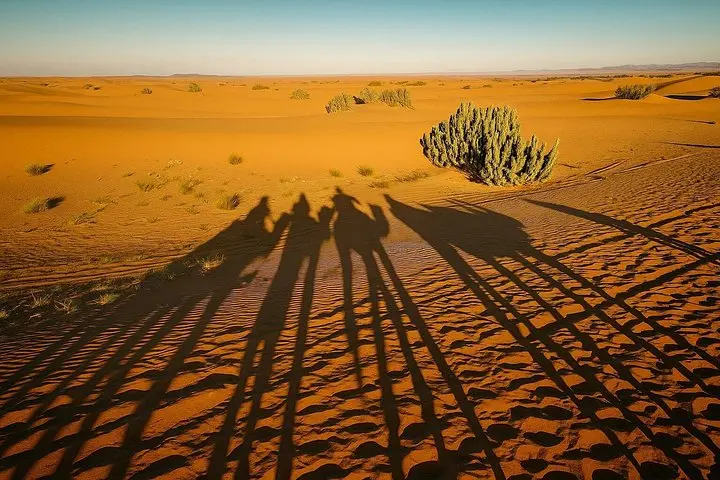
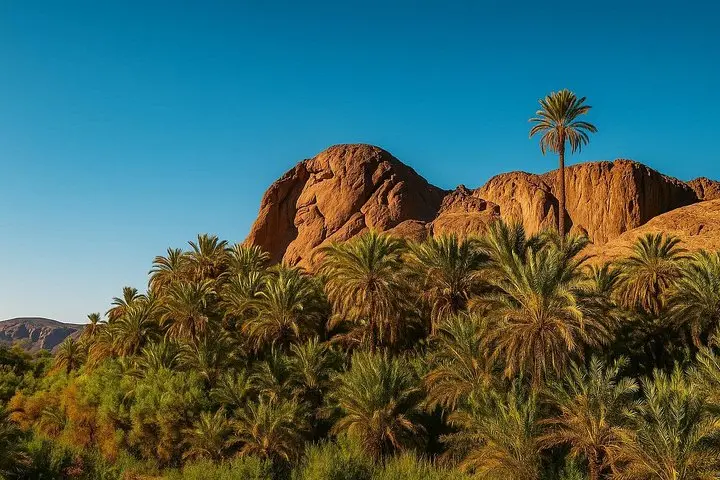
Daylight folds over the High Atlas and the road narrows into switchbacks; by late afternoon the landscape opens to ochre palmeries and the first silhouettes of kasbahs. You arrive in Ait Ben Haddou where the mud-brick kasbahs sit like ancient stage sets, then push east through gorges and dry riverbeds until sand takes over—Erg Chebbi’s dunes rising like waves frozen in time.
Daylight folds over the High Atlas and the road narrows into switchbacks; by late afternoon the landscape opens to ochre palmeries and the first silhouettes of kasbahs. You arrive in Ait Ben Haddou where the mud-brick kasbahs sit like ancient stage sets, then push east through gorges and dry riverbeds until sand takes over—Erg Chebbi’s dunes rising like waves frozen in time.
This three-day route follows centuries-old caravan corridors and modern asphalt alike: Marrakech to Ait Ben Haddou and Ouarzazate, the Dades Valley and Todra Gorge, then on to Erfoud and Merzouga. Geologically the dunes are part of the Erg Chebbi system—wind-sculpted sand that shifts with each season. Culturally the region is Berber country; small ksars and kasbahs reveal adobe architecture and a long history of trans-Saharan trade.
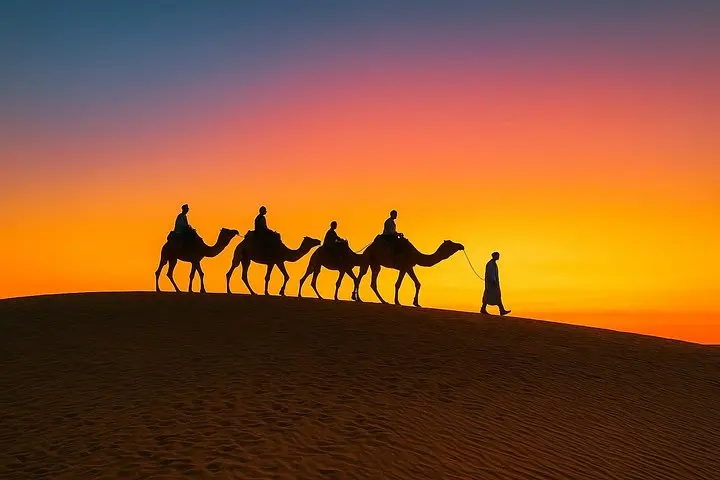
Expect long drives (Marrakech–Merzouga is roughly 9–10 hours total driving over two days with stops), one guided camel ride across the dunes, and a night in a luxury Berber camp with insulated tents and shared or private facilities. Desert nights are cold and star-filled; daytime can be brutally hot and reflective.
Practical tips: pack layered clothing, sun protection, and at least 2–3 liters of water per person for dune activities. Bring cash for small local purchases and a good camera for low-angle light at sunrise. Accessibility features on many tours accommodate wheelchairs for transport and camps with prepared access, but camel riding and steep dune slopes remain physically demanding. Plan for early mornings and slow afternoons—this trip is as much about travel time and landscape transitions as it is about the dunes themselves.
Frequently asked questions
Total driving across the itinerary is about 9–10 hours over two travel days with staged stops at Ait Ben Haddou, Dades, and Todra Gorge.
Short camel rides across dunes are common, but they require mounting from a low saddle and balance; check with the operator for age limits and assistance.
Many operators use luxury Berber camps with insulated tents, mattresses, and communal facilities; some camps provide wheelchair-accessible transport but dune walking remains challenging.
Tipping is customary; set aside cash for drivers, guides, and camp staff—rough guidelines are given by most operators at booking.
About This Experience
Ask for tour operates guided outdoor trips and adventures with an emphasis on safety, stewardship, and memorable experiences.
Adventure tips
Recommended gear
- Sun hat and UV sunglasses: Protects from intense sun and glare off the sand.
- Layered clothing and warm jacket: Keeps you comfortable through hot days and cold desert nights.
- Sturdy sandals or lightweight hiking shoes: Useful for walking in camps and on firm sand; closed shoes help in windy conditions.
- Headlamp and spare batteries: Hands-free light for camps at night and early-morning walks.
Photos of the experience
Related adventures & guides
Read the full experience
Daylight folds over the High Atlas and the road narrows into switchbacks; by late afternoon the landscape opens to ochre palmeries and the first silhouettes of kasbahs. You arrive in Ait Ben Haddou where the mud-brick kasbahs sit like ancient stage sets, then push east through gorges and dry riverbeds until sand takes over—Erg Chebbi’s dunes rising like waves frozen in time.
Daylight folds over the High Atlas and the road narrows into switchbacks; by late afternoon the landscape opens to ochre palmeries and the first silhouettes of kasbahs. You arrive in Ait Ben Haddou where the mud-brick kasbahs sit like ancient stage sets, then push east through gorges and dry riverbeds until sand takes over—Erg Chebbi’s dunes rising like waves frozen in time.
This three-day route follows centuries-old caravan corridors and modern asphalt alike: Marrakech to Ait Ben Haddou and Ouarzazate, the Dades Valley and Todra Gorge, then on to Erfoud and Merzouga. Geologically the dunes are part of the Erg Chebbi system—wind-sculpted sand that shifts with each season. Culturally the region is Berber country; small ksars and kasbahs reveal adobe architecture and a long history of trans-Saharan trade.
Expect long drives (Marrakech–Merzouga is roughly 9–10 hours total driving over two days with stops), one guided camel ride across the dunes, and a night in a luxury Berber camp with insulated tents and shared or private facilities. Desert nights are cold and star-filled; daytime can be brutally hot and reflective.
Practical tips: pack layered clothing, sun protection, and at least 2–3 liters of water per person for dune activities. Bring cash for small local purchases and a good camera for low-angle light at sunrise. Accessibility features on many tours accommodate wheelchairs for transport and camps with prepared access, but camel riding and steep dune slopes remain physically demanding. Plan for early mornings and slow afternoons—this trip is as much about travel time and landscape transitions as it is about the dunes themselves.
Make a day of it nearby.
Verified experiences and guided adventures in the surrounding area.