THE ADVENTURE COLLECTIVE® · Independent discovery and booking for outdoor travel

Cross the High Atlas, explore Ait Ben Haddou and Todgha Gorge, then ride camels across the Erg Chebbi dunes and sleep under the stars. This private 3-day itinerary balances scenic drives, short hikes and authentic desert camp experience.
Cross the High Atlas, explore Ait Ben Haddou and Todgha Gorge, then ride camels across the Erg Chebbi dunes and sleep under the stars. This private 3-day itinerary balances scenic drives, short hikes and authentic desert camp experience.
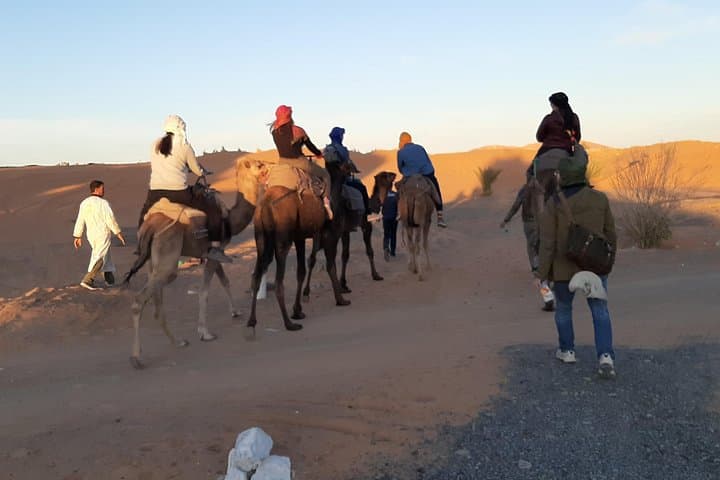
Dawn paints the Erg Chebbi dunes gold and the caravan moves like punctuation across the sand: a single-file line of camels, guides calling softly, and the desert opening its vast, wind-carved face. By night the sky is a shallow bowl of stars; by day the road climbs the High Atlas and drops into river-cut gorges and kasbah towns.
Verified experiences and guided adventures in the surrounding area.
Operated by Morocco today travel · Merzouga, Drâa-Tafilalet
Dawn paints the Erg Chebbi dunes gold and the caravan moves like punctuation across the sand: a single-file line of camels, guides calling softly, and the desert opening its vast, wind-carved face. By night the sky is a shallow bowl of stars; by day the road climbs the High Atlas and drops into river-cut gorges and kasbah towns.
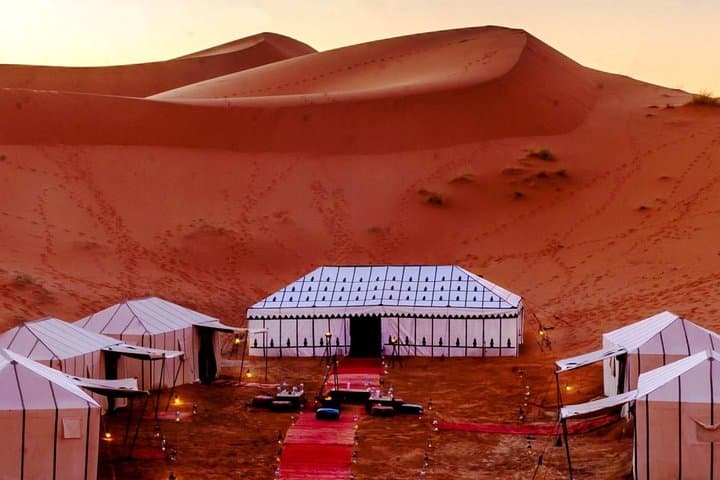
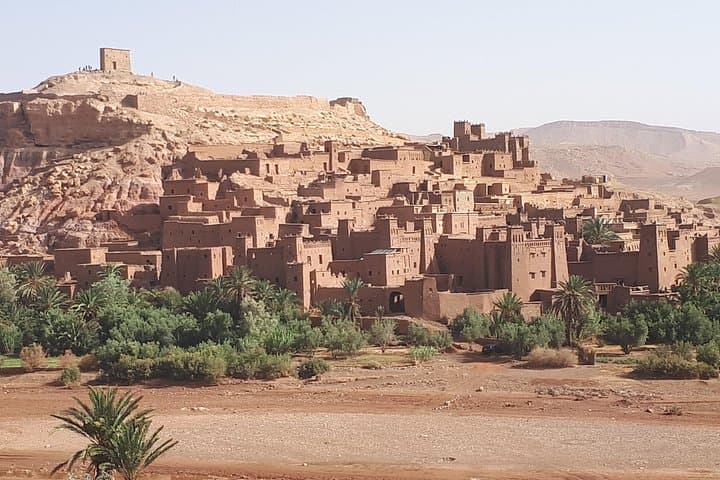
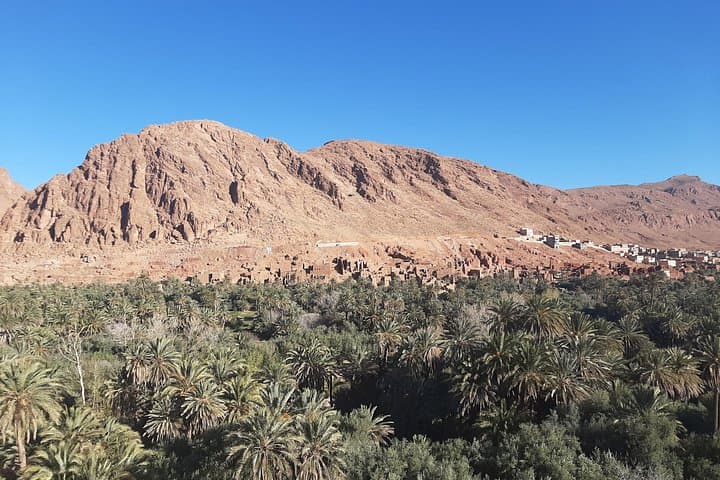
This private, three-day route threads Morocco’s geographic and cultural seams. Travelers cross the Tizi n’Tichka pass at 2,260 m, pass the earthen fortress of Ait Ben Haddou—a UNESCO ksar used in many films—run a loop through the Dades and Todgha gorges carved from limestone, then reach Merzouga and the Erg Chebbi dunes that rise roughly 100–150 m above the plain. Along the way Berber hospitality is visible in village kasbahs, market stalls, and a night in a nomad-style desert camp.
Expect long driving sections broken up by walking tours: Marrakech to Ouarzazate and the Dades valley (half a day with stops); Dades to Merzouga with short canyon hikes; early-morning sunrise on the dunes and a return over the High Atlas toward Fez on day three. Terrain varies from paved mountain passes to gravel tracks and soft sand; elevations swing from 2,260 m down to near sea level at the desert.
Practical tips: wake early for sunrise, carry 2–3 liters of water and sun protection, use a soft gaiter or scarf for sand, and wear broken-in closed-toe shoes for canyon walks. The camel ride is steady but bring a small daypack for essentials; camps provide blankets but nights can be cold—layer up. Private transport and a multilingual driver/guide make logistics simple, but always carry cash for small village purchases and tips.
moderate.
3 days.
Suitable for travelers in good general health who can handle several hours of driving, short hikes in canyons, and mounting camels; not strenuous but requires mobility.
The camel trek to the camp is low-intensity; camels kneel for mounting and rides are steady. You should be able to climb a short step and sit on an animal for up to an hour.
Yes—dinner and breakfast are included, with one night in a Berber desert tent and other nights in 3-star hotels or riads as listed.
Yes—sunset camel rides are standard and early-morning sunrise walks or camel rides are arranged; expect an early wake-up on day three for sunrise views.
Smart casual dress is requested in some towns; in villages and religious sites, modest clothing (covered shoulders and knees) is respectful and recommended.
Ait Ben Haddou is an earthen ksar along a historic caravan route and now a UNESCO site known for its fortified granaries and film sets.
The Sahara’s dune systems and oases are fragile—avoid making new tracks on the dunes, minimize water use, and accept that camp fires are limited to reduce impact.
Morocco today travel operates guided outdoor trips and adventures with an emphasis on safety, stewardship, and memorable experiences.
Dawn paints the Erg Chebbi dunes gold and the caravan moves like punctuation across the sand: a single-file line of camels, guides calling softly, and the desert opening its vast, wind-carved face. By night the sky is a shallow bowl of stars; by day the road climbs the High Atlas and drops into river-cut gorges and kasbah towns.
Dawn paints the Erg Chebbi dunes gold and the caravan moves like punctuation across the sand: a single-file line of camels, guides calling softly, and the desert opening its vast, wind-carved face. By night the sky is a shallow bowl of stars; by day the road climbs the High Atlas and drops into river-cut gorges and kasbah towns.
This private, three-day route threads Morocco’s geographic and cultural seams. Travelers cross the Tizi n’Tichka pass at 2,260 m, pass the earthen fortress of Ait Ben Haddou—a UNESCO ksar used in many films—run a loop through the Dades and Todgha gorges carved from limestone, then reach Merzouga and the Erg Chebbi dunes that rise roughly 100–150 m above the plain. Along the way Berber hospitality is visible in village kasbahs, market stalls, and a night in a nomad-style desert camp.
Expect long driving sections broken up by walking tours: Marrakech to Ouarzazate and the Dades valley (half a day with stops); Dades to Merzouga with short canyon hikes; early-morning sunrise on the dunes and a return over the High Atlas toward Fez on day three. Terrain varies from paved mountain passes to gravel tracks and soft sand; elevations swing from 2,260 m down to near sea level at the desert.
Practical tips: wake early for sunrise, carry 2–3 liters of water and sun protection, use a soft gaiter or scarf for sand, and wear broken-in closed-toe shoes for canyon walks. The camel ride is steady but bring a small daypack for essentials; camps provide blankets but nights can be cold—layer up. Private transport and a multilingual driver/guide make logistics simple, but always carry cash for small village purchases and tips.