THE ADVENTURE COLLECTIVE® · Independent discovery and booking for outdoor travel

Cross cedar highlands and palm oases to reach the orange waves of Erg Chebbi. This 3-day itinerary pairs long scenic drives with a Berber camp experience, camel trekking and desert stars.
Cross cedar highlands and palm oases to reach the orange waves of Erg Chebbi. This 3-day itinerary pairs long scenic drives with a Berber camp experience, camel trekking and desert stars.
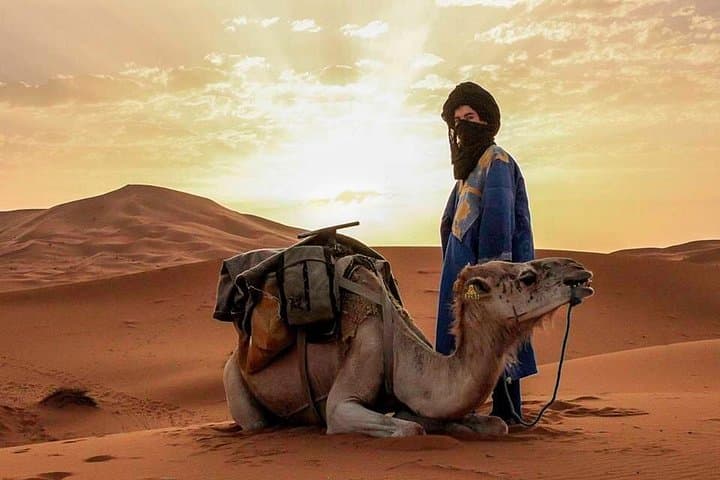
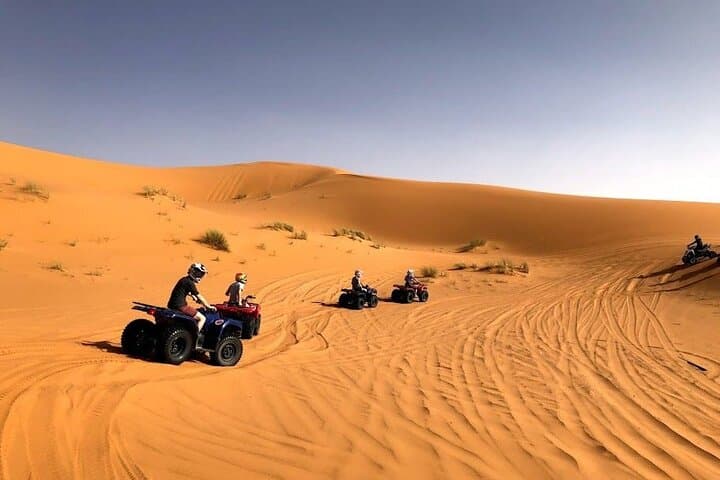
Dawn breaks over rippled orange dunes as the air cools and the minivan eases out of cedar forests—by noon you trade Mont Atlas pines for endless horizon. The road from Fez descends through oak and cedar, skirts highland pastures and the Tafilalt palm oases, and finally spills into the sand sea around Merzouga where the Erg Chebbi dunes lean into the sky.
Verified experiences and guided adventures in the surrounding area.
Operated by Omegatour · Merzouga, Drâa-Tafilalet
Dawn breaks over rippled orange dunes as the air cools and the minivan eases out of cedar forests—by noon you trade Mont Atlas pines for endless horizon. The road from Fez descends through oak and cedar, skirts highland pastures and the Tafilalt palm oases, and finally spills into the sand sea around Merzouga where the Erg Chebbi dunes lean into the sky.
This route follows old caravan corridors that linked Saharan trade towns; the Tafilalt Oasis was once an important stop on trans-Saharan routes. Geologically, Erg Chebbi is a living landscape: wind-driven sheets of sand that form dunes reaching roughly 100–150 meters, moving with seasonal winds and sculpting ever-changing ridgelines. Culturally, nights in a Berber camp introduce Gnawa music, simple desert cuisine like madfona and camel milk, and hospitality shaped by centuries of desert life.
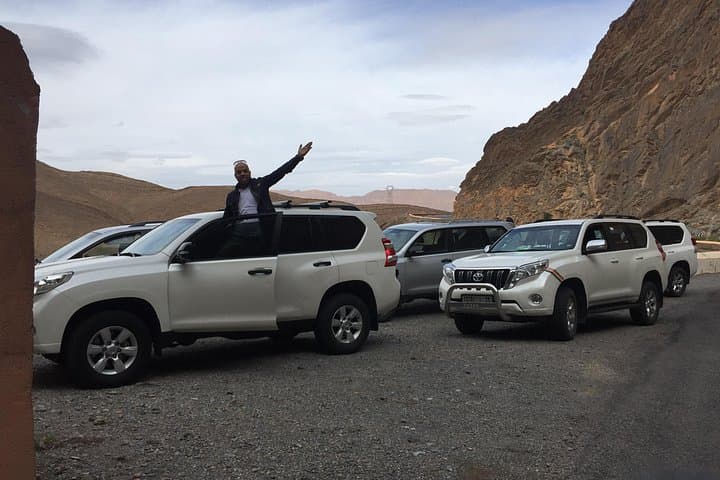
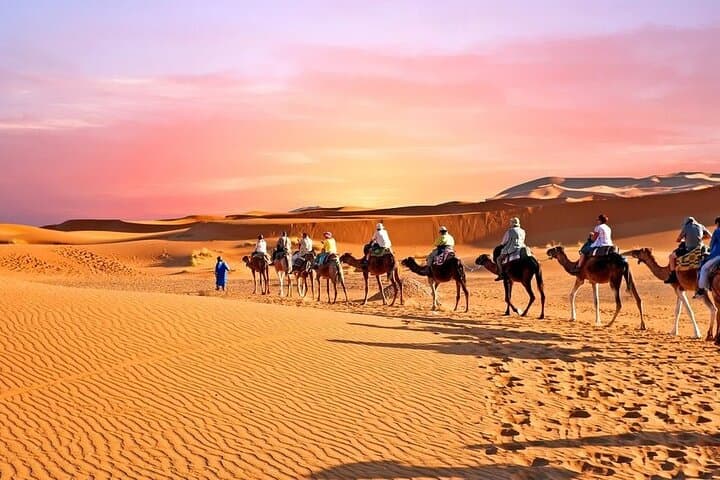
Expect long driving legs (commonly 8–10 hours from Fez to Merzouga with stops), a flexible second day for walking, village visits to Rissani or Khamlia, and a late afternoon camel trek of roughly 1–2 hours to a duneside camp. Nights are cold compared with daytime heat, and the sky is a high-definition planetarium.
Practical guidance: bring layered clothing, sun protection, and at least 2 liters of water per person for outings. Travel light for camel transfers and keep valuables in a small daypack. Bookings often include hotel pickup, bottled water, and two breakfasts and dinners, but carry cash for market purchases and tips. Time your trip for spring or fall for the most comfortable daytime temperatures and the best dune photographs.
easy.
3 days.
Suitable for most travelers; requires ability to sit on a camel, walk short dune sections, and tolerate long vehicle transfers.
Expect roughly 8–10 hours with stops through the Middle Atlas and Tafilalt region; the itinerary schedules breaks for lunch and short visits.
No special fitness is required—most activities are gentle, though camel rides and dune walking benefit from basic mobility and balance.
The tour includes 2 breakfasts and 2 dinners, hotel pickup and drop-off, and two nights accommodation (hotel + desert camp) as listed in the itinerary.
Yes—Berber camps are established for visitors with blankets and mattresses; nights can be cold so bring warm layers and follow guides safety briefings.
The Tafilalt area was historically a major stop on trans-Saharan trade routes and developed as a palm-oasis society centered on dates and caravan trade.
The Erg Chebbi ecosystem is fragile—avoid driving on vegetated interdunes, pack out trash, and minimize water waste to reduce impact.
Omegatour operates guided outdoor trips and adventures with an emphasis on safety, stewardship, and memorable experiences.
Dawn breaks over rippled orange dunes as the air cools and the minivan eases out of cedar forests—by noon you trade Mont Atlas pines for endless horizon. The road from Fez descends through oak and cedar, skirts highland pastures and the Tafilalt palm oases, and finally spills into the sand sea around Merzouga where the Erg Chebbi dunes lean into the sky.
Dawn breaks over rippled orange dunes as the air cools and the minivan eases out of cedar forests—by noon you trade Mont Atlas pines for endless horizon. The road from Fez descends through oak and cedar, skirts highland pastures and the Tafilalt palm oases, and finally spills into the sand sea around Merzouga where the Erg Chebbi dunes lean into the sky.
This route follows old caravan corridors that linked Saharan trade towns; the Tafilalt Oasis was once an important stop on trans-Saharan routes. Geologically, Erg Chebbi is a living landscape: wind-driven sheets of sand that form dunes reaching roughly 100–150 meters, moving with seasonal winds and sculpting ever-changing ridgelines. Culturally, nights in a Berber camp introduce Gnawa music, simple desert cuisine like madfona and camel milk, and hospitality shaped by centuries of desert life.
Expect long driving legs (commonly 8–10 hours from Fez to Merzouga with stops), a flexible second day for walking, village visits to Rissani or Khamlia, and a late afternoon camel trek of roughly 1–2 hours to a duneside camp. Nights are cold compared with daytime heat, and the sky is a high-definition planetarium.
Practical guidance: bring layered clothing, sun protection, and at least 2 liters of water per person for outings. Travel light for camel transfers and keep valuables in a small daypack. Bookings often include hotel pickup, bottled water, and two breakfasts and dinners, but carry cash for market purchases and tips. Time your trip for spring or fall for the most comfortable daytime temperatures and the best dune photographs.