THE ADVENTURE COLLECTIVE® · Independent discovery and booking for outdoor travel

Three days across Erg Zahar and Erg Chigaga deliver sunrise climbs, camel rides, and wild bivouac nights under an immense Saharan sky. This compact Sahara safari mixes 4x4 crossings with short treks and authentic desert camp life.
Three days across Erg Zahar and Erg Chigaga deliver sunrise climbs, camel rides, and wild bivouac nights under an immense Saharan sky. This compact Sahara safari mixes 4x4 crossings with short treks and authentic desert camp life.
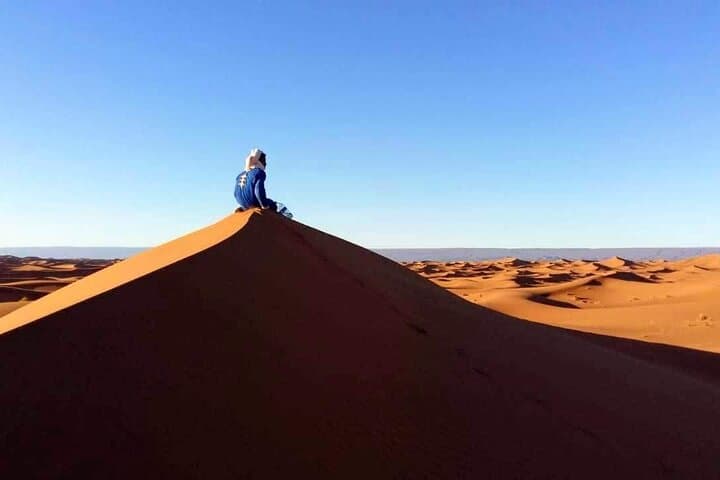
The sun slants gold across endless sand as your 4x4 eases off a gravel track and the world narrows to wind, dune and sky. By late afternoon the driver stops; you climb a steep lip of sand and watch the horizon ripple—Erg Zahar’s reddish dunes glow, then cool to indigo. That first sunset is the trip’s compass: travel by day in vehicles and on camelback, and sleep under canvas where the desert’s wide silence becomes audible.
Verified experiences and guided adventures in the surrounding area.
Operated by Erg Chigaga · M'Hamid (Mhamid El Ghizlane), Drâa-Tafilalet
The sun slants gold across endless sand as your 4x4 eases off a gravel track and the world narrows to wind, dune and sky. By late afternoon the driver stops; you climb a steep lip of sand and watch the horizon ripple—Erg Zahar’s reddish dunes glow, then cool to indigo. That first sunset is the trip’s compass: travel by day in vehicles and on camelback, and sleep under canvas where the desert’s wide silence becomes audible.
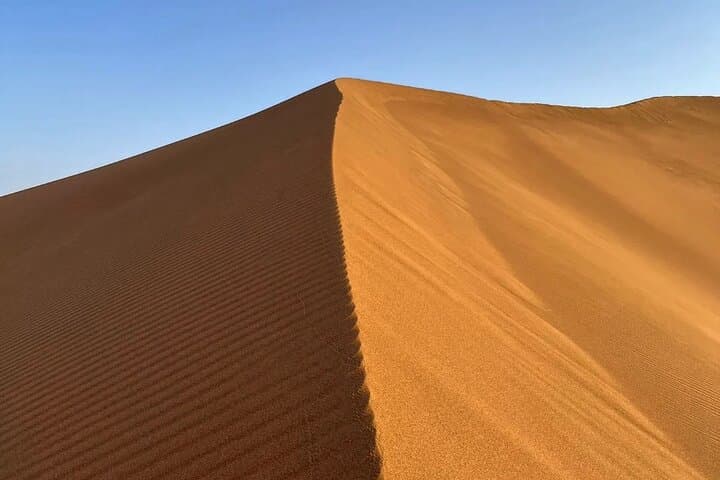
This route follows traditional caravan paths on the southern edge of the Sahara near M’Hamid. Geologically the ergs are mobile sand seas—granules moved by seasonal winds that sculpt crescent-shaped dunes and broad ridgelines. Culturally the area is tied to Saharan nomadic life: tamarisk-lined oases, seasonal grazing grounds, and small ksars that mark old trade routes.
Expect long drives across hamada (stony plateaus) and soft-sand navigation, short guided walks, a sunrise scramble, and a hosted bivouac with tea and a communal dinner. Camel rides here are steady and low-impact, and sand-surfing (bring a board or use a plastic sled) is a common, optional thrill.
Practical notes: daytime temps can scorch—start early and carry 3–4 liters of water per person, strong sun protection, and sturdy closed shoes for walking on hot sand. Nights cool dramatically—bring an insulated layer and sleeping bag rated for near-freezing if you travel in late fall to early spring. Plan logistics around M’Hamid; vehicles and local guides operate over rough terrain and schedule pickups around dawn for the best light and cooler travel.
moderate.
3 days (approx. 48–72 hours including transfers).
Suitable for travelers in average physical condition: able to walk short distances on sand and tolerate bumpy 4x4 rides.
Most departures are arranged from M'Hamid; the itinerary includes 4x4 transfers to erg zones and returns to M'Hamid on day three.
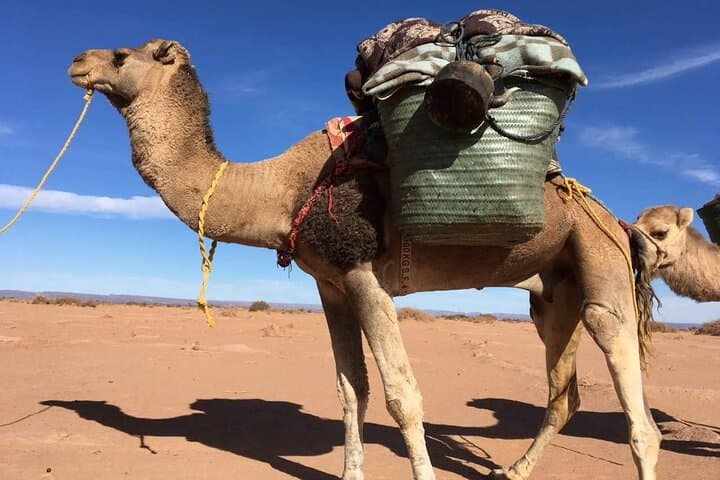
No—camel rides are offered as part of the experience but you can opt to stay with the 4x4 convoy or walk short stretches.
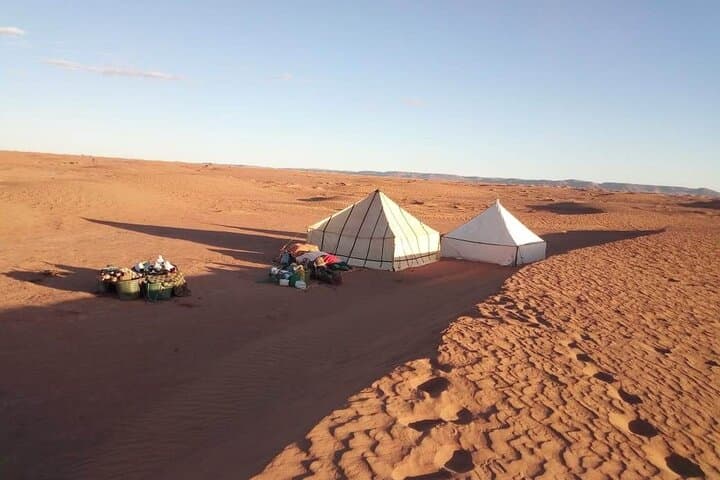
Yes—bivouac camps provide traditional canvas tents, mattresses, blankets, and shared meals; bring your own sleeping bag for warmth.
Not recommended for travelers with serious spinal or heart problems; camel saddles and 4x4 rides can jolt the back, and long drives may be uncomfortable for very young children.
The route follows caravan-era tracks once used by salt and date traders linking southern Morocco to trans-Saharan routes; small settlements reflect a mixture of Berber and Arab Saharan cultures.
Travelers are encouraged to take all waste out of the desert; local guides support low-impact camping and respect seasonal grazing and water sources.
Erg Chigaga operates guided outdoor trips and adventures with an emphasis on safety, stewardship, and memorable experiences.
The sun slants gold across endless sand as your 4x4 eases off a gravel track and the world narrows to wind, dune and sky. By late afternoon the driver stops; you climb a steep lip of sand and watch the horizon ripple—Erg Zahar’s reddish dunes glow, then cool to indigo. That first sunset is the trip’s compass: travel by day in vehicles and on camelback, and sleep under canvas where the desert’s wide silence becomes audible.
The sun slants gold across endless sand as your 4x4 eases off a gravel track and the world narrows to wind, dune and sky. By late afternoon the driver stops; you climb a steep lip of sand and watch the horizon ripple—Erg Zahar’s reddish dunes glow, then cool to indigo. That first sunset is the trip’s compass: travel by day in vehicles and on camelback, and sleep under canvas where the desert’s wide silence becomes audible.
This route follows traditional caravan paths on the southern edge of the Sahara near M’Hamid. Geologically the ergs are mobile sand seas—granules moved by seasonal winds that sculpt crescent-shaped dunes and broad ridgelines. Culturally the area is tied to Saharan nomadic life: tamarisk-lined oases, seasonal grazing grounds, and small ksars that mark old trade routes.
Expect long drives across hamada (stony plateaus) and soft-sand navigation, short guided walks, a sunrise scramble, and a hosted bivouac with tea and a communal dinner. Camel rides here are steady and low-impact, and sand-surfing (bring a board or use a plastic sled) is a common, optional thrill.
Practical notes: daytime temps can scorch—start early and carry 3–4 liters of water per person, strong sun protection, and sturdy closed shoes for walking on hot sand. Nights cool dramatically—bring an insulated layer and sleeping bag rated for near-freezing if you travel in late fall to early spring. Plan logistics around M’Hamid; vehicles and local guides operate over rough terrain and schedule pickups around dawn for the best light and cooler travel.