THE ADVENTURE COLLECTIVE® · Independent discovery and booking for outdoor travel

Three days of red kasbahs, palm-lined valleys and the rolling sand of Erg Chegaga. This private Agadir departure combines cultural stops, a camel ride and an overnight in a nomad camp for a compact Sahara experience.
Three days of red kasbahs, palm-lined valleys and the rolling sand of Erg Chegaga. This private Agadir departure combines cultural stops, a camel ride and an overnight in a nomad camp for a compact Sahara experience.
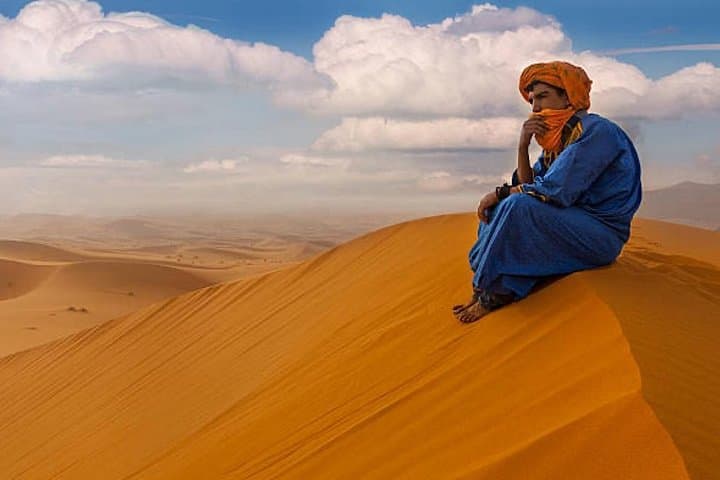
You step from an air-conditioned vehicle into a silence that seems to hold its breath — the Sahara opening like a slow exhale. Sand slopes rise in long ribs and the horizon leans flat, a raw palette of ochre and iron. Over three days you move from red-walled towns and palm-lined oases to the waves of Erg Chegaga, tracking the old caravan routes that once stitched Morocco’s inland to the coast.
Verified experiences and guided adventures in the surrounding area.
Operated by Agadir Journey · Zagora, Drâa-Tafilalet
You step from an air-conditioned vehicle into a silence that seems to hold its breath — the Sahara opening like a slow exhale. Sand slopes rise in long ribs and the horizon leans flat, a raw palette of ochre and iron. Over three days you move from red-walled towns and palm-lined oases to the waves of Erg Chegaga, tracking the old caravan routes that once stitched Morocco’s inland to the coast.
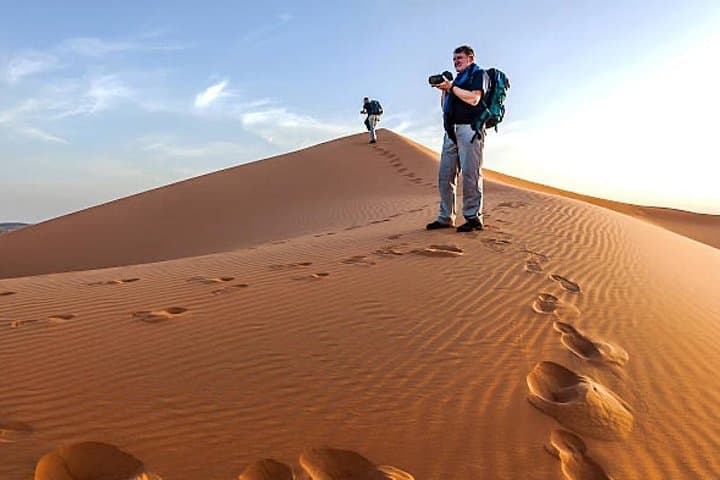
The route threads Taroudant’s ramparts and saffron-scented Taliouine, crosses the fortified kasbah of Aït Benhaddou and follows the Draa Valley’s palm groves toward M’Hamid and the Chegaga dunes. Geologically, you cross from eroded sandstone and fossil-rich plateaus to wind-sculpted sand seas — dunes here can rise more than 100 meters and shift with every strong sirocco.
Culturally the trip is as much about desert life as landscape: nomad camps, camel handlers, and the centuries-old Quran library at Tamegroute offer windows into local tradition. At dusk, the dunes take on a deep, tactile quality; the wind seems to roll the light like an old film.
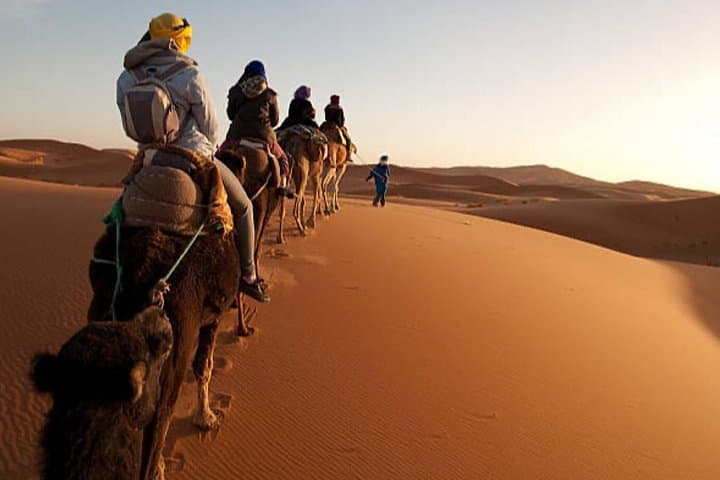
Practical side: expect long driving stretches (several hours between towns), a one-hour camel ride and an overnight in a simple nomad tent under clear, very cold nights. Pack layered clothing, sun protection, sturdy shoes for walking on sand, and a small daypack. Bring cash for tips and small purchases — ATMs are scarce once you leave the main towns. Travel in a private, air-conditioned vehicle minimizes logistics, leaving you to watch the desert change color from saddle or camp.
moderate.
3 days.
Suitable for moderately fit travelers comfortable with long vehicle transfers, short dune hikes and a camel ride.
The camel ride is gentle and lasts about an hour; no special experience is needed, though mounted movement can be bumpy.
You’ll sleep in traditional tent accommodations; beds or mattresses are provided but nights are cold so bring warm layers or a sleeping bag if desired.
Basic facilities are available at the larger stops and at some camps; expect simple, low-water showers or bucket showers at deeper desert camps.
The tour is described as suitable for all fitness levels, but long drives, sand walking and camel mounting may be challenging for some; consult the operator for mobility accommodations.
The route follows ancient caravan corridors; kasbahs like Aït Benhaddou were key fortifications on trans-Saharan trade routes and saffron-producing towns like Taliouine remain culturally significant.
Dune ecosystems are fragile—stick to tracks and established campsites, avoid disturbing vegetation, and minimize single-use plastics to reduce local impact.
Agadir Journey operates guided outdoor trips and adventures with an emphasis on safety, stewardship, and memorable experiences.
You step from an air-conditioned vehicle into a silence that seems to hold its breath — the Sahara opening like a slow exhale. Sand slopes rise in long ribs and the horizon leans flat, a raw palette of ochre and iron. Over three days you move from red-walled towns and palm-lined oases to the waves of Erg Chegaga, tracking the old caravan routes that once stitched Morocco’s inland to the coast.
You step from an air-conditioned vehicle into a silence that seems to hold its breath — the Sahara opening like a slow exhale. Sand slopes rise in long ribs and the horizon leans flat, a raw palette of ochre and iron. Over three days you move from red-walled towns and palm-lined oases to the waves of Erg Chegaga, tracking the old caravan routes that once stitched Morocco’s inland to the coast.
The route threads Taroudant’s ramparts and saffron-scented Taliouine, crosses the fortified kasbah of Aït Benhaddou and follows the Draa Valley’s palm groves toward M’Hamid and the Chegaga dunes. Geologically, you cross from eroded sandstone and fossil-rich plateaus to wind-sculpted sand seas — dunes here can rise more than 100 meters and shift with every strong sirocco.
Culturally the trip is as much about desert life as landscape: nomad camps, camel handlers, and the centuries-old Quran library at Tamegroute offer windows into local tradition. At dusk, the dunes take on a deep, tactile quality; the wind seems to roll the light like an old film.
Practical side: expect long driving stretches (several hours between towns), a one-hour camel ride and an overnight in a simple nomad tent under clear, very cold nights. Pack layered clothing, sun protection, sturdy shoes for walking on sand, and a small daypack. Bring cash for tips and small purchases — ATMs are scarce once you leave the main towns. Travel in a private, air-conditioned vehicle minimizes logistics, leaving you to watch the desert change color from saddle or camp.