THE ADVENTURE COLLECTIVE® · Independent discovery and booking for outdoor travel

Three days from Marrakech to the Sahara weave High Atlas passes, ancient kasbahs, palm valleys and the sea of Erg Chebbi dunes. Expect long drives, short hikes in dramatic gorges, and an unforgettable camel trek under an expansive desert sky.
Three days from Marrakech to the Sahara weave High Atlas passes, ancient kasbahs, palm valleys and the sea of Erg Chebbi dunes. Expect long drives, short hikes in dramatic gorges, and an unforgettable camel trek under an expansive desert sky.
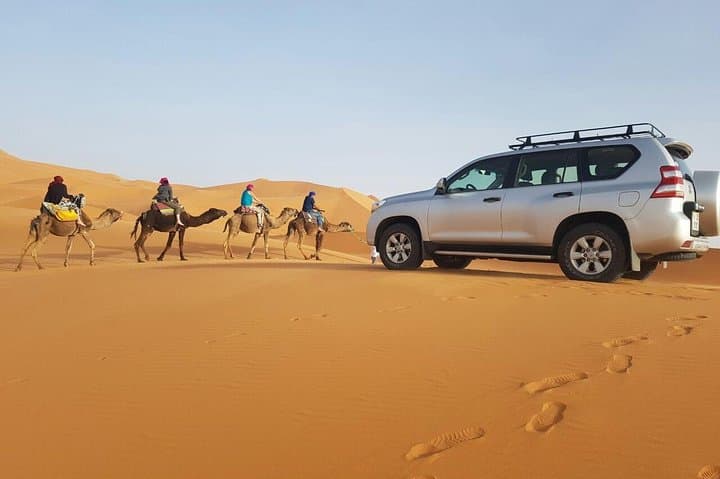
At first light the dunes outside Merzouga glow like stacked embers, wind drawing sharp crests that seem to urge you forward. You leave Marrakech behind, climbing the High Atlas where switchbacks reveal ochre kasbahs clinging to ridgelines, then descend into palm oases and the sculpted canyons of the Dades and Todra valleys. By evening the horizon opens to Erg Chebbi’s rolling sand, camels pacing toward camp as stars arrive like a slow tide.
Verified experiences and guided adventures in the surrounding area.
Operated by Mohamed Salem ARIBI · Merzouga, Drâa-Tafilalet
At first light the dunes outside Merzouga glow like stacked embers, wind drawing sharp crests that seem to urge you forward. You leave Marrakech behind, climbing the High Atlas where switchbacks reveal ochre kasbahs clinging to ridgelines, then descend into palm oases and the sculpted canyons of the Dades and Todra valleys. By evening the horizon opens to Erg Chebbi’s rolling sand, camels pacing toward camp as stars arrive like a slow tide.
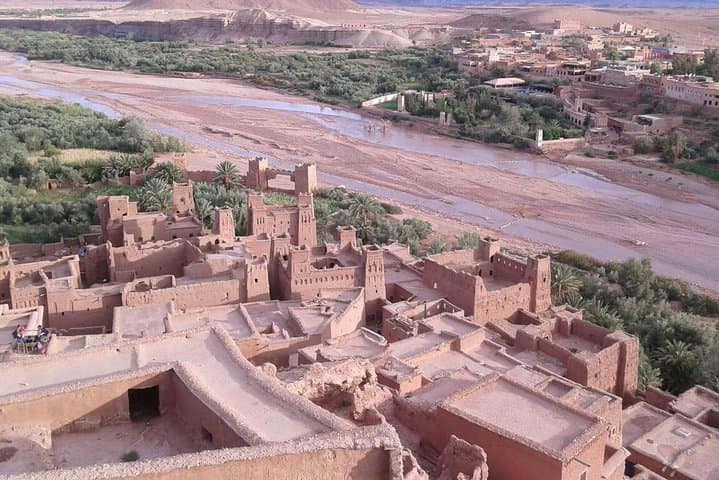
This route traces living history: Aït Ben Haddou’s mud-brick ksar stands as a remaining waypoint on old caravan tracks, while the Draa valley’s palm-groves mark long-standing irrigation and trade. Geologically the trip shifts from folded High Atlas sedimentary rock to the wind-sorted sands of the Sahara; gorges and layered cliffs record tectonic uplift and ongoing erosion. Local Berber culture appears in meals, music, and small fortified homes—hospitality is direct and practical, often shared around campfires.
Expect long driving stretches (several hours per day), short canyon walks, and a 1–2 hour camel trek at Erg Chebbi at sunrise or sunset. Nights in the desert camp are basic but atmospheric—bring warm layers for cold nights and sun protection for hot days. Hydration and sturdy footwear for mixed terrain are essential. Time your visit for spring or autumn to avoid the summer heat; ask before booking about luggage allowances, private pickup points, and how the operator practices Leave No Trace in dune areas.
moderate.
3 days.
Good baseline fitness for multi-day travel with short walks and a camel trek; able to manage 1–3 hour periods on your feet and vehicle transfers.
Typical camel treks are 1–2 hours, timed for sunrise or sunset to avoid the heat and maximize light for photos.
Camps range from simple berber-style tents with shared facilities to higher-comfort private tents; this itinerary uses a basic desert camp with dinner and bedding included.
Yes—expect several hours of driving each day between Marrakech, Atlas passes, oases, gorges and Merzouga; stops include short walks and viewpoints.
The tour is broadly accessible but includes long road transfers and a camel ride; check mobility needs and cardiac health limits before booking.
The route follows historic caravan corridors and features kasbahs that once defended and serviced trade across the High Atlas and into the Sahara.
Dune systems are fragile—travelers should avoid off-track driving, use designated camps, and minimize light and noise to protect nocturnal wildlife.
Mohamed Salem ARIBI operates guided outdoor trips and adventures with an emphasis on safety, stewardship, and memorable experiences.
At first light the dunes outside Merzouga glow like stacked embers, wind drawing sharp crests that seem to urge you forward. You leave Marrakech behind, climbing the High Atlas where switchbacks reveal ochre kasbahs clinging to ridgelines, then descend into palm oases and the sculpted canyons of the Dades and Todra valleys. By evening the horizon opens to Erg Chebbi’s rolling sand, camels pacing toward camp as stars arrive like a slow tide.
At first light the dunes outside Merzouga glow like stacked embers, wind drawing sharp crests that seem to urge you forward. You leave Marrakech behind, climbing the High Atlas where switchbacks reveal ochre kasbahs clinging to ridgelines, then descend into palm oases and the sculpted canyons of the Dades and Todra valleys. By evening the horizon opens to Erg Chebbi’s rolling sand, camels pacing toward camp as stars arrive like a slow tide.
This route traces living history: Aït Ben Haddou’s mud-brick ksar stands as a remaining waypoint on old caravan tracks, while the Draa valley’s palm-groves mark long-standing irrigation and trade. Geologically the trip shifts from folded High Atlas sedimentary rock to the wind-sorted sands of the Sahara; gorges and layered cliffs record tectonic uplift and ongoing erosion. Local Berber culture appears in meals, music, and small fortified homes—hospitality is direct and practical, often shared around campfires.
Expect long driving stretches (several hours per day), short canyon walks, and a 1–2 hour camel trek at Erg Chebbi at sunrise or sunset. Nights in the desert camp are basic but atmospheric—bring warm layers for cold nights and sun protection for hot days. Hydration and sturdy footwear for mixed terrain are essential. Time your visit for spring or autumn to avoid the summer heat; ask before booking about luggage allowances, private pickup points, and how the operator practices Leave No Trace in dune areas.