THE ADVENTURE COLLECTIVE® · Independent discovery and booking for outdoor travel

Ride camels over the rippling dunes of Erg Chebbi, sleep in a Berber tent under a star-heavy sky, and travel Marrakech to Merzouga through dramatic gorges and Kasbahs on this accessible three-day loop. Practical planning notes help you prepare for long drives, sand terrain and desert temperatures.
Ride camels over the rippling dunes of Erg Chebbi, sleep in a Berber tent under a star-heavy sky, and travel Marrakech to Merzouga through dramatic gorges and Kasbahs on this accessible three-day loop. Practical planning notes help you prepare for long drives, sand terrain and desert temperatures.
You step out of the van as the heat folds around you and the dunes of Erg Chebbi rise like a moving coastline. Sand shifts underfoot with a soft sigh; camels bend and lift, patient as local guides work the herd. Over three days you cross high passes, stop at kasbah towns and end beneath a wide, cold sky full of stars.
Verified experiences and guided adventures in the surrounding area.
Operated by Merzouga Desert · Merzouga, Drâa-Tafilalet
You step out of the van as the heat folds around you and the dunes of Erg Chebbi rise like a moving coastline. Sand shifts underfoot with a soft sigh; camels bend and lift, patient as local guides work the herd. Over three days you cross high passes, stop at kasbah towns and end beneath a wide, cold sky full of stars.
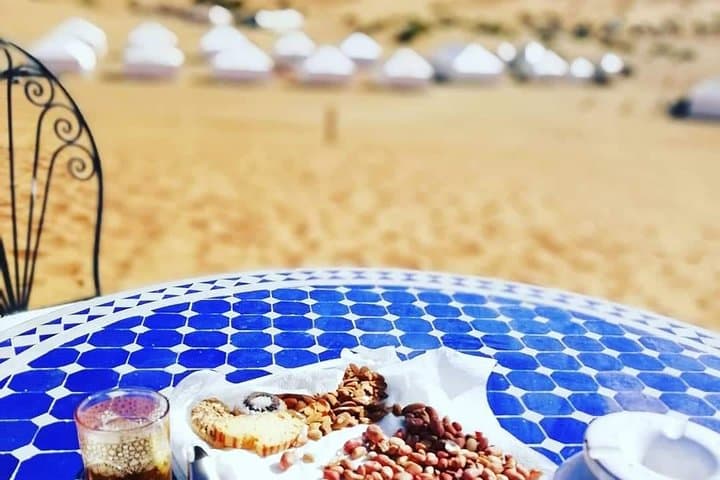
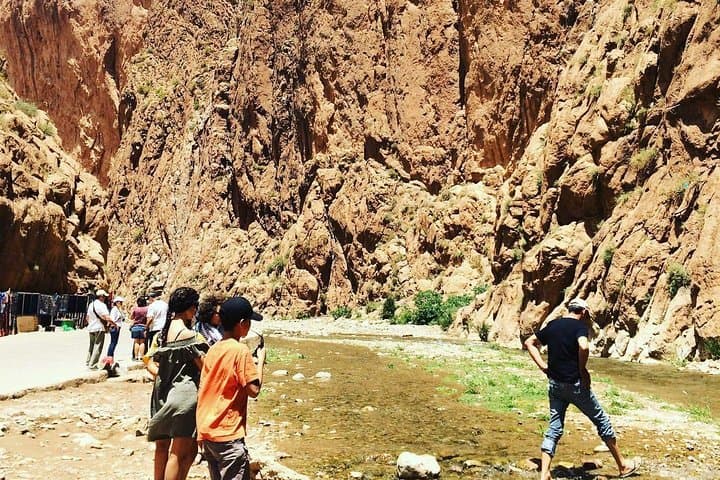
The route threads historic Aït Benhaddou, a ksar on old caravan routes, and the fortified towns of Ouarzazate—both products of local mud-brick architecture shaped by millennia of riverine and wind erosion. The Dadès and Todgha gorges show the region’s limestone bones: sheer walls gouged by seasonal rivers, pockets of green clinging to fractures. Cultural life here is Berber and Amazigh; guesthouses and camps offer music, mint tea, and meals cooked on open fire.
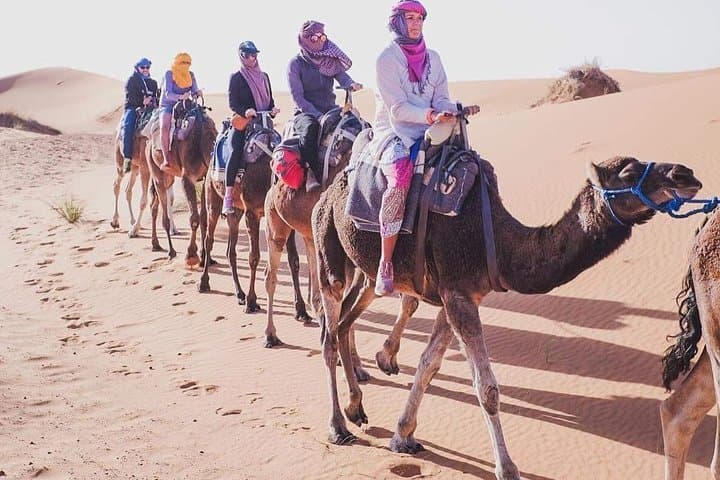
Expect long road transfers (Marrakech to Merzouga ≈ 8–10 hours total round-trip) broken by hikes in gorges and short village walks. Camel rides across Erg Chebbi last about 1–2 hours for sunset and sunrise; saddle transfers are low but require basic balance. Accommodations include one night in an auberge and one in a desert camp (standard or luxury) with communal meals and tented sleeping.
Practical tips: carry plenty of water, sun protection and a warm layer for night; terrain is sand, gravel and paved roads; mornings and nights are best for dune travel. If you have mobility concerns, ask about camel alternatives and luggage transfer. With simple gear and an early start, this three-day loop is an accessible way to feel the desert’s scale and quiet.
easy.
3 days (≈72 hours).
Suitable for travelers in normal physical condition; must be able to mount/dismount camels and walk on uneven sand.
Sunset and sunrise camel treks typically last 1–2 hours each; guides lead at a steady walking pace suitable for most riders.
Most camps provide bedding; a lightweight sleeping bag liner is recommended for hygiene and extra warmth in winter months.
Expect long transfers: the round-trip from Marrakech to Merzouga involves roughly 8–10 hours of driving broken over the itinerary with stops at Aït Benhaddou, Ouarzazate and the gorges.
The typical package includes two nights’ accommodation (one auberge, one desert camp), breakfast and dinners as outlined—confirm specifics when booking for dietary needs.
This corridor linked sub-Saharan caravan routes with Atlantic and Mediterranean trade; kasbahs and caravanserai grew where water and trade intersected.
The desert ecosystem is fragile—stick to marked tracks, limit single-use plastics, and use local guides whose livelihoods encourage responsible land use.
Merzouga Desert operates guided outdoor trips and adventures with an emphasis on safety, stewardship, and memorable experiences.
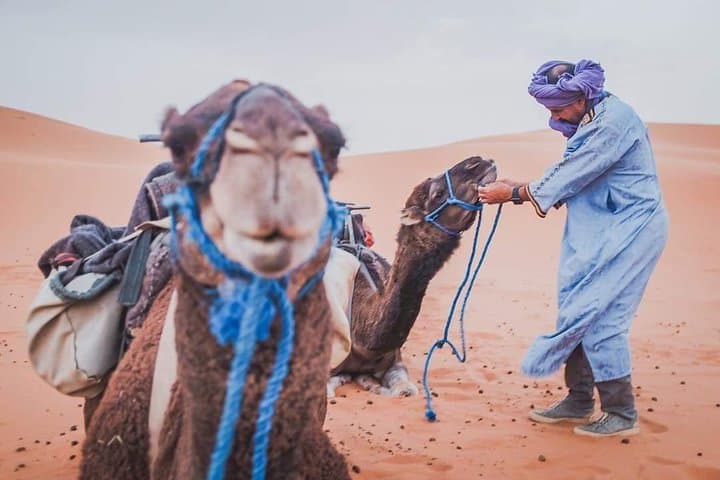
You step out of the van as the heat folds around you and the dunes of Erg Chebbi rise like a moving coastline. Sand shifts underfoot with a soft sigh; camels bend and lift, patient as local guides work the herd. Over three days you cross high passes, stop at kasbah towns and end beneath a wide, cold sky full of stars.
You step out of the van as the heat folds around you and the dunes of Erg Chebbi rise like a moving coastline. Sand shifts underfoot with a soft sigh; camels bend and lift, patient as local guides work the herd. Over three days you cross high passes, stop at kasbah towns and end beneath a wide, cold sky full of stars.
The route threads historic Aït Benhaddou, a ksar on old caravan routes, and the fortified towns of Ouarzazate—both products of local mud-brick architecture shaped by millennia of riverine and wind erosion. The Dadès and Todgha gorges show the region’s limestone bones: sheer walls gouged by seasonal rivers, pockets of green clinging to fractures. Cultural life here is Berber and Amazigh; guesthouses and camps offer music, mint tea, and meals cooked on open fire.
Expect long road transfers (Marrakech to Merzouga ≈ 8–10 hours total round-trip) broken by hikes in gorges and short village walks. Camel rides across Erg Chebbi last about 1–2 hours for sunset and sunrise; saddle transfers are low but require basic balance. Accommodations include one night in an auberge and one in a desert camp (standard or luxury) with communal meals and tented sleeping.
Practical tips: carry plenty of water, sun protection and a warm layer for night; terrain is sand, gravel and paved roads; mornings and nights are best for dune travel. If you have mobility concerns, ask about camel alternatives and luggage transfer. With simple gear and an early start, this three-day loop is an accessible way to feel the desert’s scale and quiet.