THE ADVENTURE COLLECTIVE® · Independent discovery and booking for outdoor travel

Drive over the High Atlas, walk narrow gorges, then ride camels into the wind-sculpted Erg Chebbi dunes for an overnight under bright desert stars. This three-day loop from Marrakech mixes cultural stops with distinct desert geology and a classic bivouac night.
Drive over the High Atlas, walk narrow gorges, then ride camels into the wind-sculpted Erg Chebbi dunes for an overnight under bright desert stars. This three-day loop from Marrakech mixes cultural stops with distinct desert geology and a classic bivouac night.
The sun lowers like an oven door over the High Atlas as the road from Marrakech winds up and over the Tizi n’Tichka pass, revealing village terraces and stone kasbahs that watch the valley below.
Verified experiences and guided adventures in the surrounding area.
Operated by Desert Stars tours · Merzouga, Errachidia Province
The sun lowers like an oven door over the High Atlas as the road from Marrakech winds up and over the Tizi n’Tichka pass, revealing village terraces and stone kasbahs that watch the valley below.
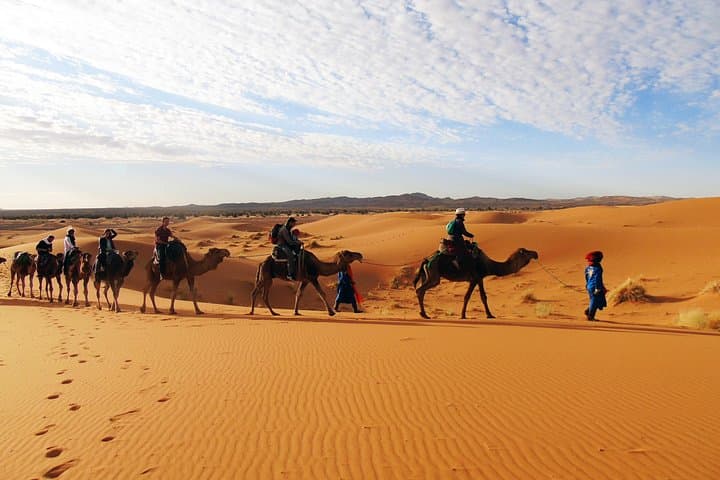
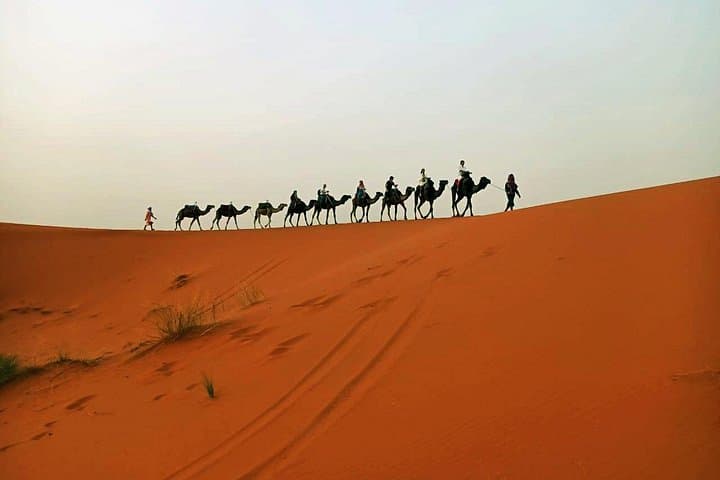
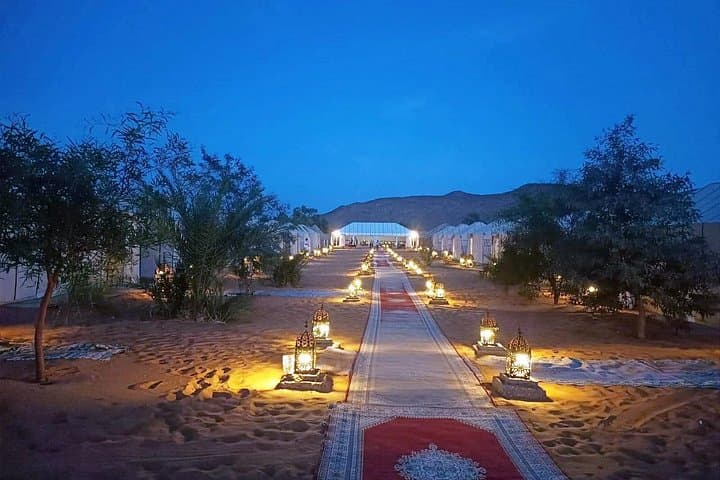
By the second day the asphalt gives way to rocky plateaus and then the curves of Erg Chebbi: dunes that shift and breathe, daring you to climb. A slow camel file pushes into the orange slope at sunset; the animals sway in time with the dunes as evening cold moves in and the sky sharpens into a map of stars. Overnight, a Berber-style bivouac offers tea, a shared meal, and the desert’s hush.
This route threads centuries of history — caravan tracks, film locations at Aït Benhaddou, and oases carved where groundwater meets rock. Geologically, the Atlas lifts sediments to form narrow gorges and then spills into the sandy Erg Chebbi, a wind-sculpted sea of grain.
Expect long drives (Marrakech–Merzouga is ~9–10 hours of scenic travel spread over two days), short guided walks, a 1–1.5 hour camel ride, and a night in a desert camp. Nights are cold even after hot days; bring layers and an eye for light on sand ridges at dawn or dusk. Respect local customs—ask before photographing people—and keep water use conservative in this arid environment.
Practical planning: schedule arrival in Marrakech the day before departure, pack sun protection and power banks, and allow time for altitude and temperature shifts over the High Atlas.
moderate.
3 days (approx. 9–10 hours driving total).
Suitable for travelers in regular health—requires ability to mount a camel, walk on soft sand short distances, and tolerate long vehicle transfers.
No prior experience required; guides brief riders and lead the caravan—expect a slow, swaying walk and assistance mounting/dismounting.
Overnight is in a Berber-style bivouac tent, typically with sleeping mats or simple beds; facilities are basic and communal.
Yes—transfers cross the High Atlas and desert approach; expect several multi-hour driving segments spread over the three days.
The operator notes it’s not recommended for pregnant travelers or those with serious back or heart conditions; children can join but consider the long drives and camel ride.
This corridor was part of trans-Saharan routes; Aït Benhaddou served as a fortified caravan stop and later a film location for global cinema.
Erg Chebbi’s dunes are sensitive to off-track vehicles and overuse; conserve water, avoid littering, and follow local guidance to protect fragile desert habitats.
Desert Stars tours operates guided outdoor trips and adventures with an emphasis on safety, stewardship, and memorable experiences.
The sun lowers like an oven door over the High Atlas as the road from Marrakech winds up and over the Tizi n’Tichka pass, revealing village terraces and stone kasbahs that watch the valley below.
The sun lowers like an oven door over the High Atlas as the road from Marrakech winds up and over the Tizi n’Tichka pass, revealing village terraces and stone kasbahs that watch the valley below.
By the second day the asphalt gives way to rocky plateaus and then the curves of Erg Chebbi: dunes that shift and breathe, daring you to climb. A slow camel file pushes into the orange slope at sunset; the animals sway in time with the dunes as evening cold moves in and the sky sharpens into a map of stars. Overnight, a Berber-style bivouac offers tea, a shared meal, and the desert’s hush.
This route threads centuries of history — caravan tracks, film locations at Aït Benhaddou, and oases carved where groundwater meets rock. Geologically, the Atlas lifts sediments to form narrow gorges and then spills into the sandy Erg Chebbi, a wind-sculpted sea of grain.
Expect long drives (Marrakech–Merzouga is ~9–10 hours of scenic travel spread over two days), short guided walks, a 1–1.5 hour camel ride, and a night in a desert camp. Nights are cold even after hot days; bring layers and an eye for light on sand ridges at dawn or dusk. Respect local customs—ask before photographing people—and keep water use conservative in this arid environment.
Practical planning: schedule arrival in Marrakech the day before departure, pack sun protection and power banks, and allow time for altitude and temperature shifts over the High Atlas.