THE ADVENTURE COLLECTIVE® · Independent discovery and booking for outdoor travel

Experience three days of Atlas passes, fortified kasbahs and the towering dunes of Erg Chebbi. This route blends cinematic history, dramatic geology and a desert overnight into a compact, accessible Sahara adventure.
Experience three days of Atlas passes, fortified kasbahs and the towering dunes of Erg Chebbi. This route blends cinematic history, dramatic geology and a desert overnight into a compact, accessible Sahara adventure.
You push out of Marrakech before dawn, the city’s ochre walls still cool, and the road climbs into the High Atlas where switchbacks open onto a wide, wind-sculpted landscape. The air tastes of dust and sage; Berber villages perch like folded maps above river terraces as the van threads Tizi n’Tichka and drops toward Aït Benhaddou.
Verified experiences and guided adventures in the surrounding area.
Operated by The Alternative Morocco · Marrakech, Marrakech-Safi
You push out of Marrakech before dawn, the city’s ochre walls still cool, and the road climbs into the High Atlas where switchbacks open onto a wide, wind-sculpted landscape. The air tastes of dust and sage; Berber villages perch like folded maps above river terraces as the van threads Tizi n’Tichka and drops toward Aït Benhaddou.
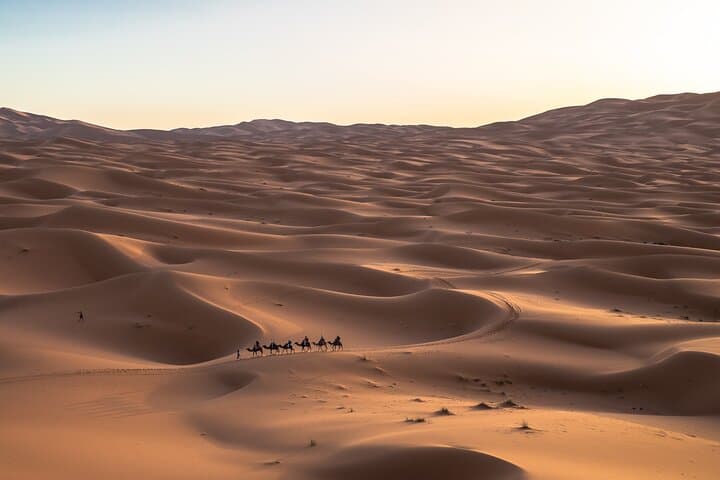
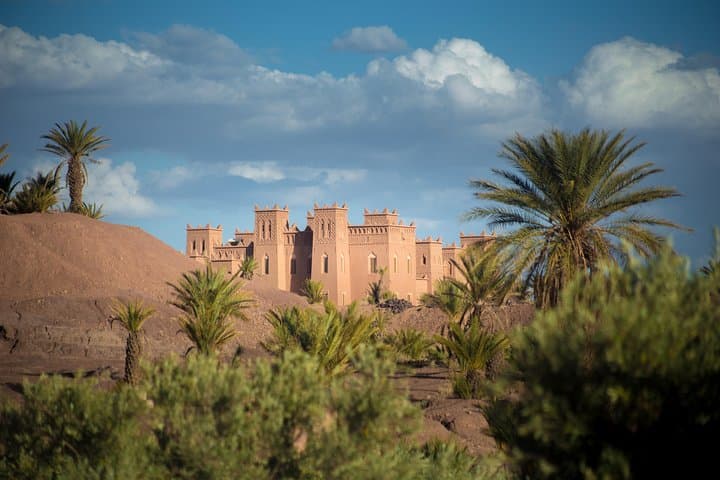
Aït Benhaddou’s earthen kasbahs explain centuries of trade—mud-brick houses stacked for defense on a caravan route that once linked sub‑Saharan caravans to Marrakech. Geology takes over as you pass red canyons: the Dades’ layered cliffs and the vertical walls of Todra gorge carved from limestone and sandstone uplifted by the Atlas. By late afternoon the dunes of Erg Chebbi appear—the sand’s grain size and wind patterns create steep slip faces and long, rippled ridgelines inviting ascent.
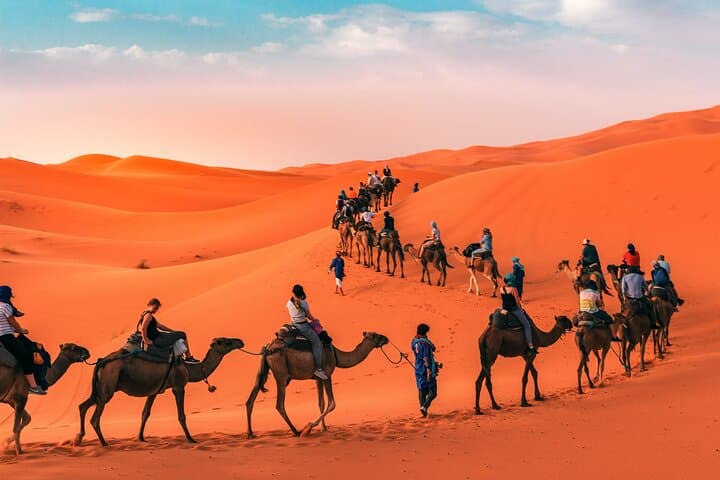
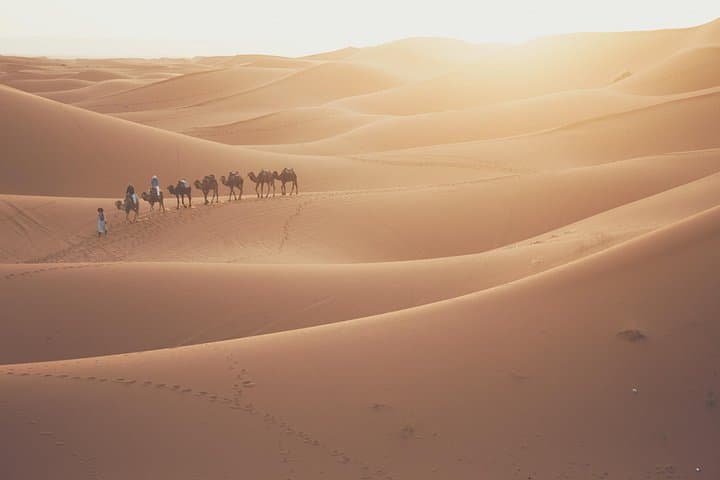
Culture moves at an easy, hospitable tempo: nomad tents, Berber drums at night, tagines shared under stars. Expect a guided camel ride to a dune crest for sunset, a night in a desert camp in traditional tents, and an early-morning climb for the sunrise over a horizon that seems to tilt with color.
Practical guidance: plan for long stretches in the vehicle—carry at least 2–3 liters of water per day, strong sun protection, and sturdy shoes for dune scrambling. Nights can drop sharply, so bring insulating layers. Photography is best at golden hour; battery packs and sand protection for gear are essential. Respect private homes and ask before photographing people—tipping local guides and camp staff is customary.
easy.
3 days.
Suitable for most fitness levels; expect light walking, short dune scrambles, and prolonged vehicle time—basic mobility required.
Yes—this shared tour is designed for a wide range of ages and fitness levels; however, participants should be comfortable with long vehicle transfers and camel rides.
Bring warm layers, sleepwear, toiletries, any necessary medications, and a small daypack; tents provide basic bedding but temperatures can get cold at night.
Camel treks are short and led by experienced handlers; you sit comfortably in a saddle but should be able to mount and dismount with minimal assistance.
Carry Moroccan dirham for small purchases and tips; tipping guides, drivers and camp staff is customary—small amounts per service are appreciated.
The route follows ancient caravan arteries; Aït Benhaddou is a UNESCO World Heritage ksar that once controlled trans‑Saharan trade and still demonstrates classic southern Moroccan architecture.
Dune environments are fragile—stay on established camel paths, pack out waste, and minimize water use; choose camps that follow local stewardship and avoid disturbing native plants.
The Alternative Morocco operates guided outdoor trips and adventures with an emphasis on safety, stewardship, and memorable experiences.
You push out of Marrakech before dawn, the city’s ochre walls still cool, and the road climbs into the High Atlas where switchbacks open onto a wide, wind-sculpted landscape. The air tastes of dust and sage; Berber villages perch like folded maps above river terraces as the van threads Tizi n’Tichka and drops toward Aït Benhaddou.
You push out of Marrakech before dawn, the city’s ochre walls still cool, and the road climbs into the High Atlas where switchbacks open onto a wide, wind-sculpted landscape. The air tastes of dust and sage; Berber villages perch like folded maps above river terraces as the van threads Tizi n’Tichka and drops toward Aït Benhaddou.
Aït Benhaddou’s earthen kasbahs explain centuries of trade—mud-brick houses stacked for defense on a caravan route that once linked sub‑Saharan caravans to Marrakech. Geology takes over as you pass red canyons: the Dades’ layered cliffs and the vertical walls of Todra gorge carved from limestone and sandstone uplifted by the Atlas. By late afternoon the dunes of Erg Chebbi appear—the sand’s grain size and wind patterns create steep slip faces and long, rippled ridgelines inviting ascent.
Culture moves at an easy, hospitable tempo: nomad tents, Berber drums at night, tagines shared under stars. Expect a guided camel ride to a dune crest for sunset, a night in a desert camp in traditional tents, and an early-morning climb for the sunrise over a horizon that seems to tilt with color.
Practical guidance: plan for long stretches in the vehicle—carry at least 2–3 liters of water per day, strong sun protection, and sturdy shoes for dune scrambling. Nights can drop sharply, so bring insulating layers. Photography is best at golden hour; battery packs and sand protection for gear are essential. Respect private homes and ask before photographing people—tipping local guides and camp staff is customary.