THE ADVENTURE COLLECTIVE® · Independent discovery and booking for outdoor travel

Cross the High Atlas, stand beneath Todra Gorge’s towering limestone walls and sleep beneath the stars on the Erg Chebbi dunes. This three‑day loop from Marrakech pairs landmark history with hands‑on desert travel.
Cross the High Atlas, stand beneath Todra Gorge’s towering limestone walls and sleep beneath the stars on the Erg Chebbi dunes. This three‑day loop from Marrakech pairs landmark history with hands‑on desert travel.
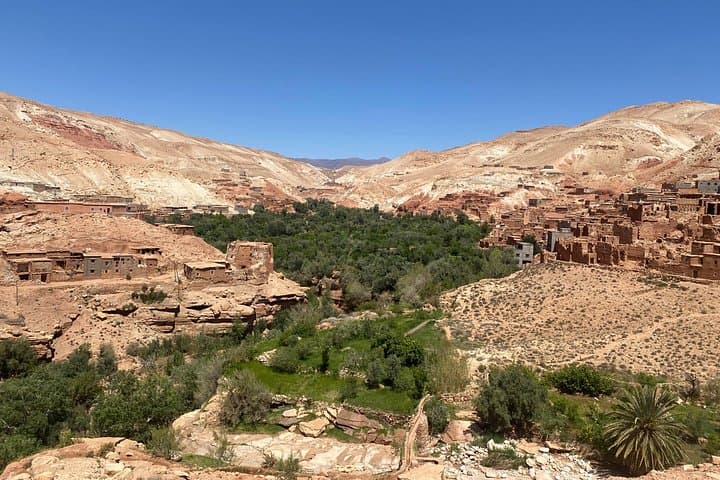
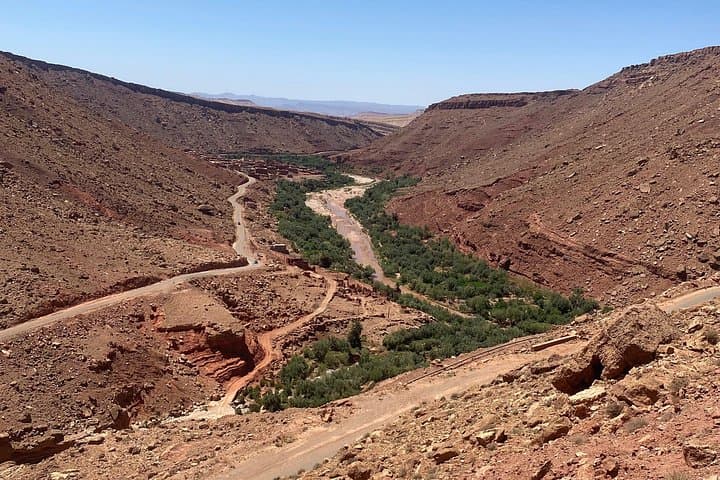
The road out of Marrakech climbs the High Atlas and opens into changing skies: a ribbon of asphalt, terraces of ochre villages, and at the Tizi n'Tichka pass an alpine wind that cools the skin before the desert heat pushes back in.
Verified experiences and guided adventures in the surrounding area.
Operated by Trips With Guides (Tour Guide) · Merzouga, Drâa-Tafilalet
The road out of Marrakech climbs the High Atlas and opens into changing skies: a ribbon of asphalt, terraces of ochre villages, and at the Tizi n'Tichka pass an alpine wind that cools the skin before the desert heat pushes back in.
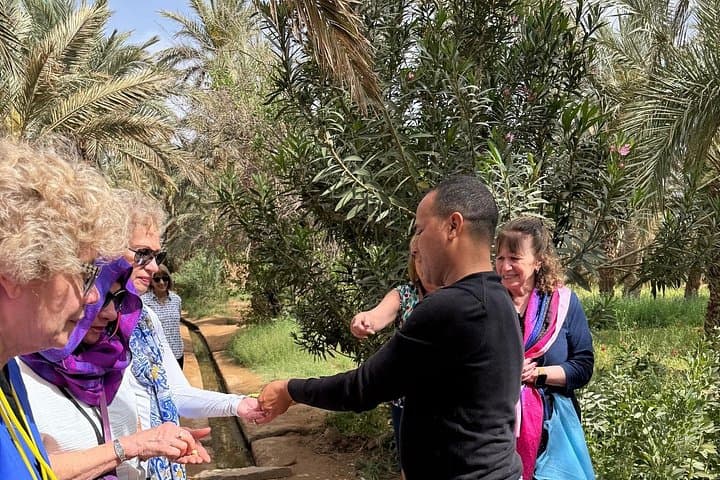
Across three days the tour threads geology and history—carving through the mountains where peaks near 4,167 m give way to river-cut limestone in Todra Gorge, then to the orange seas of Erg Chebbi. Ait Ben Haddou appears as compact earthen fortifications, a reminder of old caravan routes that once linked sub‑Saharan trade to Moroccan cities. Locally guided camp nights introduce Berber culture: shared tagine, Gnawa rhythms, and the long, resonant conversations of blue-robed guides.
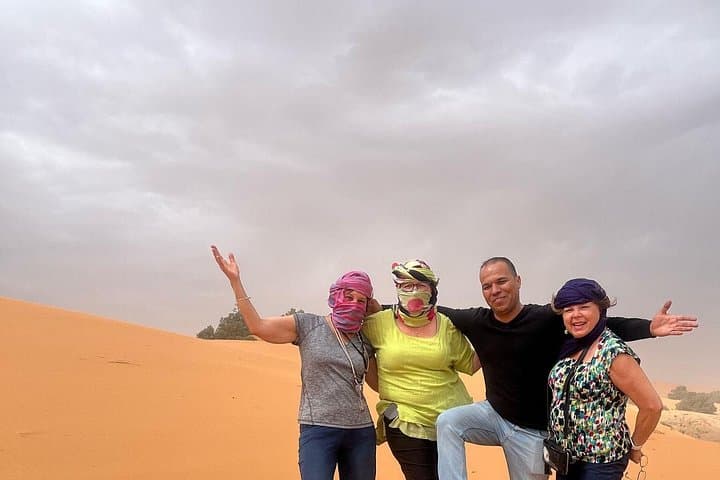
Expect hands-on desert travel: long driving legs (Marrakech–Merzouga roughly 9–10 hours by road), a guided walk in Todra’s 300–400 m canyon walls, and a late‑afternoon camel ride across dunes that reach 100–150 m—where the sand shifts underfoot and the skyline seems to move with you.
Practical notes: pack layered clothing for 2260 m mountain passes and cold desert nights, bring 2–3 liters of water per day, and plan for basic but comfortable camp accommodations. Photography is rewarding at sunrise and sunset; mornings are best for dune walks before daytime heat. Respect local customs—cover shoulders and avoid loud behavior at camps—and minimize impact by leaving no trace in fragile dune systems.
This itinerary balances active exploration with cultural stops, making the Sahara feel reachable rather than remote.
moderate.
3 days.
Moderate—able to handle several hours of walking and long vehicle transfers; comfortable mounting a camel and short hikes.
Expect roughly 9–10 hours total driving one way, depending on stops; the itinerary includes photo and sightseeing breaks at Ait Ben Haddou, Ouarzazate and the Dades/Todra valleys.
No special skill is required; rides are usually 30–60 minutes over dunes and camels are handled by experienced guides, but mounting can be bumpy for first-timers.
Camps are typically comfortable Berber tents with mattresses and blankets; facilities vary from basic to upgraded—check the operator’s accommodation level if you need electricity or private bathrooms.
Spring (March–May) and fall (September–November) offer milder temperatures; winter has cold nights while summer can be very hot during the day.
The route follows historic trans‑Saharan caravan corridors; Ait Ben Haddou is a UNESCO ksar that guarded trade routes and later served as a film location.
Erg systems are fragile—avoid leaving tracks across large dune faces, minimize water use, and support local camps that practice sustainable waste management.
Trips With Guides (Tour Guide) operates guided outdoor trips and adventures with an emphasis on safety, stewardship, and memorable experiences.
The road out of Marrakech climbs the High Atlas and opens into changing skies: a ribbon of asphalt, terraces of ochre villages, and at the Tizi n'Tichka pass an alpine wind that cools the skin before the desert heat pushes back in.
The road out of Marrakech climbs the High Atlas and opens into changing skies: a ribbon of asphalt, terraces of ochre villages, and at the Tizi n'Tichka pass an alpine wind that cools the skin before the desert heat pushes back in.
Across three days the tour threads geology and history—carving through the mountains where peaks near 4,167 m give way to river-cut limestone in Todra Gorge, then to the orange seas of Erg Chebbi. Ait Ben Haddou appears as compact earthen fortifications, a reminder of old caravan routes that once linked sub‑Saharan trade to Moroccan cities. Locally guided camp nights introduce Berber culture: shared tagine, Gnawa rhythms, and the long, resonant conversations of blue-robed guides.
Expect hands-on desert travel: long driving legs (Marrakech–Merzouga roughly 9–10 hours by road), a guided walk in Todra’s 300–400 m canyon walls, and a late‑afternoon camel ride across dunes that reach 100–150 m—where the sand shifts underfoot and the skyline seems to move with you.
Practical notes: pack layered clothing for 2260 m mountain passes and cold desert nights, bring 2–3 liters of water per day, and plan for basic but comfortable camp accommodations. Photography is rewarding at sunrise and sunset; mornings are best for dune walks before daytime heat. Respect local customs—cover shoulders and avoid loud behavior at camps—and minimize impact by leaving no trace in fragile dune systems.
This itinerary balances active exploration with cultural stops, making the Sahara feel reachable rather than remote.