THE ADVENTURE COLLECTIVE® · Independent discovery and booking for outdoor travel

Cross the High Atlas, walk canyon floors and sleep beneath clear desert skies on a 3-day circuit from Marrakech to the Erg Chebbi dunes. This trip pairs long scenic drives with short hikes, a sunset camel ride and an overnight in a traditional nomad camp.
Cross the High Atlas, walk canyon floors and sleep beneath clear desert skies on a 3-day circuit from Marrakech to the Erg Chebbi dunes. This trip pairs long scenic drives with short hikes, a sunset camel ride and an overnight in a traditional nomad camp.
A grinding pass, a river that will not be hurried and a sea of sand that shifts with every gust—this is the first hour out of Marrakech as you climb the High Atlas toward Tizi n'Tichka (2,260 m). The road opens and the landscape loosens: kasbahs of sun-baked clay, terraces clinging to slopes and the distant line of Ouarzazate. By day two the Valley of the Roses and the 300 m walls of Todgha Gorge demand slower steps and longer looks.
Verified experiences and guided adventures in the surrounding area.
Operated by amazigh voyage · Merzouga, Drâa-Tafilalet
A grinding pass, a river that will not be hurried and a sea of sand that shifts with every gust—this is the first hour out of Marrakech as you climb the High Atlas toward Tizi n'Tichka (2,260 m). The road opens and the landscape loosens: kasbahs of sun-baked clay, terraces clinging to slopes and the distant line of Ouarzazate. By day two the Valley of the Roses and the 300 m walls of Todgha Gorge demand slower steps and longer looks.
Geology here reads like a slow-motion earth story: folded mountains, river-cut gorges and the Erg Chebbi dunefield where sand dunes reach roughly 100–150 m high and move with the wind. Culturally the route follows ancient caravan corridors—the kasbahs, souks and Berber villages still shaped by those trading lines. Fossil workshops near Erfoud are reminders of this region’s deep past, where ancient sea beds yield decorative stone.
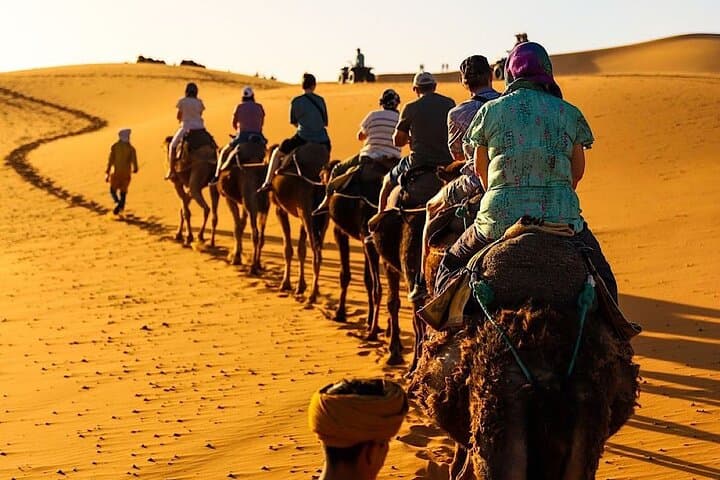
Practically: expect long drives interspersed with walks and short climbs, camel rides into the dunes at sunset, and an overnight in a traditional Berber-style camp. Nights are cold and wind can sharpen the air; mornings bring a slow, wide sunrise that repays the early alarm. Bring layered clothing, at least 2–3 liters of water per person per day while on excursions, sturdy shoes for rocky gorges and a small daypack for essentials. Plan cash for small purchases and local tips. The route is accessible to travelers with moderate fitness; coordination with your guide will keep the logistics simple so you can focus on the landscape and the light.
moderate.
3 days.
Suitable for travelers with a reasonable base fitness—able to handle multi-hour drives, short hikes and camel transfers.
The tour involves long drives, short walks and a camel ride; it’s rated moderate—basic mobility and endurance for multi-hour travel days are sufficient.
Yes—dinner and breakfast and one night’s stay in a desert camp or nomad tent are typically included; specifics will be confirmed at booking.
Closed-toe shoes, long trousers and layers for wind and temperature changes; a scarf helps protect against sand during camel transfers.
Not recommended for pregnant travelers; families with children should check with the operator about age limits and camel ride suitability.
The route follows historic caravan corridors connecting sub-Saharan trade routes with northern markets; kasbahs reflect centuries of fortified, earthen architecture.
The Sahara’s fragile soils and vegetation recover slowly—stick to established paths, pack out waste and use local guides who follow sustainable camp practices.
amazigh voyage operates guided outdoor trips and adventures with an emphasis on safety, stewardship, and memorable experiences.


A grinding pass, a river that will not be hurried and a sea of sand that shifts with every gust—this is the first hour out of Marrakech as you climb the High Atlas toward Tizi n'Tichka (2,260 m). The road opens and the landscape loosens: kasbahs of sun-baked clay, terraces clinging to slopes and the distant line of Ouarzazate. By day two the Valley of the Roses and the 300 m walls of Todgha Gorge demand slower steps and longer looks.
A grinding pass, a river that will not be hurried and a sea of sand that shifts with every gust—this is the first hour out of Marrakech as you climb the High Atlas toward Tizi n'Tichka (2,260 m). The road opens and the landscape loosens: kasbahs of sun-baked clay, terraces clinging to slopes and the distant line of Ouarzazate. By day two the Valley of the Roses and the 300 m walls of Todgha Gorge demand slower steps and longer looks.
Geology here reads like a slow-motion earth story: folded mountains, river-cut gorges and the Erg Chebbi dunefield where sand dunes reach roughly 100–150 m high and move with the wind. Culturally the route follows ancient caravan corridors—the kasbahs, souks and Berber villages still shaped by those trading lines. Fossil workshops near Erfoud are reminders of this region’s deep past, where ancient sea beds yield decorative stone.
Practically: expect long drives interspersed with walks and short climbs, camel rides into the dunes at sunset, and an overnight in a traditional Berber-style camp. Nights are cold and wind can sharpen the air; mornings bring a slow, wide sunrise that repays the early alarm. Bring layered clothing, at least 2–3 liters of water per person per day while on excursions, sturdy shoes for rocky gorges and a small daypack for essentials. Plan cash for small purchases and local tips. The route is accessible to travelers with moderate fitness; coordination with your guide will keep the logistics simple so you can focus on the landscape and the light.