THE ADVENTURE COLLECTIVE® · Independent discovery and booking for outdoor travel

A three-day route from Marrakech to Merzouga that moves from Atlas passes and kasbah valleys to the orange sweep of Erg Chebbi. Expect camel rides, a night under the stars in a desert camp, and guided stops at Todgha Gorge and traditional Berber villages.
A three-day route from Marrakech to Merzouga that moves from Atlas passes and kasbah valleys to the orange sweep of Erg Chebbi. Expect camel rides, a night under the stars in a desert camp, and guided stops at Todgha Gorge and traditional Berber villages.
The caravan arrives as the light thins: camels file across the crest of Erg Chebbi, sand spilling in slow waves behind padded feet while the sky readies a wide canopy of stars. On this three-day route from Marrakech, travelers move from the high passes of the Atlas through kasbah-lined valleys to the orange sweep of Merzouga's dunes, trading city bustle for desert quiet.
Verified experiences and guided adventures in the surrounding area.
Operated by Morocco unlimited adventures · Merzouga, Drâa-Tafilalet
The caravan arrives as the light thins: camels file across the crest of Erg Chebbi, sand spilling in slow waves behind padded feet while the sky readies a wide canopy of stars. On this three-day route from Marrakech, travelers move from the high passes of the Atlas through kasbah-lined valleys to the orange sweep of Merzouga's dunes, trading city bustle for desert quiet.
The route traces old trade corridors where Berber communities and caravan routes once connected sub-Saharan markets to the Atlantic. Geology here is plain and dramatic: wind-sculpted sand sea overlaid on ancient oases and folded limestone gorges like Todgha, where abrupt cliffs frame narrow river runs. Culture is present in small things — smoke from tagines, Gnawa rhythms in tiny villages, and hospitality that centers on shared tea and stories.
Expect two nights off-grid: one in a valley auberge and one in a desert camp. The camel trek to camp is low-impact walking paced for comfort; sandboarding and sunset climbs are optional. Guides explain local customs and point out flora adapted to drought, while evenings bring open-sky navigation and simple communal meals.
Practical notes: pack layered clothing — desert days heat quickly, nights cool sharply. Bring at least 2 liters of water per day, sun protection, and a small headlamp. Mobility is moderate; the camel ride can be bumpy but accessible to most. Morning departures avoid midday heat; plan your camera batteries and patience for long windows between services. With basic preparation, the trip delivers accessible desert wilderness, cultural contact, and wide, unbroken horizons.
easy.
3 days (approx. 72 hours).
Suitable for travelers in average physical condition; must manage short camel rides and walking on sand.
The camel transfer to the Erg Chebbi camp typically takes 45–90 minutes depending on pace and dune route; guides allow stops for photos and comfort breaks.
The tour includes air-conditioned transfers, two dinners, three breakfasts, a local guide, and a camel ride to the desert camp; specifics may vary by operator so confirm at booking.
The tour is generally accessible and described as physically easy, but camel mounting and uneven sand surfaces can be challenging—discuss special needs with the operator ahead of time.
Autumn and spring offer mild daytime temperatures and pleasant nights; summer is hottest and winter brings cold nights but clear skies for stargazing.
This corridor links ancient trans-Saharan trade routes and features Berber settlements and fortified kasbahs that served as trade and defense points.
Dunes are fragile—stick to established camp areas and avoid driving on vegetated dune fringes; support local guides who practice low-impact camping.
Morocco unlimited adventures operates guided outdoor trips and adventures with an emphasis on safety, stewardship, and memorable experiences.
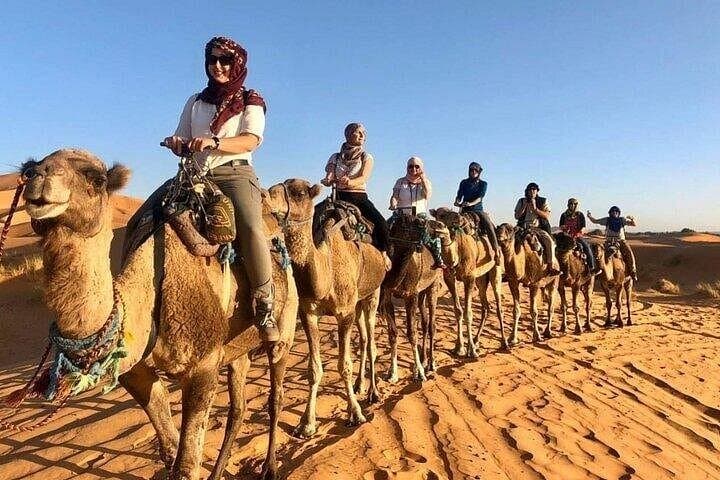
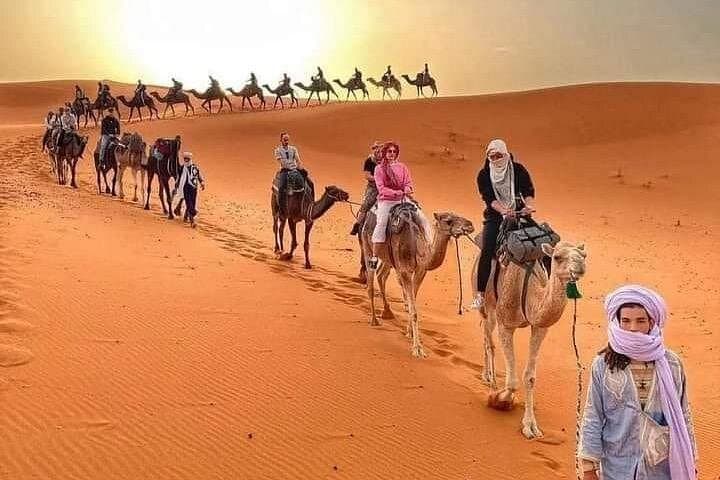
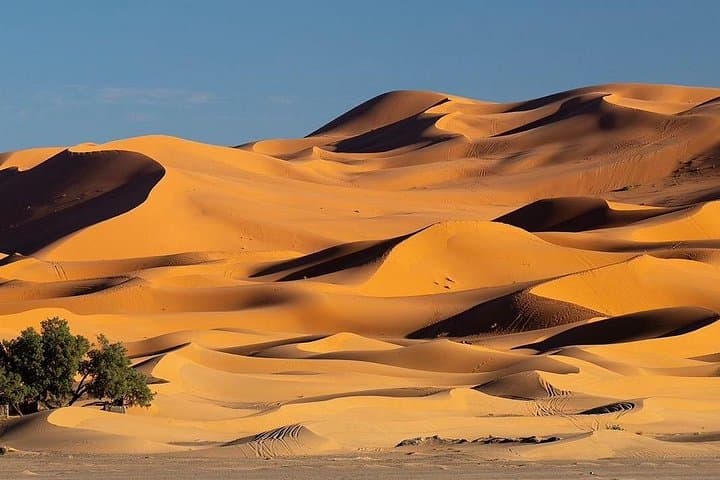
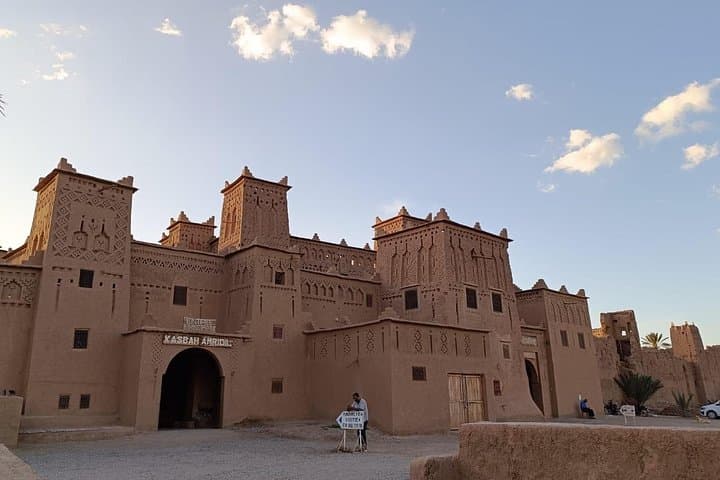
The caravan arrives as the light thins: camels file across the crest of Erg Chebbi, sand spilling in slow waves behind padded feet while the sky readies a wide canopy of stars. On this three-day route from Marrakech, travelers move from the high passes of the Atlas through kasbah-lined valleys to the orange sweep of Merzouga's dunes, trading city bustle for desert quiet.
The caravan arrives as the light thins: camels file across the crest of Erg Chebbi, sand spilling in slow waves behind padded feet while the sky readies a wide canopy of stars. On this three-day route from Marrakech, travelers move from the high passes of the Atlas through kasbah-lined valleys to the orange sweep of Merzouga's dunes, trading city bustle for desert quiet.
The route traces old trade corridors where Berber communities and caravan routes once connected sub-Saharan markets to the Atlantic. Geology here is plain and dramatic: wind-sculpted sand sea overlaid on ancient oases and folded limestone gorges like Todgha, where abrupt cliffs frame narrow river runs. Culture is present in small things — smoke from tagines, Gnawa rhythms in tiny villages, and hospitality that centers on shared tea and stories.
Expect two nights off-grid: one in a valley auberge and one in a desert camp. The camel trek to camp is low-impact walking paced for comfort; sandboarding and sunset climbs are optional. Guides explain local customs and point out flora adapted to drought, while evenings bring open-sky navigation and simple communal meals.
Practical notes: pack layered clothing — desert days heat quickly, nights cool sharply. Bring at least 2 liters of water per day, sun protection, and a small headlamp. Mobility is moderate; the camel ride can be bumpy but accessible to most. Morning departures avoid midday heat; plan your camera batteries and patience for long windows between services. With basic preparation, the trip delivers accessible desert wilderness, cultural contact, and wide, unbroken horizons.