THE ADVENTURE COLLECTIVE® · Independent discovery and booking for outdoor travel

A compact three-day journey from Fes through the Atlas Mountains to the Erg Chebbi dunes—mountain passes, cedar forests, a sunset camel ride, and an overnight in a traditional Berber camp. Expect long drives, dramatic landscape shifts, and authentic local hospitality.
A compact three-day journey from Fes through the Atlas Mountains to the Erg Chebbi dunes—mountain passes, cedar forests, a sunset camel ride, and an overnight in a traditional Berber camp. Expect long drives, dramatic landscape shifts, and authentic local hospitality.
The tour starts before dawn as a small coach slips out of Fes and climbs into the Middle Atlas, the air sharpening with altitude and cedar forests rising on each side. Macaques move like shadows through the trees, and the road threads past rock walls and clear streams until the landscape opens into the sunburnt plains that lead to Erg Chebbi’s vast dunes. At dusk, camels kneel in the bronze light and the desert seems to breathe; you ride a slow, ninety-minute arc to a Berber camp where fires and music mark the night.
Verified experiences and guided adventures in the surrounding area.
Operated by Fes Desert Trips · Merzouga, Drâa-Tafilalet
The tour starts before dawn as a small coach slips out of Fes and climbs into the Middle Atlas, the air sharpening with altitude and cedar forests rising on each side. Macaques move like shadows through the trees, and the road threads past rock walls and clear streams until the landscape opens into the sunburnt plains that lead to Erg Chebbi’s vast dunes. At dusk, camels kneel in the bronze light and the desert seems to breathe; you ride a slow, ninety-minute arc to a Berber camp where fires and music mark the night.
Geology and history are on every bend: the Atlas Mountains are the product of African-Eurasian tectonic collision and host limestone and sandstone layers scored by winter rains, while the Saharan dunes are wind-sculpted seas of sand that shift seasonally. Culturally the route crosses Amazigh (Berber) villages and kasbahs where hospitality and mint tea are central. Local guides keep stories pragmatic—trade routes, seasonal grazing patterns, and the practical art of moving people and livestock across marginal land.
Practical guidance: this is a three-day, ~750–900 km circuit depending on drop-off, with long driving stretches broken by several stops. Expect paved roads through the Atlas, then graded desert tracks and soft sand near Merzouga; elevation ranges roughly 400 m (Fes) to 1,800 m in parts of the Atlas before dropping to the Sahara plain. Bring layered clothing for hot days and cold nights, sturdy walking shoes for kasbahs and dune approaches, sun protection, and a small daypack. Moderate fitness covers most travelers, but be prepared for vehicle motion and brief camel riding discomfort. Plan arrival or departure times conservatively—morning starts and sunset rides are the highlights.
moderate.
3 days.
Suitable for travelers with moderate fitness who can handle multiple hours of driving, short dune walks, and a 90-minute camel ride.
The evening camel trek is about 90 minutes across Erg Chebbi and is steady but can be bouncy; most travelers find it manageable with short rests.
Nights include a kasbah-style hotel at the dune edge and an overnight in a Berber tented camp with basic sleeping mats and local meals.
Local guides and operators can usually handle common dietary restrictions if notified ahead via booking questions or special requirements.
Children can join but consider long vehicle hours and limited facilities in camp; strollers may be usable at hotel stops but not across dunes.
The route follows centuries-old trade corridors linking Saharan caravan towns such as Rissani with imperial cities; kasbah architecture reflects defensive and clan-based histories of the region.
Respect water scarcity—minimize waste and use refillable bottles; camps often follow low-impact practices but avoid single-use plastics and stick to marked areas to protect fragile dune vegetation.
Fes Desert Trips operates guided outdoor trips and adventures with an emphasis on safety, stewardship, and memorable experiences.
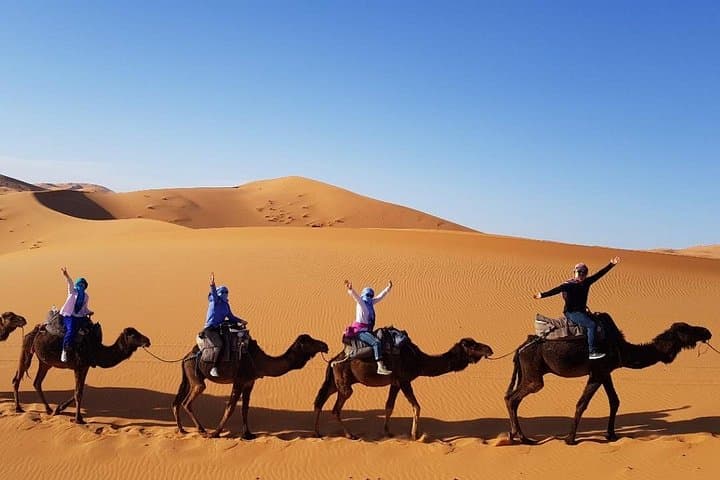
The tour starts before dawn as a small coach slips out of Fes and climbs into the Middle Atlas, the air sharpening with altitude and cedar forests rising on each side. Macaques move like shadows through the trees, and the road threads past rock walls and clear streams until the landscape opens into the sunburnt plains that lead to Erg Chebbi’s vast dunes. At dusk, camels kneel in the bronze light and the desert seems to breathe; you ride a slow, ninety-minute arc to a Berber camp where fires and music mark the night.
The tour starts before dawn as a small coach slips out of Fes and climbs into the Middle Atlas, the air sharpening with altitude and cedar forests rising on each side. Macaques move like shadows through the trees, and the road threads past rock walls and clear streams until the landscape opens into the sunburnt plains that lead to Erg Chebbi’s vast dunes. At dusk, camels kneel in the bronze light and the desert seems to breathe; you ride a slow, ninety-minute arc to a Berber camp where fires and music mark the night.
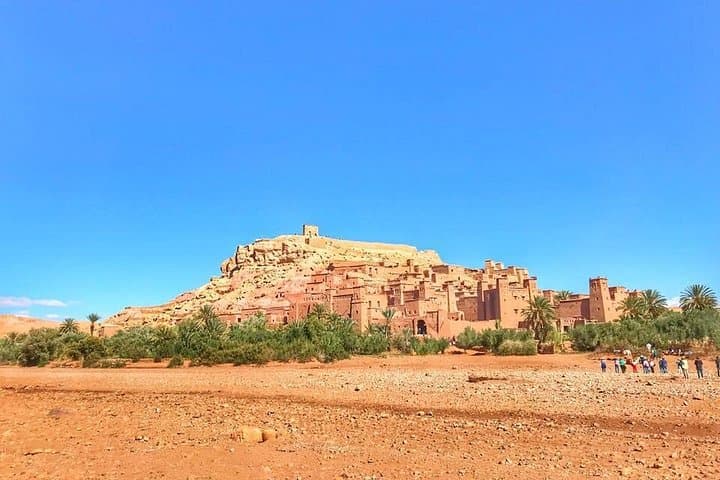
Geology and history are on every bend: the Atlas Mountains are the product of African-Eurasian tectonic collision and host limestone and sandstone layers scored by winter rains, while the Saharan dunes are wind-sculpted seas of sand that shift seasonally. Culturally the route crosses Amazigh (Berber) villages and kasbahs where hospitality and mint tea are central. Local guides keep stories pragmatic—trade routes, seasonal grazing patterns, and the practical art of moving people and livestock across marginal land.
Practical guidance: this is a three-day, ~750–900 km circuit depending on drop-off, with long driving stretches broken by several stops. Expect paved roads through the Atlas, then graded desert tracks and soft sand near Merzouga; elevation ranges roughly 400 m (Fes) to 1,800 m in parts of the Atlas before dropping to the Sahara plain. Bring layered clothing for hot days and cold nights, sturdy walking shoes for kasbahs and dune approaches, sun protection, and a small daypack. Moderate fitness covers most travelers, but be prepared for vehicle motion and brief camel riding discomfort. Plan arrival or departure times conservatively—morning starts and sunset rides are the highlights.