THE ADVENTURE COLLECTIVE® · Independent discovery and booking for outdoor travel

Drive the High Atlas, walk through ancient kasbahs and ride a camel into Erg Chebbi on this three‑day loop from Marrakech. Expect dramatic landscape shifts, guided canyon walks, a desert camp under stars and practical logistics—perfect for travelers seeking an accessible Sahara experience.
Drive the High Atlas, walk through ancient kasbahs and ride a camel into Erg Chebbi on this three‑day loop from Marrakech. Expect dramatic landscape shifts, guided canyon walks, a desert camp under stars and practical logistics—perfect for travelers seeking an accessible Sahara experience.
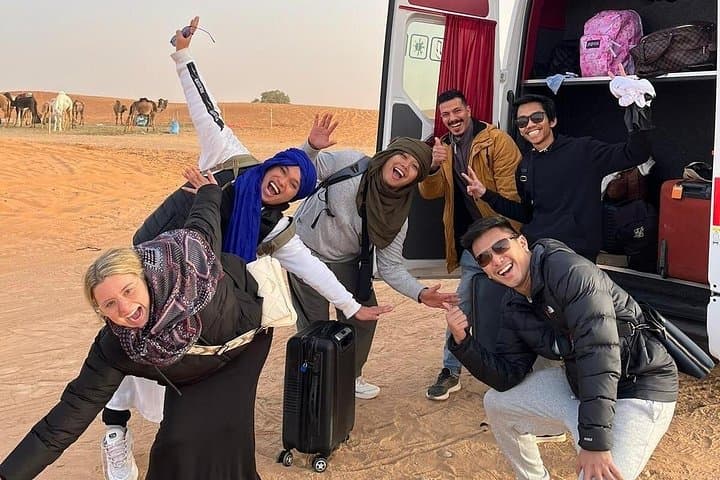
You step out of the air‑conditioned van into a horizon of moving gold—the Erg Chebbi dunes rise like a living wall, pushing the light into long, cool shadows.
Verified experiences and guided adventures in the surrounding area.
Operated by Marrakech City Travel · Merzouga, Drâa-Tafilalet
You step out of the air‑conditioned van into a horizon of moving gold—the Erg Chebbi dunes rise like a living wall, pushing the light into long, cool shadows.
Across three days the landscape changes with cinematic speed: the fertile Haouz plain around Marrakech gives way to the Tizi n'Tichka pass (about 2,260 m) through the High Atlas, then down into red‑rock valleys, palm oases and finally the broad sea of sand at Merzouga. History here is human and geological: Ait Ben Haddou’s earthen kasbahs recall trans‑Saharan caravan routes and colonial film crews, while wind and sediment have sculpted dunes as high as 120–150 m on Erg Chebbi.
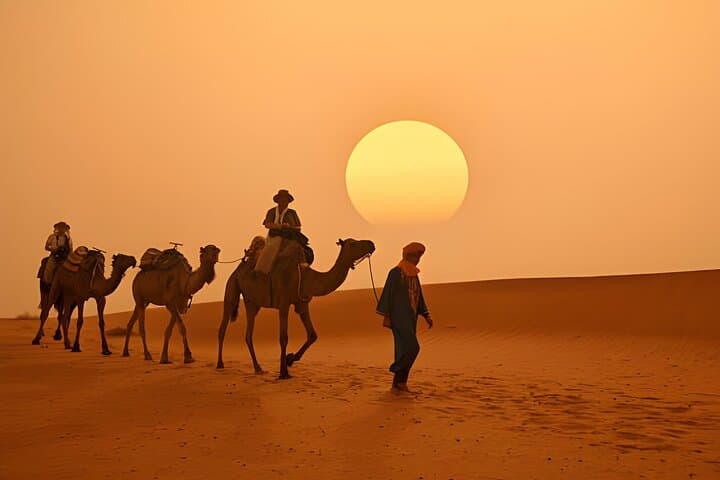
Culture is present at every stop—berber guesthouses, rose cooperatives in the Dades valley (peak blooms in May) and the Gnawa music of small villages near Merzouga. Expect short guided walks in Todra Gorge, a 90–100 minute camel trek to a desert camp for dinner, and sunrise over the dunes before the return drive to Marrakech. Total driving between Marrakech and Merzouga is roughly 550–600 km; plan for long legs (8–10 hours total across days) broken by viewpoints and village stops.
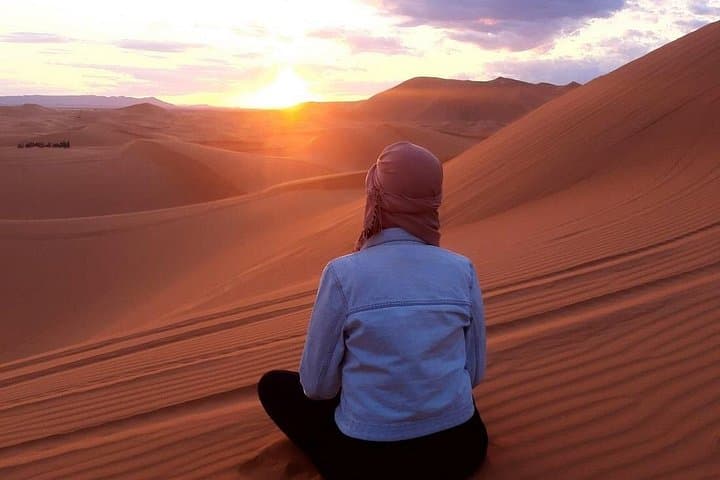
Practical notes: pack layered clothing for hot days and cold desert nights, sun protection and a refillable water bottle, comfortable shoes for canyon walking and sand, and local cash for small cooperatives and tips. Aim to arrive in Marrakech a day early to acclimate; schedule sunrise and sunset dune visits for the best light and cooler temperatures.
moderate.
3 days (approx. 72 hours).
Suitable for travelers with basic fitness: short guided walks, a 90–120 minute camel trek and long periods sitting in a vehicle.
The camel trek is about 90 minutes to 1.5 hours one way, timed so you arrive before sunset; alternatives such as 4x4 transfers are sometimes available.
No special fitness is required—short canyon walks and camel rides are gentle, but you should be comfortable mounting camels and walking on uneven ground.
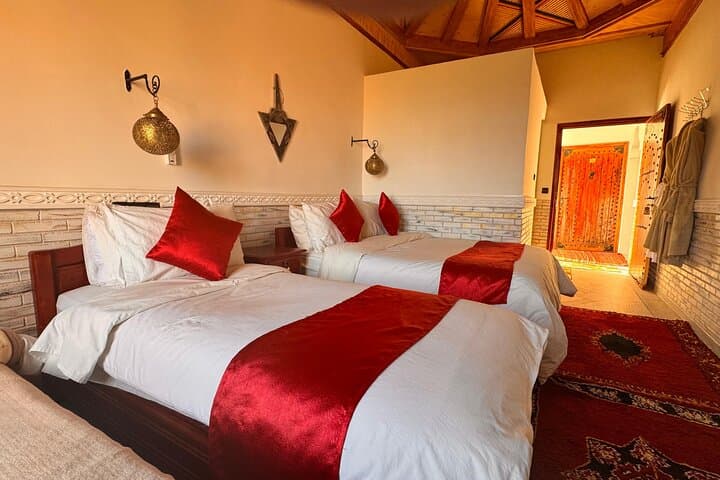
Options range from shared tents in standard camps to private luxury tents; expect simple facilities and meals prepared by camp staff.
Yes—small tips for drivers, local guides and camp staff are customary; carry small denominations of Moroccan dirham.
This corridor was a crossroads of trans‑Saharan caravan routes and later drew filmmakers to Ait Ben Haddou; many villages still reflect traditional Berber architecture and craft trades.
Dune and oasis ecosystems are fragile—avoid leaving waste, respect dune vegetation and use local camps that follow waste‑management practices; support local cooperatives to keep tourism benefits in the community.
Marrakech City Travel operates guided outdoor trips and adventures with an emphasis on safety, stewardship, and memorable experiences.
You step out of the air‑conditioned van into a horizon of moving gold—the Erg Chebbi dunes rise like a living wall, pushing the light into long, cool shadows.
You step out of the air‑conditioned van into a horizon of moving gold—the Erg Chebbi dunes rise like a living wall, pushing the light into long, cool shadows.
Across three days the landscape changes with cinematic speed: the fertile Haouz plain around Marrakech gives way to the Tizi n'Tichka pass (about 2,260 m) through the High Atlas, then down into red‑rock valleys, palm oases and finally the broad sea of sand at Merzouga. History here is human and geological: Ait Ben Haddou’s earthen kasbahs recall trans‑Saharan caravan routes and colonial film crews, while wind and sediment have sculpted dunes as high as 120–150 m on Erg Chebbi.
Culture is present at every stop—berber guesthouses, rose cooperatives in the Dades valley (peak blooms in May) and the Gnawa music of small villages near Merzouga. Expect short guided walks in Todra Gorge, a 90–100 minute camel trek to a desert camp for dinner, and sunrise over the dunes before the return drive to Marrakech. Total driving between Marrakech and Merzouga is roughly 550–600 km; plan for long legs (8–10 hours total across days) broken by viewpoints and village stops.
Practical notes: pack layered clothing for hot days and cold desert nights, sun protection and a refillable water bottle, comfortable shoes for canyon walking and sand, and local cash for small cooperatives and tips. Aim to arrive in Marrakech a day early to acclimate; schedule sunrise and sunset dune visits for the best light and cooler temperatures.