THE ADVENTURE COLLECTIVE® · Independent discovery and booking for outdoor travel

Spend three days in Pench National Park on dawn and dusk game drives through teak forests and river valleys. Expect vehicle-based wildlife viewing focused on tigers, leopards, deer and rich birdlife, with lodge stays and early starts.
Spend three days in Pench National Park on dawn and dusk game drives through teak forests and river valleys. Expect vehicle-based wildlife viewing focused on tigers, leopards, deer and rich birdlife, with lodge stays and early starts.
Dawn breaks over dry teak forest and a low river that seems to dare you to move closer—this is Pench, where the park’s rust-colored ridges and riverine flats set the stage for game drives. Over three days visitors trade city hum for the slow theater of the wild: early-morning drives when dust lifts like a curtain, brief midday rests at a forest lodge, and late-afternoon forays as light slants through the canopy.
Verified experiences and guided adventures in the surrounding area.
Dawn breaks over dry teak forest and a low river that seems to dare you to move closer—this is Pench, where the park’s rust-colored ridges and riverine flats set the stage for game drives. Over three days visitors trade city hum for the slow theater of the wild: early-morning drives when dust lifts like a curtain, brief midday rests at a forest lodge, and late-afternoon forays as light slants through the canopy.
Pench National Park sits on the Pench River and is part of the larger Pench Tiger Reserve (covering roughly 758 km² across Madhya Pradesh and Maharashtra). The landscape is classic central-Indian dry deciduous country—undulating plateaus, seasonal streams and teak-dominated woods—terrain that shaped local livelihoods and appears in accounts tied to Rudyard Kipling’s Seoni-inspired Jungle Book landscapes. The area’s villages and forest culture center on agriculture, timber history and a growing community focus on wildlife tourism.
Practically, expect vehicle-based game drives (morning and afternoon), short guided nature walks at authorized times, and lodge-based stays. Key species include Bengal tiger, leopard, sambar, chital and a wide suite of resident and migratory birds; sightings depend on season and patience, not promise. Bring binoculars, neutral clothing, sun protection and a refillable water bottle; be prepared for early starts, dusty tracks and park regulations that keep wildlife undisturbed.
Timing your visit around the cooler months improves visibility and animal activity; monsoon brings lush green vistas but limits access. Follow guide instructions, keep noise low, and treat the forest as an active partner in the experience—its rhythms set the pace for what you’ll see.
moderate.
3 days.
Moderate fitness—able to sit for long drives, manage short guided walks and early starts.
No—sightings depend on season, animal movements and a measure of luck; guides increase chances but cannot promise encounters.
October through March offers cooler temperatures, better visibility and higher wildlife activity than the monsoon months.
Pench is roughly a 2–3 hour drive from Nagpur depending on lodge location and road conditions—plan transfers around safari timings.
Independent walking inside the core zones is not allowed; guided nature walks are available only at authorized times and with a permit/guide.
The park is named for the Pench River; the Seoni–Pench landscape is often linked to the setting that inspired Rudyard Kipling’s Jungle Book stories.
Pench balances tourism and protection through regulated drives and community programs; visitors are encouraged to minimize plastic and follow lodge waste practices.
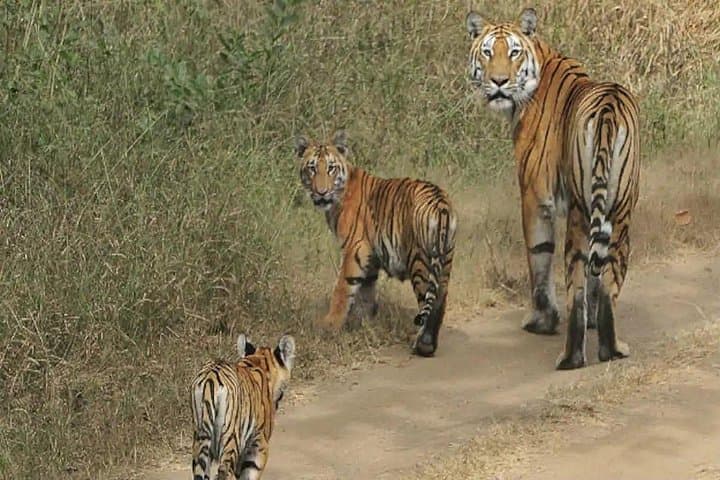
Dawn breaks over dry teak forest and a low river that seems to dare you to move closer—this is Pench, where the park’s rust-colored ridges and riverine flats set the stage for game drives. Over three days visitors trade city hum for the slow theater of the wild: early-morning drives when dust lifts like a curtain, brief midday rests at a forest lodge, and late-afternoon forays as light slants through the canopy.
Dawn breaks over dry teak forest and a low river that seems to dare you to move closer—this is Pench, where the park’s rust-colored ridges and riverine flats set the stage for game drives. Over three days visitors trade city hum for the slow theater of the wild: early-morning drives when dust lifts like a curtain, brief midday rests at a forest lodge, and late-afternoon forays as light slants through the canopy.
Pench National Park sits on the Pench River and is part of the larger Pench Tiger Reserve (covering roughly 758 km² across Madhya Pradesh and Maharashtra). The landscape is classic central-Indian dry deciduous country—undulating plateaus, seasonal streams and teak-dominated woods—terrain that shaped local livelihoods and appears in accounts tied to Rudyard Kipling’s Seoni-inspired Jungle Book landscapes. The area’s villages and forest culture center on agriculture, timber history and a growing community focus on wildlife tourism.
Practically, expect vehicle-based game drives (morning and afternoon), short guided nature walks at authorized times, and lodge-based stays. Key species include Bengal tiger, leopard, sambar, chital and a wide suite of resident and migratory birds; sightings depend on season and patience, not promise. Bring binoculars, neutral clothing, sun protection and a refillable water bottle; be prepared for early starts, dusty tracks and park regulations that keep wildlife undisturbed.
Timing your visit around the cooler months improves visibility and animal activity; monsoon brings lush green vistas but limits access. Follow guide instructions, keep noise low, and treat the forest as an active partner in the experience—its rhythms set the pace for what you’ll see.