THE ADVENTURE COLLECTIVE® · Independent discovery and booking for outdoor travel

Three days that pair India’s greatest monuments with one of the best tiger reserves in the world: early-morning trains to Agra, two jeep safaris in Ranthambhore, and a cultural finale in Jaipur. Expect long transfers, dawn-and-dusk wildlife windows, and a mix of forested ridges and Mughal architecture.
Three days that pair India’s greatest monuments with one of the best tiger reserves in the world: early-morning trains to Agra, two jeep safaris in Ranthambhore, and a cultural finale in Jaipur. Expect long transfers, dawn-and-dusk wildlife windows, and a mix of forested ridges and Mughal architecture.
You step out before dawn in Delhi, the city’s hum still soft, and board an early AC chair car bound for Agra. Two hours of watching fields and villages slip by ends at the Taj’s pale silhouette; later the road turns west toward dry scrub and granite outcrops, and Ranthambhore’s forested ridges appear on the horizon.
Verified experiences and guided adventures in the surrounding area.
Operated by Hire Taxi India · Sawai Madhopur, Rajasthan
You step out before dawn in Delhi, the city’s hum still soft, and board an early AC chair car bound for Agra. Two hours of watching fields and villages slip by ends at the Taj’s pale silhouette; later the road turns west toward dry scrub and granite outcrops, and Ranthambhore’s forested ridges appear on the horizon.
Ranthambhore National Park occupies rocky hills and seasonal lakes carved from Vindhyan sandstone; elevation sits roughly 200–300 m above sea level and the terrain alternates between open grasslands and dense sal forest. The reserve’s ruined Ranthambhore Fort crowns a dramatic ridge—the area was historically a royal hunting ground before becoming a protected reserve in the 20th century.
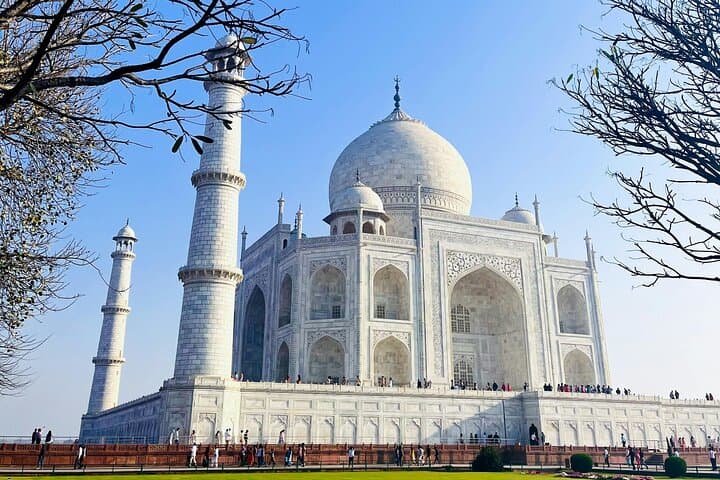
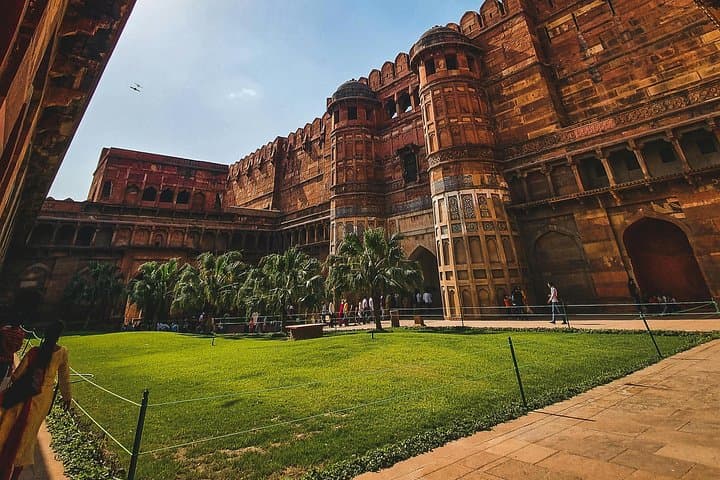
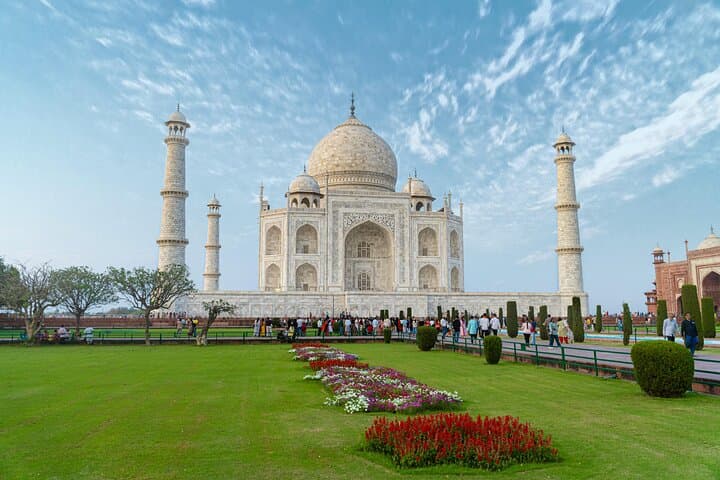
Over three days the trip stitches iconic monuments and wildlife: a morning at the Taj Mahal and Agra Fort, two 3-hour jeep safaris (morning and afternoon) hunting for Bengal tigers and abundant birdlife, then a cultural sweep of Amber Fort, Hawa Mahal and City Palace in Jaipur before returning to Delhi. Expect long transfers (Delhi–Agra by train ~2 hours; Agra–Ranthambhore ~5 hours by road; Ranthambhore–Jaipur ~3 hours; Jaipur–Delhi ~4 hours).
Practical edge: safaris run best at dawn and late afternoon; bring a telephoto lens or binoculars, wear neutral clothes and carry water. The park closes for monsoon (1 July–30 Sept). Guides, permits and shared jeep safaris are standard—book early for peak winter months when sightings and weather are most favorable.
moderate.
3 days (full days with multiple transfers).
Suitable for travelers in average fitness who can handle early starts and multi-hour road transfers; minimal hiking required.
No—sightings depend on animal movement and luck; Ranthambhore has a good record but no operator can guarantee a tiger sighting.
Ranthambhore National Park closes for the monsoon from 1 July to 30 September each year for safety and habitat recovery.
Typical jeep safaris last about 3 hours each and run at dawn and late afternoon when wildlife is most active.
The itinerary uses an AC chair car train from Delhi to Agra and air-conditioned private vehicles for road transfers between Agra, Ranthambhore, Jaipur and Delhi.
Ranthambhore’s hills and fort were historically royal hunting grounds; the reserve was later established to protect tiger populations and local biodiversity.
The park enforces vehicle limits, anti-poaching patrols and seasonal closures during the monsoon; avoid single-use plastics and follow guide instructions to minimize impact.
Hire Taxi India operates guided outdoor trips and adventures with an emphasis on safety, stewardship, and memorable experiences.

You step out before dawn in Delhi, the city’s hum still soft, and board an early AC chair car bound for Agra. Two hours of watching fields and villages slip by ends at the Taj’s pale silhouette; later the road turns west toward dry scrub and granite outcrops, and Ranthambhore’s forested ridges appear on the horizon.
You step out before dawn in Delhi, the city’s hum still soft, and board an early AC chair car bound for Agra. Two hours of watching fields and villages slip by ends at the Taj’s pale silhouette; later the road turns west toward dry scrub and granite outcrops, and Ranthambhore’s forested ridges appear on the horizon.
Ranthambhore National Park occupies rocky hills and seasonal lakes carved from Vindhyan sandstone; elevation sits roughly 200–300 m above sea level and the terrain alternates between open grasslands and dense sal forest. The reserve’s ruined Ranthambhore Fort crowns a dramatic ridge—the area was historically a royal hunting ground before becoming a protected reserve in the 20th century.
Over three days the trip stitches iconic monuments and wildlife: a morning at the Taj Mahal and Agra Fort, two 3-hour jeep safaris (morning and afternoon) hunting for Bengal tigers and abundant birdlife, then a cultural sweep of Amber Fort, Hawa Mahal and City Palace in Jaipur before returning to Delhi. Expect long transfers (Delhi–Agra by train ~2 hours; Agra–Ranthambhore ~5 hours by road; Ranthambhore–Jaipur ~3 hours; Jaipur–Delhi ~4 hours).
Practical edge: safaris run best at dawn and late afternoon; bring a telephoto lens or binoculars, wear neutral clothes and carry water. The park closes for monsoon (1 July–30 Sept). Guides, permits and shared jeep safaris are standard—book early for peak winter months when sightings and weather are most favorable.