THE ADVENTURE COLLECTIVE® · Independent discovery and booking for outdoor travel

Three days across central Mongolia — from Khustai’s rewilded prairies to Karakorum’s imperial traces and the Semi-Gobi dunes — offer wildlife encounters, nomadic hospitality, and a camel ride through sand. This private tour balances comfort with authentic fieldtime, perfect for travelers wanting a compact yet immersive steppe experience.
Three days across central Mongolia — from Khustai’s rewilded prairies to Karakorum’s imperial traces and the Semi-Gobi dunes — offer wildlife encounters, nomadic hospitality, and a camel ride through sand. This private tour balances comfort with authentic fieldtime, perfect for travelers wanting a compact yet immersive steppe experience.
The road out of Ulaanbaatar loosens the city’s grip in a single sun-baked hour: asphalt gives way to wide steppe, the horizon flattens, and the smell of hay and dust takes charge. By late afternoon you’re in Khustai National Park, where wind and plain trade stories with herds of horses; a guide points to a short-statured, dun-colored horse grazing quietly — a Przewalski’s horse, once extinct in the wild and now the park’s headline act.
Verified experiences and guided adventures in the surrounding area.
Operated by Byambasuren Lkhamsuren · Kharkhorin, Ovorkhangai
The road out of Ulaanbaatar loosens the city’s grip in a single sun-baked hour: asphalt gives way to wide steppe, the horizon flattens, and the smell of hay and dust takes charge. By late afternoon you’re in Khustai National Park, where wind and plain trade stories with herds of horses; a guide points to a short-statured, dun-colored horse grazing quietly — a Przewalski’s horse, once extinct in the wild and now the park’s headline act.
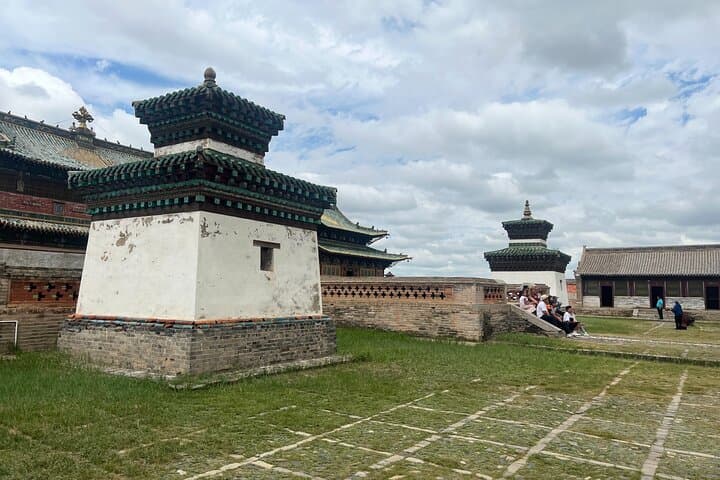
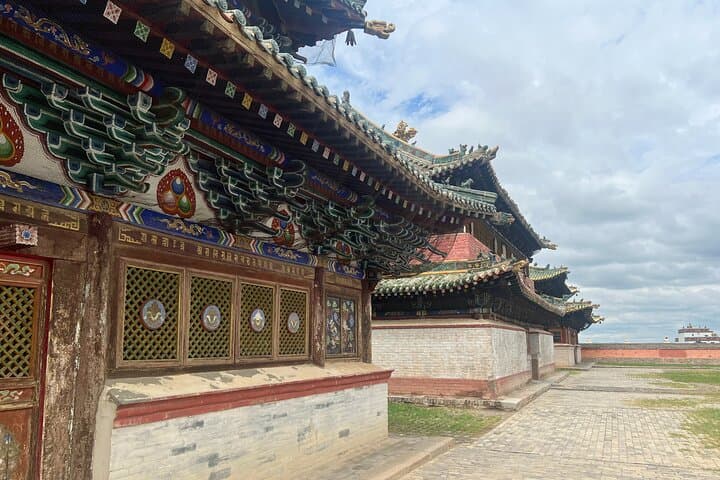
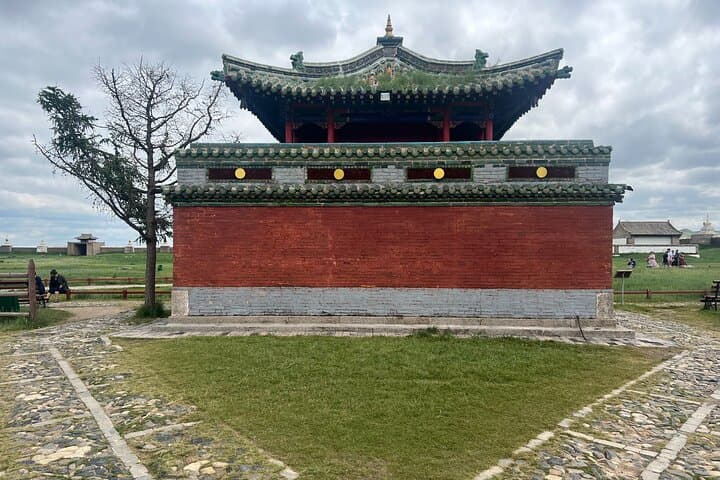
Over the next three days the trip stitches together three distinct faces of central Mongolia. Karakorum — the 13th-century Mongol capital — keeps its past close: scattered ruins, low mounds of ancient walls and the whitewashed walls of Erdene Zuu Monastery, founded in the late 1500s on the very bones of the old imperial city. Geologically, the Semi-Gobi’s dunes are a study in contrast: sandy tongues pushed up by winds over loess and gravel, close enough to the steppe to feel the two landscapes duel at the skyline.
Culture is tangible on this route. Nights are spent in gers where steam from boiled mutton hangs in the air, and mornings begin with the quiet choreography of nomadic life: milking, tack-checking, and the soft creak of felt and wood. Hosts invite conversation — about horses, seasonal migration, and how traditional skills persist alongside cell service — and the tour includes a visit to a nomadic family so travelers can ask, listen, and learn.
Practicalities keep the poetry useful. The tour is private and includes transport, two nights’ ger accommodation, meals, park entry and even the fee for camel or horse rides. Expect straightforward driving between sites (total trip time is about 72 hours) and light activity: short walks, dune climbs, and mounted rides rather than long alpine hikes. Weather swings dramatically — hot days, cool nights, and sudden wind — so layered clothing matters more than fancy gear.
For photographers and naturalists the payoff is big: sunrise over Erdene Zuu, late-afternoon light on Khustai’s prairies, and the dun curves of Semi-Gobi dunes at golden hour. Respect local norms (remove shoes in gers when asked, ask before photographing people) and consider donating at the Khustai visitor center — the reserve runs critical reintroduction and monitoring programs.
This is a trip that balances ease and rawness: comfortable travel logistics paired with rugged landscapes and intimate cultural exchanges. Come prepared to walk on uneven ground, to sit with elders over tea, and to let Mongolia’s open spaces slow your pace — the country rewards attention with vivid skies, animal encounters, and stories that extend long after the road narrows again back toward the capital.
moderate.
3 days (approx. 72 hours).
Suitable for travelers in reasonable health who can handle short hikes, dune climbs and camel/horse rides; not strenuous but involves uneven ground.
Yes — private transport and hotel pickup from Ulaanbaatar are included; specify your hotel at booking and expect a 20-minute pre-departure pickup window.
Yes — the tour includes the fee for camel or horse rides during the Semi-Gobi stop, though tipping or extra time may incur additional cost.
Two nights are spent in traditional ger camps (yurts) with basic amenities; meals listed in the itinerary are included.
Late spring through early fall (May–September) provides the best chance to see Przewalski’s horses, marmots and other wildlife in Khustai as vegetation and visibility improve.
Visa requirements depend on nationality — check Mongolia’s embassy guidance before travel; routine vaccinations are recommended, and consult a travel clinic for current advice.
The tour is family-friendly and marked suitable for varying fitness levels, but consider mobility limits for dune climbs and horse/camel mounts and notify the operator of needs in advance.
Karakorum was established as the Mongol Empire’s capital in the 13th century; Erdene Zuu Monastery was later built on the ruins and remains a key religious site.
Khustai National Park is a center for Przewalski’s horse reintroduction and monitoring; visitors are encouraged to donate and follow park guidelines to minimize disturbance.
Byambasuren Lkhamsuren operates guided outdoor trips and adventures with an emphasis on safety, stewardship, and memorable experiences.
The road out of Ulaanbaatar loosens the city’s grip in a single sun-baked hour: asphalt gives way to wide steppe, the horizon flattens, and the smell of hay and dust takes charge. By late afternoon you’re in Khustai National Park, where wind and plain trade stories with herds of horses; a guide points to a short-statured, dun-colored horse grazing quietly — a Przewalski’s horse, once extinct in the wild and now the park’s headline act.
The road out of Ulaanbaatar loosens the city’s grip in a single sun-baked hour: asphalt gives way to wide steppe, the horizon flattens, and the smell of hay and dust takes charge. By late afternoon you’re in Khustai National Park, where wind and plain trade stories with herds of horses; a guide points to a short-statured, dun-colored horse grazing quietly — a Przewalski’s horse, once extinct in the wild and now the park’s headline act.
Over the next three days the trip stitches together three distinct faces of central Mongolia. Karakorum — the 13th-century Mongol capital — keeps its past close: scattered ruins, low mounds of ancient walls and the whitewashed walls of Erdene Zuu Monastery, founded in the late 1500s on the very bones of the old imperial city. Geologically, the Semi-Gobi’s dunes are a study in contrast: sandy tongues pushed up by winds over loess and gravel, close enough to the steppe to feel the two landscapes duel at the skyline.
Culture is tangible on this route. Nights are spent in gers where steam from boiled mutton hangs in the air, and mornings begin with the quiet choreography of nomadic life: milking, tack-checking, and the soft creak of felt and wood. Hosts invite conversation — about horses, seasonal migration, and how traditional skills persist alongside cell service — and the tour includes a visit to a nomadic family so travelers can ask, listen, and learn.
Practicalities keep the poetry useful. The tour is private and includes transport, two nights’ ger accommodation, meals, park entry and even the fee for camel or horse rides. Expect straightforward driving between sites (total trip time is about 72 hours) and light activity: short walks, dune climbs, and mounted rides rather than long alpine hikes. Weather swings dramatically — hot days, cool nights, and sudden wind — so layered clothing matters more than fancy gear.
For photographers and naturalists the payoff is big: sunrise over Erdene Zuu, late-afternoon light on Khustai’s prairies, and the dun curves of Semi-Gobi dunes at golden hour. Respect local norms (remove shoes in gers when asked, ask before photographing people) and consider donating at the Khustai visitor center — the reserve runs critical reintroduction and monitoring programs.
This is a trip that balances ease and rawness: comfortable travel logistics paired with rugged landscapes and intimate cultural exchanges. Come prepared to walk on uneven ground, to sit with elders over tea, and to let Mongolia’s open spaces slow your pace — the country rewards attention with vivid skies, animal encounters, and stories that extend long after the road narrows again back toward the capital.