THE ADVENTURE COLLECTIVE® · Independent discovery and booking for outdoor travel

Cover Egypt’s headline sites in three days: sunrise at Giza, museum deep-dives in Cairo, and a coastal finish in Alexandria. This private tour pairs an Egyptologist guide with A/C transport and admissions to streamline the experience.
Cover Egypt’s headline sites in three days: sunrise at Giza, museum deep-dives in Cairo, and a coastal finish in Alexandria. This private tour pairs an Egyptologist guide with A/C transport and admissions to streamline the experience.
You step out of the air-conditioned car onto the sun-baked plateau and the pyramids loom—stone faces that have watched the Nile's slow march for millennia. The Sphinx turns its silent profile toward you as a desert breeze dares to rearrange loose sand at your feet. Over three days the rhythm shifts from open ruins to museum galleries and finally to the salt air of Alexandria.
Verified experiences and guided adventures in the surrounding area.
Operated by Egypt Sunny Tours · Cairo, Cairo Governorate
You step out of the air-conditioned car onto the sun-baked plateau and the pyramids loom—stone faces that have watched the Nile's slow march for millennia. The Sphinx turns its silent profile toward you as a desert breeze dares to rearrange loose sand at your feet. Over three days the rhythm shifts from open ruins to museum galleries and finally to the salt air of Alexandria.
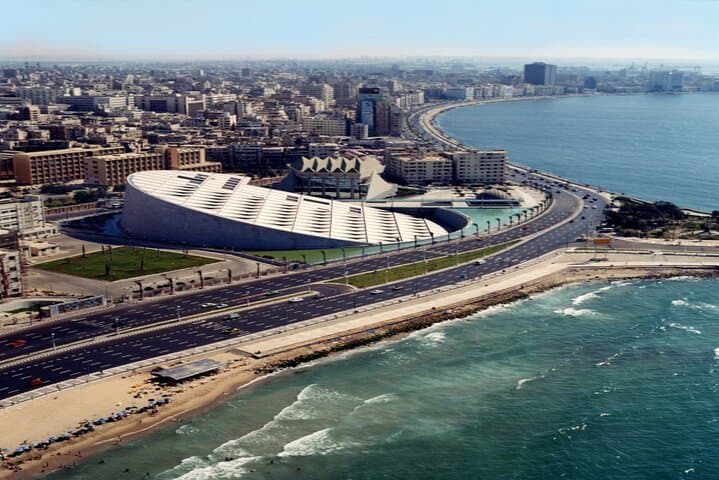
This itinerary threads together Egypt’s major civilizational chapters: Old Kingdom engineering at Giza and Saqqara, the movable capitals and religious layering of Coptic and Islamic Cairo, and Alexandria’s Greco-Roman and Mediterranean legacy—visible in the massive Biblioteca Alexandrina and Fort Qaitbey. Geologically, the pyramids sit on the Giza Plateau’s limestone bedrock; the step-sided Saqqara pyramid records an early experiment in monumental stone. Culture here is tactile: hieroglyphs, carved reliefs, mosque courtyards and coastal fortifications each reveal different social orders and trade routes.
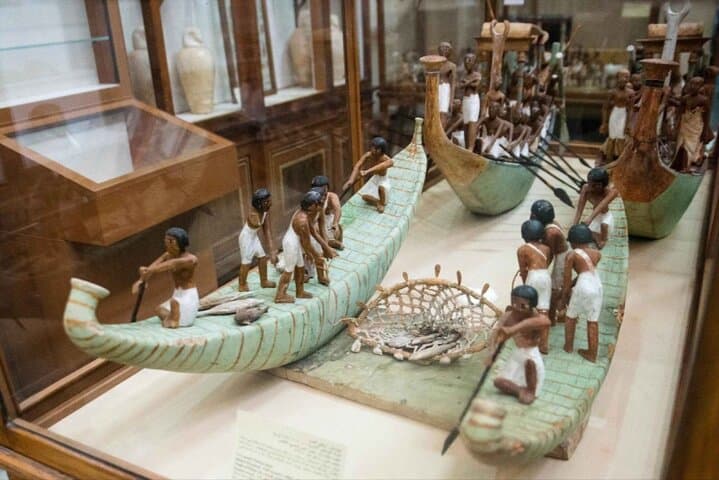
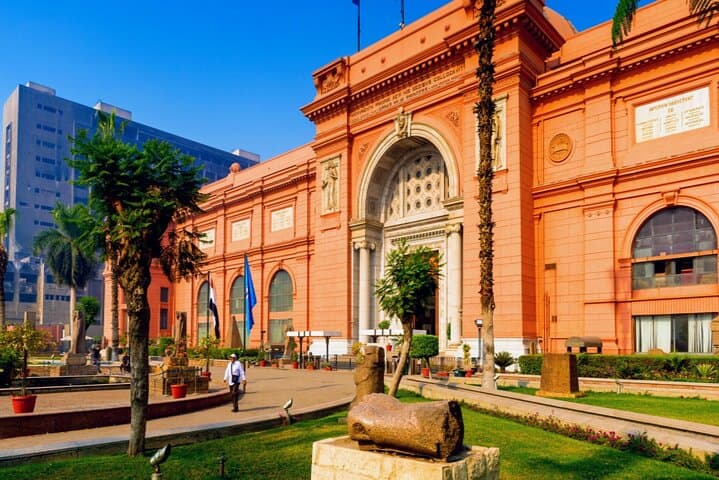
Practically, expect a lot of walking on uneven stone, stairs and city pavements—comfortable, broken-in shoes are essential. Midday heat in summer is intense; schedule pyramid visits early morning when possible and use the included A/C transport between sites. Museums are cooler, with long galleries—plan for about 2–3 hours in the Egyptian Museum and 1–2 hours in Alexandria landmarks. Bring your passport for admissions, a refillable water bottle, sun protection and a light layer for air-conditioned vehicles and galleries. The tour is private with an Egyptologist guide and covers entry fees and lunches as listed, making it a focused, efficient way to see Egypt’s major ancient and cultural sights in three compact days.
easy.
3 days.
Suitable for most fitness levels; requires ability to walk moderate distances on uneven surfaces and climb stairs.
Yes—admissions to the listed sites (Giza Plateau, Saqqara, Memphis, Egyptian Museum, Coptic Museum, Islamic Museum, Bibliotheca Alexandrina, Fort Qaitbey, Kom el Shoqafa) are included as stated.
The operator lists wheelchair-accessible transportation and surfaces for many areas, but some archaeological sites have uneven terrain and stairs—check specific site access in advance.
Expect moderate walking each day—roughly 2–4 miles total with stops; days combine short urban walks, museum exploration and on-site walking at ruins.
Carry your passport (required for some admissions), a photocopy stored separately, and any necessary visas or travel documents.
The Giza pyramids date to the Fourth Dynasty (circa 2600–2500 BCE); Alexandria later became a major Hellenistic center founded by Alexander the Great in 331 BCE.
High visitor numbers pressure fragile stone and archaeological contexts—stick to marked paths, avoid touching carvings, and follow guide instructions to minimize impact.
Egypt Sunny Tours operates guided outdoor trips and adventures with an emphasis on safety, stewardship, and memorable experiences.

You step out of the air-conditioned car onto the sun-baked plateau and the pyramids loom—stone faces that have watched the Nile's slow march for millennia. The Sphinx turns its silent profile toward you as a desert breeze dares to rearrange loose sand at your feet. Over three days the rhythm shifts from open ruins to museum galleries and finally to the salt air of Alexandria.
You step out of the air-conditioned car onto the sun-baked plateau and the pyramids loom—stone faces that have watched the Nile's slow march for millennia. The Sphinx turns its silent profile toward you as a desert breeze dares to rearrange loose sand at your feet. Over three days the rhythm shifts from open ruins to museum galleries and finally to the salt air of Alexandria.
This itinerary threads together Egypt’s major civilizational chapters: Old Kingdom engineering at Giza and Saqqara, the movable capitals and religious layering of Coptic and Islamic Cairo, and Alexandria’s Greco-Roman and Mediterranean legacy—visible in the massive Biblioteca Alexandrina and Fort Qaitbey. Geologically, the pyramids sit on the Giza Plateau’s limestone bedrock; the step-sided Saqqara pyramid records an early experiment in monumental stone. Culture here is tactile: hieroglyphs, carved reliefs, mosque courtyards and coastal fortifications each reveal different social orders and trade routes.
Practically, expect a lot of walking on uneven stone, stairs and city pavements—comfortable, broken-in shoes are essential. Midday heat in summer is intense; schedule pyramid visits early morning when possible and use the included A/C transport between sites. Museums are cooler, with long galleries—plan for about 2–3 hours in the Egyptian Museum and 1–2 hours in Alexandria landmarks. Bring your passport for admissions, a refillable water bottle, sun protection and a light layer for air-conditioned vehicles and galleries. The tour is private with an Egyptologist guide and covers entry fees and lunches as listed, making it a focused, efficient way to see Egypt’s major ancient and cultural sights in three compact days.