THE ADVENTURE COLLECTIVE® · Independent discovery and booking for outdoor travel

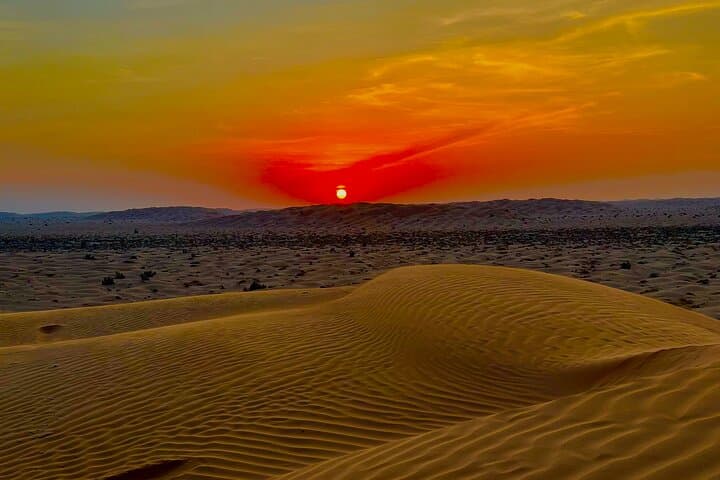
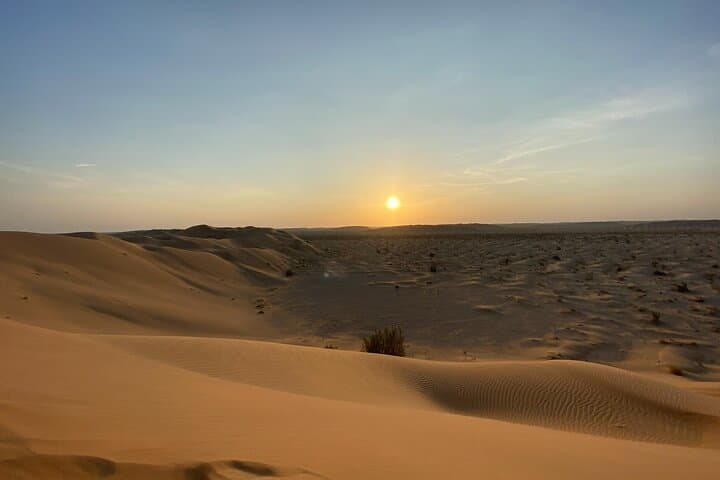
Three days of privately guided exploration around Salalah — from frankincense groves and Wadi Darbat to Mughsail blowholes and a sunset in the Empty Quarter. Ideal for travelers who want curated access to Dhofar’s natural and cultural highlights with minimal logistics stress.
Three days of privately guided exploration around Salalah — from frankincense groves and Wadi Darbat to Mughsail blowholes and a sunset in the Empty Quarter. Ideal for travelers who want curated access to Dhofar’s natural and cultural highlights with minimal logistics stress.
You arrive to a warm sea breeze and the slow percussion of surf against volcanic cliffs — Salalah feels like a coast that learned to keep secrets. Over three days a private guide ferries you through salt-spray beaches, sudden mountain fog, and the open sweep of the Empty Quarter, each landscape changing like chapters in a travelogue.
Verified experiences and guided adventures in the surrounding area.
Operated by Go Salalah Tour · Salalah, Dhofar
You arrive to a warm sea breeze and the slow percussion of surf against volcanic cliffs — Salalah feels like a coast that learned to keep secrets. Over three days a private guide ferries you through salt-spray beaches, sudden mountain fog, and the open sweep of the Empty Quarter, each landscape changing like chapters in a travelogue.
The Dhofar region sits at the southern edge of Oman where the Khareef monsoon turns arid slopes green; this season shaped the frankincense trade that made Salalah an important stop on routes to the Mediterranean. Geology here alternates between limestone karst, basaltic outcrops on Jebel Samhan, and wide alluvial plains that feed fertile plantations. Culture is tactile: souq vendors offering frankincense and coconut-sweet fruit, Bedouin stories in Thumrait, and simple mosque architecture that favors light and shade.
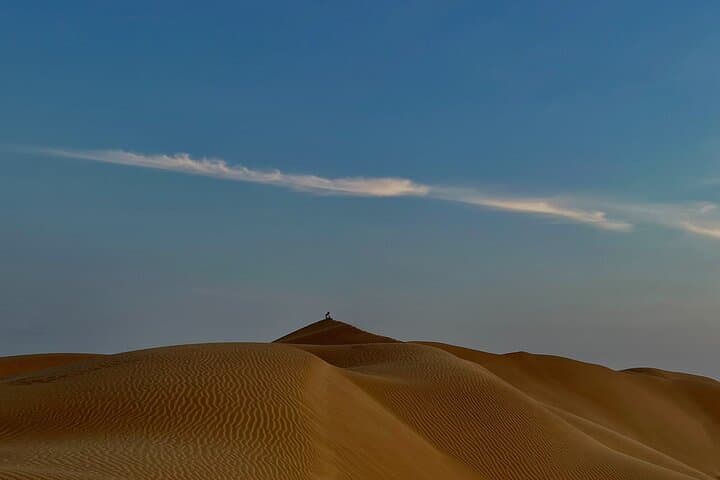
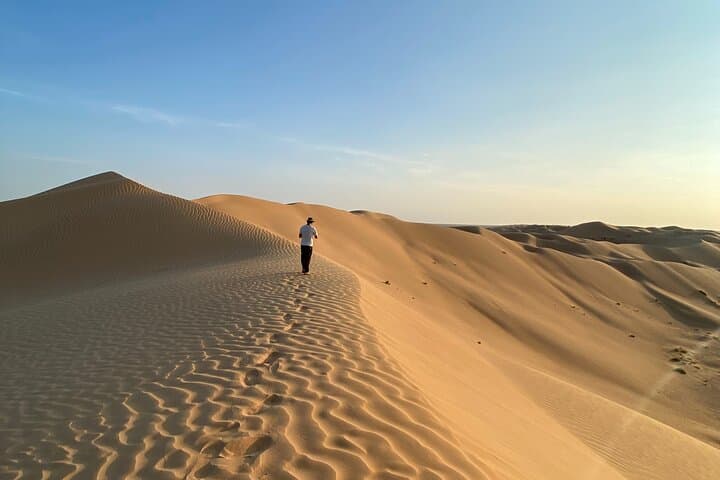
Expect short coastal walks, easy trails at Wadi Darbat, viewpoint stops at Jebel Samhan, and dune play in the Empty Quarter — most time is spent in an air-conditioned 4x4 with guided commentary. Practicalities matter: plan for strong sun and sudden humidity during Khareef, check tide charts for Mughsail blowholes, and bring layers for cool hilltop mornings. Guides typically include lunches, fruit stops and hotel pickup; accessibility is generally good for car-based touring but terrain at waterfalls and dunes can be uneven.
For field-ready travelers: hydrate often, wear closed shoes for rocky paths, carry cash for souqs, and time your beach and blowhole visits around high tide. With focused planning you’ll leave with panoramic photos, frankincense stories, and a desert sunset burned into memory.
easy.
3 days.
Suitable for travelers of most fitness levels; primarily vehicle-based with occasional short walks on uneven ground and sand.
No — the itinerary uses air-conditioned 4x4s provided by the operator; most stops are accessible by standard 4x4 and guides handle any rougher sections.
Khareef (June–September) makes the hills and plantations green and enhances waterfalls and blowholes; outside Khareef you’ll have drier, clearer conditions and calmer seas.
Most lunches and local admissions mentioned in the itinerary are included; confirm specifics at booking and carry small cash for optional purchases.
The tour is family-friendly and mostly vehicle-based, but some sites involve uneven ground or sand; notify the operator of mobility needs so routes and stops can be adapted.
Dhofar was a global hub for frankincense trade for millennia; Wadi Dawkah and the frankincense landscape are part of the region’s cultural heritage.
Many frankincense trees are protected and Wadi Dawkah is recognized in conservation efforts; visitors should avoid removing resin or disturbing tree bark and stick to marked paths where possible.
Go Salalah Tour operates guided outdoor trips and adventures with an emphasis on safety, stewardship, and memorable experiences.
You arrive to a warm sea breeze and the slow percussion of surf against volcanic cliffs — Salalah feels like a coast that learned to keep secrets. Over three days a private guide ferries you through salt-spray beaches, sudden mountain fog, and the open sweep of the Empty Quarter, each landscape changing like chapters in a travelogue.
You arrive to a warm sea breeze and the slow percussion of surf against volcanic cliffs — Salalah feels like a coast that learned to keep secrets. Over three days a private guide ferries you through salt-spray beaches, sudden mountain fog, and the open sweep of the Empty Quarter, each landscape changing like chapters in a travelogue.
The Dhofar region sits at the southern edge of Oman where the Khareef monsoon turns arid slopes green; this season shaped the frankincense trade that made Salalah an important stop on routes to the Mediterranean. Geology here alternates between limestone karst, basaltic outcrops on Jebel Samhan, and wide alluvial plains that feed fertile plantations. Culture is tactile: souq vendors offering frankincense and coconut-sweet fruit, Bedouin stories in Thumrait, and simple mosque architecture that favors light and shade.
Expect short coastal walks, easy trails at Wadi Darbat, viewpoint stops at Jebel Samhan, and dune play in the Empty Quarter — most time is spent in an air-conditioned 4x4 with guided commentary. Practicalities matter: plan for strong sun and sudden humidity during Khareef, check tide charts for Mughsail blowholes, and bring layers for cool hilltop mornings. Guides typically include lunches, fruit stops and hotel pickup; accessibility is generally good for car-based touring but terrain at waterfalls and dunes can be uneven.
For field-ready travelers: hydrate often, wear closed shoes for rocky paths, carry cash for souqs, and time your beach and blowhole visits around high tide. With focused planning you’ll leave with panoramic photos, frankincense stories, and a desert sunset burned into memory.