THE ADVENTURE COLLECTIVE® · Independent discovery and booking for outdoor travel

Walk and ride between the dunes of Erg Sidi Naji and Erg Douib on a private three-day camel trek from M'Hamid El Ghizlane. Wild camping, tea at sunset and a slow desert rhythm make this a compact, immersive Sahara experience.
Walk and ride between the dunes of Erg Sidi Naji and Erg Douib on a private three-day camel trek from M'Hamid El Ghizlane. Wild camping, tea at sunset and a slow desert rhythm make this a compact, immersive Sahara experience.
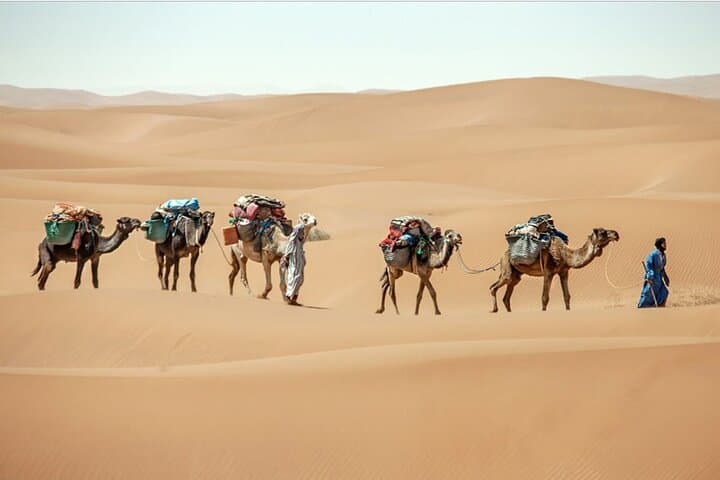
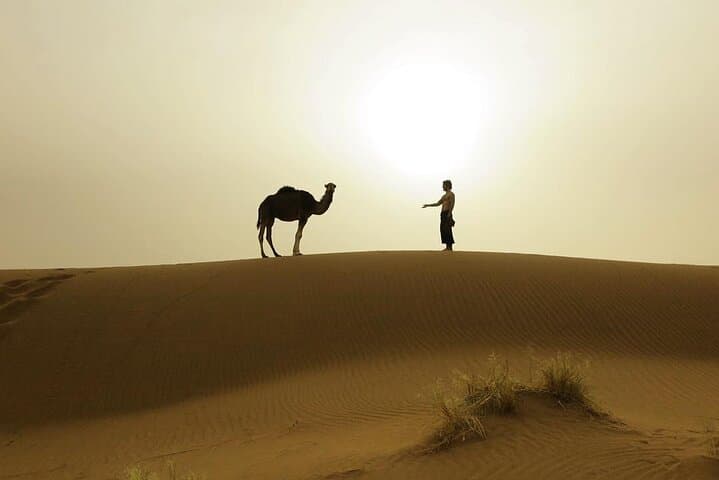
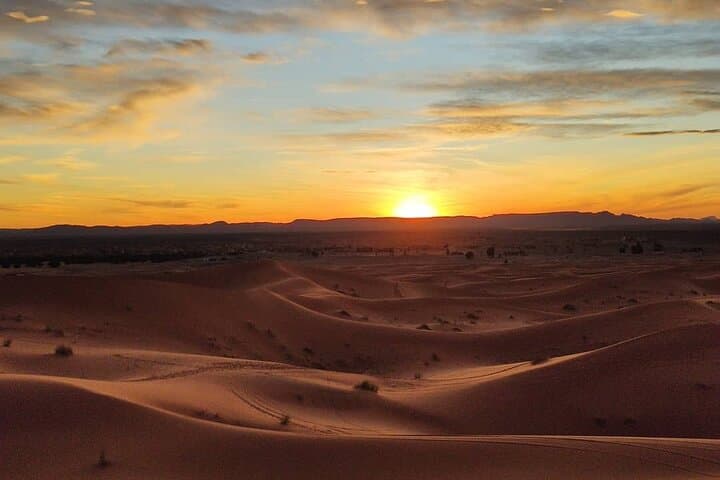
Dawn breaks cold and clear over rolling sand; the camels shift and the dunes change color as you step out of camp. For three days the horizon becomes a moving map — wind-sculpted ridges, scattered tamarisk and the slow rhythm of a caravan that has crossed this edge of the Sahara for generations.
Verified experiences and guided adventures in the surrounding area.
Operated by Z Marrakch Travel · M'Hamid El Ghizlane, Drâa-Tafilalet
Dawn breaks cold and clear over rolling sand; the camels shift and the dunes change color as you step out of camp. For three days the horizon becomes a moving map — wind-sculpted ridges, scattered tamarisk and the slow rhythm of a caravan that has crossed this edge of the Sahara for generations.
The route runs from M'Hamid El Ghizlane toward Erg Sidi Naji and Erg Douib, dunes formed of wind-blown quartz and limestone fragments set atop an ancient fluvial plain. M'Hamid sits at the historic terminus of trans-Saharan routes and still reflects nomadic culture in tea ceremonies, tent etiquette and the simple logic of desert travel.
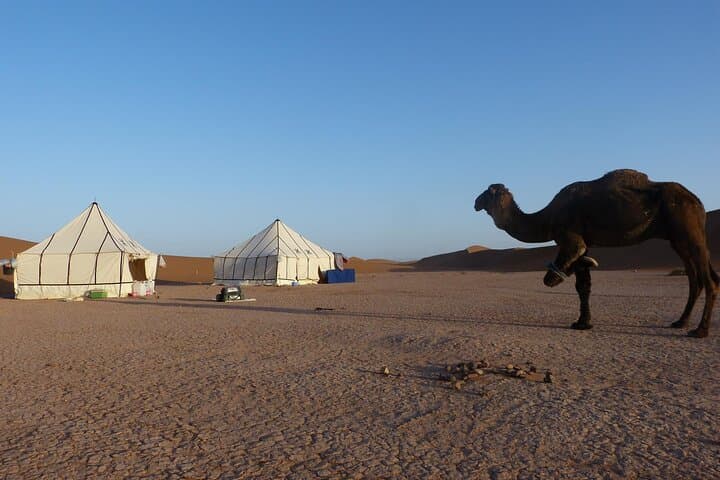
Expect loose sand underfoot, regular camel reliefs and nights in a wild camp—sleep in tents or under the stars. Daily travel is dictated more by dune fields than distance; typical walking stretches feel like 6–12 km across soft sand with minimal elevation but uneven footing that tests ankles and balance. Guides handle navigation, logistics and cooking; camels carry gear.
Practical essentials: hydrate early and often, cover skin against sun and blowing sand, and pack a warm layer for nights when temperatures drop dramatically. Aim to travel in the cooler months (autumn–spring) to avoid midday heat. Bring a headlamp, a small first-aid kit and footwear that grips in sand. Respect campsites: burn no wood, pack out trash, and limit group lights to preserve dark skies. Over three days this trek trades speed for the patient pace of the desert — it rewards attention, steady steps and a willingness to move with the landscape.
moderate.
3 days.
Moderate fitness: able to walk 6–12 km on soft sand with occasional camel riding; comfortable with multi-day camping.
The itinerary mixes walking and camel transport; expect several hours a day on foot (6–12 km equivalent) with camels carrying gear and offering rides as needed.
Yes—guides set up wild camps each night and provide meals, including shared breakfasts, lunches and tagine dinners, with tea ceremonies at sunset.
Moderate fitness: able to walk on soft sand for hours, manage uneven terrain and tolerate multi-day camping; no advanced technical skills required.
Many operators host family treks; children should be supervised around camels and follow guide instructions—confirm age and sleeping arrangements when booking.
M'Hamid sits at the end of historic trans-Saharan caravan tracks; the town and local nomadic groups preserved routes, hospitality traditions and camel-handling techniques used today.
Dune ecosystems are fragile—stick to existing routes, avoid collecting plants or shells, minimize campfire use and carry out all waste to protect scarce water and wildlife.
Z Marrakch Travel operates guided outdoor trips and adventures with an emphasis on safety, stewardship, and memorable experiences.
Dawn breaks cold and clear over rolling sand; the camels shift and the dunes change color as you step out of camp. For three days the horizon becomes a moving map — wind-sculpted ridges, scattered tamarisk and the slow rhythm of a caravan that has crossed this edge of the Sahara for generations.
Dawn breaks cold and clear over rolling sand; the camels shift and the dunes change color as you step out of camp. For three days the horizon becomes a moving map — wind-sculpted ridges, scattered tamarisk and the slow rhythm of a caravan that has crossed this edge of the Sahara for generations.
The route runs from M'Hamid El Ghizlane toward Erg Sidi Naji and Erg Douib, dunes formed of wind-blown quartz and limestone fragments set atop an ancient fluvial plain. M'Hamid sits at the historic terminus of trans-Saharan routes and still reflects nomadic culture in tea ceremonies, tent etiquette and the simple logic of desert travel.
Expect loose sand underfoot, regular camel reliefs and nights in a wild camp—sleep in tents or under the stars. Daily travel is dictated more by dune fields than distance; typical walking stretches feel like 6–12 km across soft sand with minimal elevation but uneven footing that tests ankles and balance. Guides handle navigation, logistics and cooking; camels carry gear.
Practical essentials: hydrate early and often, cover skin against sun and blowing sand, and pack a warm layer for nights when temperatures drop dramatically. Aim to travel in the cooler months (autumn–spring) to avoid midday heat. Bring a headlamp, a small first-aid kit and footwear that grips in sand. Respect campsites: burn no wood, pack out trash, and limit group lights to preserve dark skies. Over three days this trek trades speed for the patient pace of the desert — it rewards attention, steady steps and a willingness to move with the landscape.