THE ADVENTURE COLLECTIVE® · Independent discovery and booking for outdoor travel

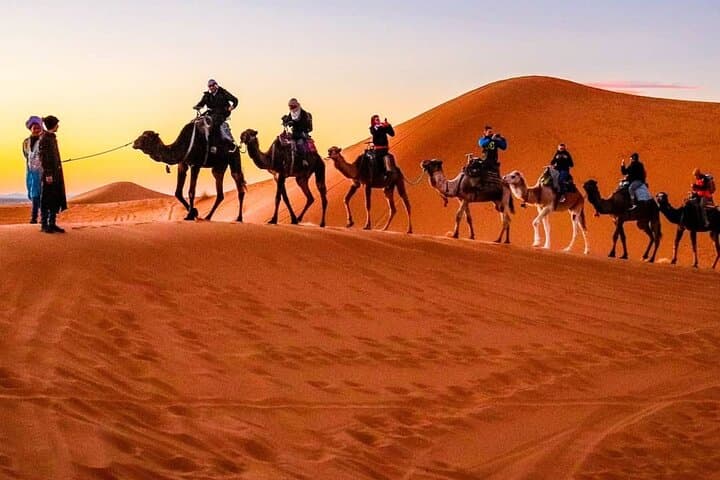
Drive over Tizi n'Tichka, explore Ait Ben Haddou, hike Todra and Dades gorges, then meet the orange sweep of Erg Chebbi for a camel-led sunset and overnight camp. This private 3-day circuit blends film-set kasbahs, fossil plains and true Saharan nights.
Drive over Tizi n'Tichka, explore Ait Ben Haddou, hike Todra and Dades gorges, then meet the orange sweep of Erg Chebbi for a camel-led sunset and overnight camp. This private 3-day circuit blends film-set kasbahs, fossil plains and true Saharan nights.
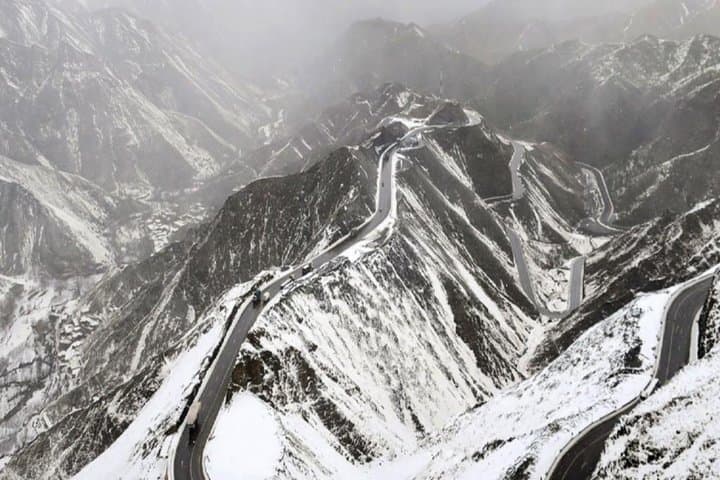
Before sunrise the High Atlas looms like a dark spine, and the road out of Marrakech unspools through hairpin turns and Berber villages. By mid-day the ochre kasbahs of Ait Ben Haddou appear on a river bluff, their mudbrick facades holding stories of caravan traffic and film crews. Over Tizi n'Tichka (2,260 m) the mountains give way to plateaus, then to the red sea of Erg Chebbi where dunes climb roughly 100–150 m and dare you to climb their wind-sculpted ridges.
Verified experiences and guided adventures in the surrounding area.
Operated by Safari Desert Tours · Merzouga, Drâa-Tafilalet
Before sunrise the High Atlas looms like a dark spine, and the road out of Marrakech unspools through hairpin turns and Berber villages. By mid-day the ochre kasbahs of Ait Ben Haddou appear on a river bluff, their mudbrick facades holding stories of caravan traffic and film crews. Over Tizi n'Tichka (2,260 m) the mountains give way to plateaus, then to the red sea of Erg Chebbi where dunes climb roughly 100–150 m and dare you to climb their wind-sculpted ridges.
This itinerary threads history and geology: kasbahs built on ancient trade routes, fossil-rich plains near Erfoud, and valleys like Dades and Todra carved by rivers into cathedral-like gorges. Cultural moments arrive in small things — the scent of rose water in Kelaa M’gouna, potters in Erfoud, and the nightly rhythm of a desert camp where a simple dinner and a berber tent open a window on Saharan life.
Practical guidance is concrete. Expect long drives (Marrakech–Merzouga is roughly 8–10 hours total, split across days), a 1½-hour camel trek to camp, and optional sandboarding. Elevation ranges from 1,600–2,200 m over the Atlas to near sea-level desert fringes; pack layers for cold desert nights. Bring sun protection, sturdy shoes for rocky gorges, and enough water for dune walks. Private transport and lodging logistics are handled, but be prepared for remote roads and variable cell service. Time your visit for shoulder seasons to avoid peak summer heat and enjoy clear star-filled skies above the dunes.
moderate.
3 days (approx. 72 hours).
Light-to-moderate fitness; must be able to mount a camel, walk on soft sand and climb short dune slopes.
The standard camel trek to the camp is about 1 to 1.5 hours each way; shorter rides can often be arranged on request.
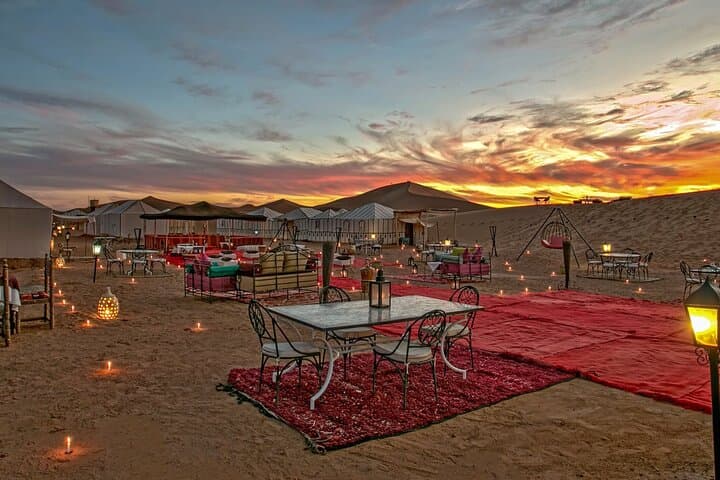
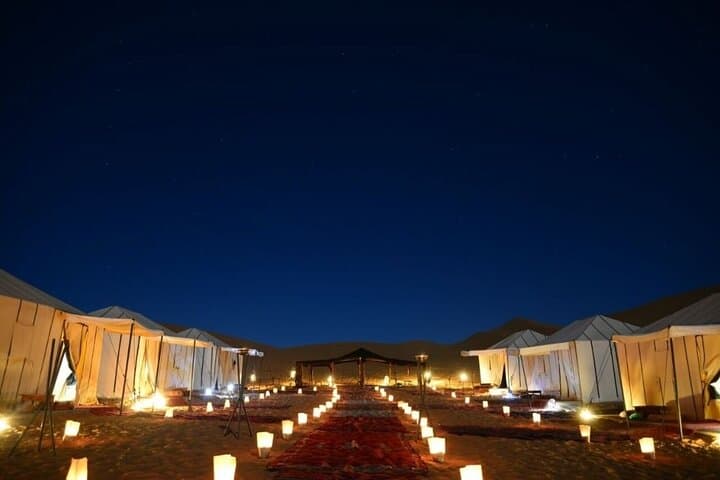
Many camps offer private tents with en-suite shower and toilet in higher-tier camps; confirm the accommodation level when booking.
No specialized fitness is required, but expect walking on sand and climbing dunes; the tour is advertised as suitable for most fitness levels.
Yes — it runs year-round, but summer brings extreme heat and winter nights can be very cold; schedule according to your comfort with temperature extremes.
The route follows historic caravan corridors across the High Atlas; Ait Ben Haddou and Telouet were strategic stops on trans-Saharan trade routes and later film locations.
Tour operators increasingly support water-saving camp practices and limit vehicle access across fragile dune crests; stick to established camel tracks and camps to reduce impact.
Safari Desert Tours operates guided outdoor trips and adventures with an emphasis on safety, stewardship, and memorable experiences.
Before sunrise the High Atlas looms like a dark spine, and the road out of Marrakech unspools through hairpin turns and Berber villages. By mid-day the ochre kasbahs of Ait Ben Haddou appear on a river bluff, their mudbrick facades holding stories of caravan traffic and film crews. Over Tizi n'Tichka (2,260 m) the mountains give way to plateaus, then to the red sea of Erg Chebbi where dunes climb roughly 100–150 m and dare you to climb their wind-sculpted ridges.
Before sunrise the High Atlas looms like a dark spine, and the road out of Marrakech unspools through hairpin turns and Berber villages. By mid-day the ochre kasbahs of Ait Ben Haddou appear on a river bluff, their mudbrick facades holding stories of caravan traffic and film crews. Over Tizi n'Tichka (2,260 m) the mountains give way to plateaus, then to the red sea of Erg Chebbi where dunes climb roughly 100–150 m and dare you to climb their wind-sculpted ridges.
This itinerary threads history and geology: kasbahs built on ancient trade routes, fossil-rich plains near Erfoud, and valleys like Dades and Todra carved by rivers into cathedral-like gorges. Cultural moments arrive in small things — the scent of rose water in Kelaa M’gouna, potters in Erfoud, and the nightly rhythm of a desert camp where a simple dinner and a berber tent open a window on Saharan life.
Practical guidance is concrete. Expect long drives (Marrakech–Merzouga is roughly 8–10 hours total, split across days), a 1½-hour camel trek to camp, and optional sandboarding. Elevation ranges from 1,600–2,200 m over the Atlas to near sea-level desert fringes; pack layers for cold desert nights. Bring sun protection, sturdy shoes for rocky gorges, and enough water for dune walks. Private transport and lodging logistics are handled, but be prepared for remote roads and variable cell service. Time your visit for shoulder seasons to avoid peak summer heat and enjoy clear star-filled skies above the dunes.