THE ADVENTURE COLLECTIVE® · Independent discovery and booking for outdoor travel

Three days of focused game drives from Arusha take you to Tarangire’s baobab-dotted plains, down into the Ngorongoro caldera and along Lake Manyara’s bird-rich shore. Expect long sits, early starts and high chances to see elephants, predators and flamingos.
Three days of focused game drives from Arusha take you to Tarangire’s baobab-dotted plains, down into the Ngorongoro caldera and along Lake Manyara’s bird-rich shore. Expect long sits, early starts and high chances to see elephants, predators and flamingos.
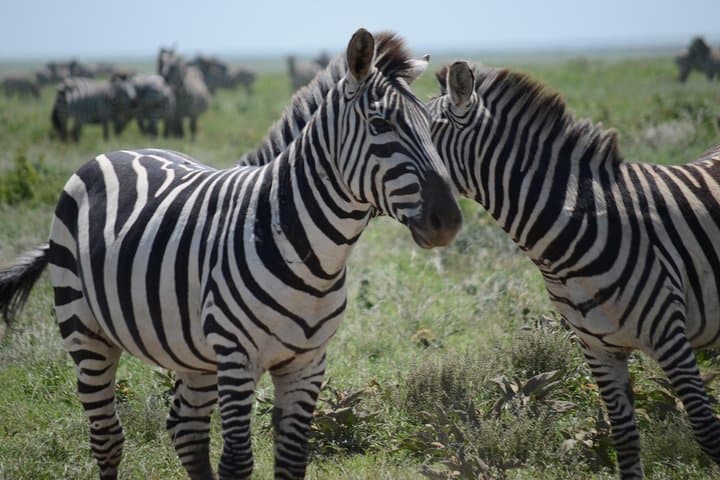
The morning light in northern Tanzania draws a slow map across the savanna: dust rises along the track, baobabs throw long shadows, and distant rumblings suggest a herd moving toward the river. On a private three-day loop from Arusha you’ll follow that sound—two mornings of game drives and one crater descent—watching animals against landscapes that change from floodplain to crater floor to alkaline lake.
Verified experiences and guided adventures in the surrounding area.
Operated by Simbaland Magic Tours · Arusha, Arusha Region
The morning light in northern Tanzania draws a slow map across the savanna: dust rises along the track, baobabs throw long shadows, and distant rumblings suggest a herd moving toward the river. On a private three-day loop from Arusha you’ll follow that sound—two mornings of game drives and one crater descent—watching animals against landscapes that change from floodplain to crater floor to alkaline lake.
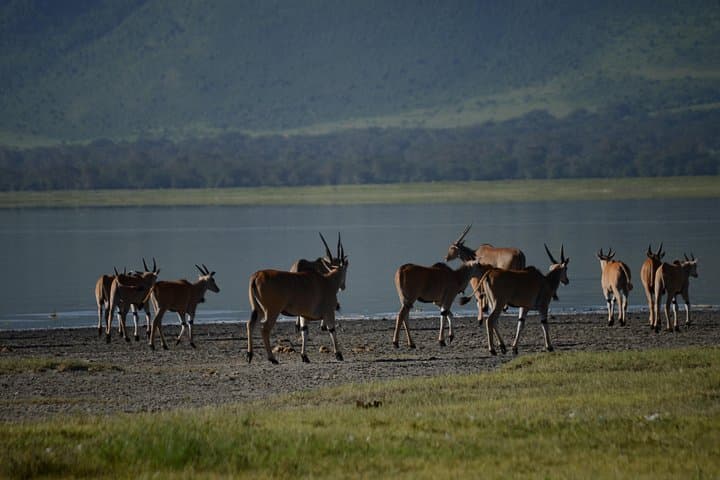
Geology defines this itinerary. Ngorongoro is a collapsed volcanic caldera with a rim around 2,300 m and a crater floor roughly 400–600 m below; that drop creates a year-round wildlife basin. Tarangire’s seasonal river and ancient baobabs concentrate elephants and other grazers during the dry months. Lake Manyara is an alkaline shallow lake whose shoreline and dense acacia forest attract flamingos, hippos and, occasionally, the famed tree-climbing lions.
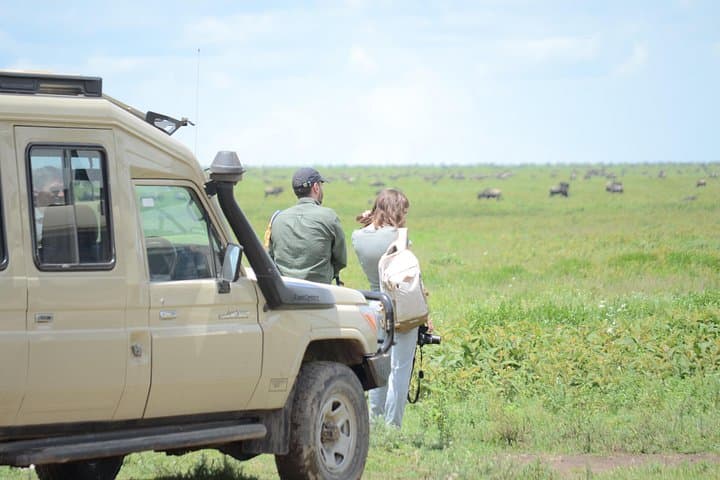
You’ll move by 4x4 vehicle, and most time is spent on slow, observational game drives; expect bumpy roads, early starts and long stretches sitting with the engine off while animals go about their day. Guides here read spoor and behavior as easily as a map—ask about Maasai land use and how pastoral traditions coexist with conservation.
Practical edge: bring a telephoto lens or good binoculars, hydrate for high-altitude mornings at the Ngorongoro rim, and prepare for dust and sun. Days are warm; nights, particularly on the crater rim, can be cool. This private loop balances big-game viewing with manageable drives and a strong chance to see elephants, predators and flocks of flamingos in three compact days.
moderate.
3 days.
Suitable for travelers in average physical condition — most activity involves sitting during game drives with short, easy walks at viewpoints.
Yes — parks are accessed by unpaved, often rutted roads; pop-top 4x4 vehicles are standard for visibility and safety.
That varies by operator; confirm at booking whether conservation and park entry fees are included or paid separately on arrival.
Tarangire and Ngorongoro offer strong chances for elephants, lions and buffalo; rhino sightings are possible but less common and depend on patrol patterns.
Yes — the itinerary is family-friendly, but arrange child seats if needed and check vaccination and health advice for young travelers.
The Ngorongoro area is both a geological caldera and a cultural landscape used for generations by Maasai pastoralists, who graze livestock in designated zones within the conservation area.
Tourism funds park management and anti-poaching, but visitors should minimize waste, stay on tracks and support operators that contribute to local communities and conservation initiatives.
Simbaland Magic Tours operates guided outdoor trips and adventures with an emphasis on safety, stewardship, and memorable experiences.
The morning light in northern Tanzania draws a slow map across the savanna: dust rises along the track, baobabs throw long shadows, and distant rumblings suggest a herd moving toward the river. On a private three-day loop from Arusha you’ll follow that sound—two mornings of game drives and one crater descent—watching animals against landscapes that change from floodplain to crater floor to alkaline lake.
The morning light in northern Tanzania draws a slow map across the savanna: dust rises along the track, baobabs throw long shadows, and distant rumblings suggest a herd moving toward the river. On a private three-day loop from Arusha you’ll follow that sound—two mornings of game drives and one crater descent—watching animals against landscapes that change from floodplain to crater floor to alkaline lake.
Geology defines this itinerary. Ngorongoro is a collapsed volcanic caldera with a rim around 2,300 m and a crater floor roughly 400–600 m below; that drop creates a year-round wildlife basin. Tarangire’s seasonal river and ancient baobabs concentrate elephants and other grazers during the dry months. Lake Manyara is an alkaline shallow lake whose shoreline and dense acacia forest attract flamingos, hippos and, occasionally, the famed tree-climbing lions.
You’ll move by 4x4 vehicle, and most time is spent on slow, observational game drives; expect bumpy roads, early starts and long stretches sitting with the engine off while animals go about their day. Guides here read spoor and behavior as easily as a map—ask about Maasai land use and how pastoral traditions coexist with conservation.
Practical edge: bring a telephoto lens or good binoculars, hydrate for high-altitude mornings at the Ngorongoro rim, and prepare for dust and sun. Days are warm; nights, particularly on the crater rim, can be cool. This private loop balances big-game viewing with manageable drives and a strong chance to see elephants, predators and flocks of flamingos in three compact days.