THE ADVENTURE COLLECTIVE® · Independent discovery and booking for outdoor travel

Traverse the High Atlas to Erg Chebbi in a private three-day journey from Marrakech. Visit Ait Ben Haddou, Todgha Gorge, and ride camels at sunset before a night in a desert camp under unpolluted stars.
Traverse the High Atlas to Erg Chebbi in a private three-day journey from Marrakech. Visit Ait Ben Haddou, Todgha Gorge, and ride camels at sunset before a night in a desert camp under unpolluted stars.
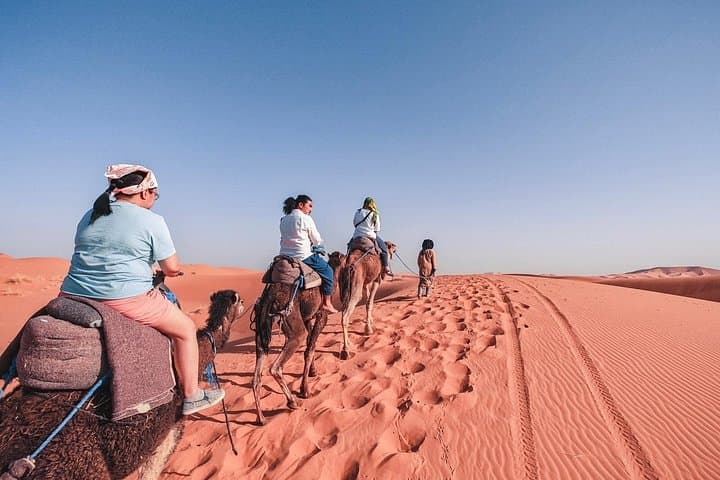
The sun slides low behind wind-sculpted ridges as your camel caravan threads the lip of Erg Chebbi; the sand takes on the color of copper and ink, and the horizon becomes an objective more felt than seen.
Verified experiences and guided adventures in the surrounding area.
Operated by Top sahara tours · Merzouga, Errachidia Province
The sun slides low behind wind-sculpted ridges as your camel caravan threads the lip of Erg Chebbi; the sand takes on the color of copper and ink, and the horizon becomes an objective more felt than seen.
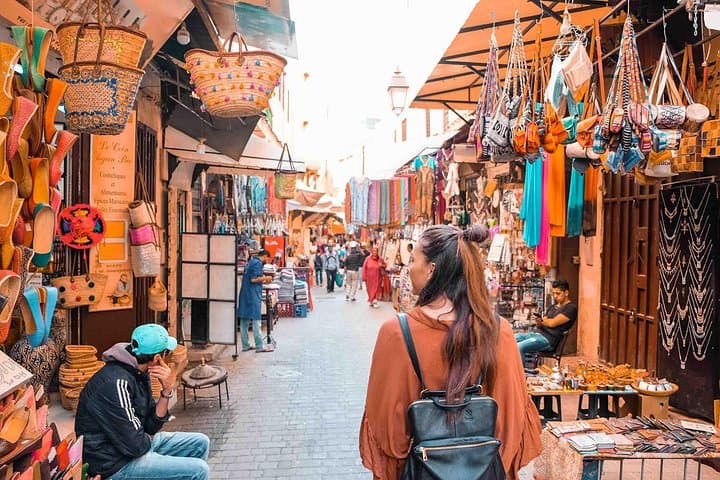
Start in Marrakech and climb the High Atlas via the Tizi n’Tichka pass (about 2,260 m), descend through oases and kasbahs, and follow river valleys into the layered gorges and red-rock palaces of southern Morocco. Day one moves through Ait Ben Haddou and Ouarzazate — a living film set and UNESCO kasbah — then into the Valley of the Roses for an overnight in Dades.
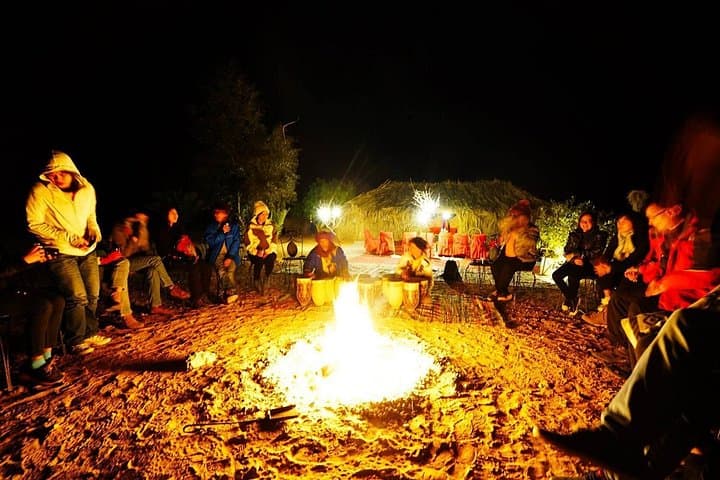
Day two traces palm-lined roads to the Todgha Gorge (cliffs up to ~300 m), skirts Rissani’s date market, and reaches Merzouga at the edge of Erg Chebbi, a dune field whose tallest ridges can exceed 150 m. You’ll ride camels at dusk, stay in a camp beneath clear desert sky, and listen to local music by the fire. Day three returns over the High Atlas toward Marrakech; expect long driving sections (Marrakech–Merzouga roughly 560 km, 8–10 hours including stops).
Practical edge: pack sun protection, layered clothing for cold nights, reusable water, and cash for remote stalls. Camel rides require basic balance; the camp is remote — phone signal can be patchy. Timing: late afternoon camel treks give the best light and cooler temperatures; spring and autumn offer the most comfortable daytime temps. Respect local customs, conserve water, and leave no trace — the desert records every footprint.
moderate.
3 days (approx. 72 hours).
Suitable for travelers who can sit through long drives, mount/dismount camels, and walk short uneven trails.
Expect day-one and day-three to include long driving stretches (total Marrakech–Merzouga ~8–10 hours including stops); day two has shorter drives with canyon visits before reaching the dunes.
Camel rides are low-impact but require balance for mounting/dismounting and riding over uneven sand—most travelers manage without special fitness.
This tour uses a private arrangement for your group but camps can be small-scale with shared dining and communal music evenings; confirm single-tent options when booking.
Camel saddles and vehicle transfers can aggravate spinal issues; the operator advises caution and to disclose conditions before booking.
The route follows historic caravan tracks and stops at fortified kasbahs like Ait Ben Haddou, a pre-modern hub on trans-Saharan trade routes and a UNESCO site.
Water scarcity and fragile dune ecosystems make leaving no trace essential; support local guides and use refillable water to reduce plastic waste.
Top sahara tours operates guided outdoor trips and adventures with an emphasis on safety, stewardship, and memorable experiences.

The sun slides low behind wind-sculpted ridges as your camel caravan threads the lip of Erg Chebbi; the sand takes on the color of copper and ink, and the horizon becomes an objective more felt than seen.
The sun slides low behind wind-sculpted ridges as your camel caravan threads the lip of Erg Chebbi; the sand takes on the color of copper and ink, and the horizon becomes an objective more felt than seen.
Start in Marrakech and climb the High Atlas via the Tizi n’Tichka pass (about 2,260 m), descend through oases and kasbahs, and follow river valleys into the layered gorges and red-rock palaces of southern Morocco. Day one moves through Ait Ben Haddou and Ouarzazate — a living film set and UNESCO kasbah — then into the Valley of the Roses for an overnight in Dades.
Day two traces palm-lined roads to the Todgha Gorge (cliffs up to ~300 m), skirts Rissani’s date market, and reaches Merzouga at the edge of Erg Chebbi, a dune field whose tallest ridges can exceed 150 m. You’ll ride camels at dusk, stay in a camp beneath clear desert sky, and listen to local music by the fire. Day three returns over the High Atlas toward Marrakech; expect long driving sections (Marrakech–Merzouga roughly 560 km, 8–10 hours including stops).
Practical edge: pack sun protection, layered clothing for cold nights, reusable water, and cash for remote stalls. Camel rides require basic balance; the camp is remote — phone signal can be patchy. Timing: late afternoon camel treks give the best light and cooler temperatures; spring and autumn offer the most comfortable daytime temps. Respect local customs, conserve water, and leave no trace — the desert records every footprint.