THE ADVENTURE COLLECTIVE® · Independent discovery and booking for outdoor travel

A private three-day circuit from Marrakech to Merzouga that combines High Atlas mountain passes, UNESCO-listed Kasbah Ait Ben Haddou, Todgha and Dades gorges, and an overnight under the stars at Erg Chebbi. Ideal for travelers who want a compact but immersive Sahara experience with guided camel rides and local camp hospitality.
A private three-day circuit from Marrakech to Merzouga that combines High Atlas mountain passes, UNESCO-listed Kasbah Ait Ben Haddou, Todgha and Dades gorges, and an overnight under the stars at Erg Chebbi. Ideal for travelers who want a compact but immersive Sahara experience with guided camel rides and local camp hospitality.
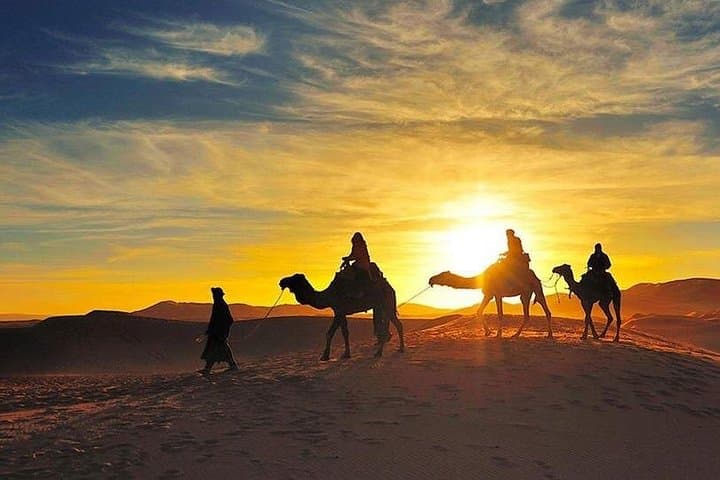
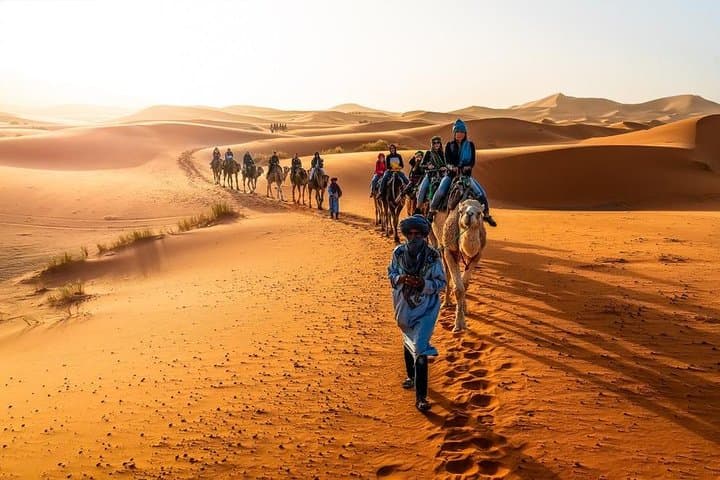
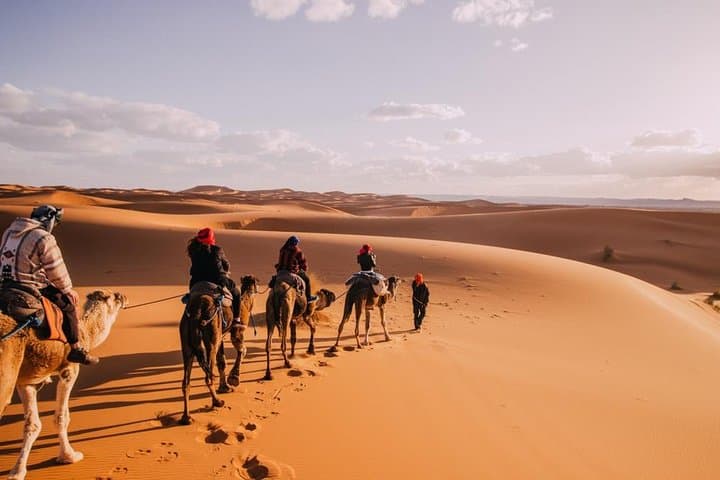
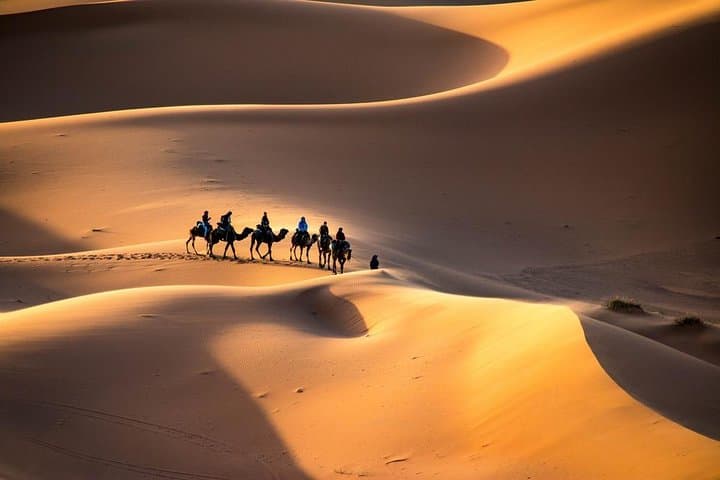
You leave Marrakech before dawn, the medina shrinking behind you as the road climbs through the High Atlas. By mid-morning the pass opens: terraced fields give way to ochre kasbahs, then the valley floors where the air tastes drier. On day two the landscape tips into the Sahara—waves of sand rise and fall like an ocean frozen mid-swell.
Verified experiences and guided adventures in the surrounding area.
Operated by Time Out travel · Merzouga, Drâa-Tafilalet
You leave Marrakech before dawn, the medina shrinking behind you as the road climbs through the High Atlas. By mid-morning the pass opens: terraced fields give way to ochre kasbahs, then the valley floors where the air tastes drier. On day two the landscape tips into the Sahara—waves of sand rise and fall like an ocean frozen mid-swell.
This route threads centuries of history: caravan tracks, fortified Ksours and Ait Ben Haddou’s mud-brick façades that once stood on trans-Saharan trade arteries and now host film crews. Geologically, the High Atlas is young and uplifted, while Erg Chebbi’s dunes are wind-built stars and linear ridges; some dunes here crest at more than 100 metres and shift with seasonal winds.
Culture feels immediate in the villages and at the desert camp—Berber drummers, mint tea rituals and rose distillation in the Valley of the Roses. Local guides interpret the land and its traditions, making the trip more than scenery.
Practical notes: expect long drives (day 1 ~6 hours, day 2 ~4 hours to Merzouga, day 3 ~9 hours back to Marrakech) with multiple short stops. Camel treks are gentle but bring closed-toe shoes for the climb up dunes, a headscarf for sand and sun, and a warm layer for cold desert nights. Hydrate proactively—the desert is dry even in spring and fall. Choose sunrise or sunset camel rides for the best light; the camp’s star-filled sky rewards late nights. This private itinerary balances sightseeing with time to stretch legs in canyons, kasbahs and the sand itself.
moderate.
3 days (approx. 72 hours).
Moderate fitness recommended—able to manage several hours of light walking and short dune climbs; long vehicle transfers require stamina.
Day 1 involves roughly 6 hours of driving with stops (Marrakech to Dades Valley), day 2 about 4 hours to Merzouga with sightseeing, and day 3 about 9 hours returning to Marrakech with breaks.
Yes—camel treks to the camp are gentle and guided; notify the operator if you have mobility concerns so they can provide assistance.
The tour includes an overnight in a Sahara desert camp with private tents; deluxe camp upgrades are usually available for an extra fee.
This is a private tour, which typically allows flexibility in stops and pacing—confirm customization options with the operator in advance.
The route follows historic trans-Saharan corridors; Ait Ben Haddou and local ksours were once strategic stops for salt and caravan trade and later filming locations.
Water is scarce—use refillable bottles and minimize waste. Support local guides and camps that follow leave-no-trace practices and hire staff from nearby communities.
Time Out travel operates guided outdoor trips and adventures with an emphasis on safety, stewardship, and memorable experiences.
You leave Marrakech before dawn, the medina shrinking behind you as the road climbs through the High Atlas. By mid-morning the pass opens: terraced fields give way to ochre kasbahs, then the valley floors where the air tastes drier. On day two the landscape tips into the Sahara—waves of sand rise and fall like an ocean frozen mid-swell.
You leave Marrakech before dawn, the medina shrinking behind you as the road climbs through the High Atlas. By mid-morning the pass opens: terraced fields give way to ochre kasbahs, then the valley floors where the air tastes drier. On day two the landscape tips into the Sahara—waves of sand rise and fall like an ocean frozen mid-swell.
This route threads centuries of history: caravan tracks, fortified Ksours and Ait Ben Haddou’s mud-brick façades that once stood on trans-Saharan trade arteries and now host film crews. Geologically, the High Atlas is young and uplifted, while Erg Chebbi’s dunes are wind-built stars and linear ridges; some dunes here crest at more than 100 metres and shift with seasonal winds.
Culture feels immediate in the villages and at the desert camp—Berber drummers, mint tea rituals and rose distillation in the Valley of the Roses. Local guides interpret the land and its traditions, making the trip more than scenery.
Practical notes: expect long drives (day 1 ~6 hours, day 2 ~4 hours to Merzouga, day 3 ~9 hours back to Marrakech) with multiple short stops. Camel treks are gentle but bring closed-toe shoes for the climb up dunes, a headscarf for sand and sun, and a warm layer for cold desert nights. Hydrate proactively—the desert is dry even in spring and fall. Choose sunrise or sunset camel rides for the best light; the camp’s star-filled sky rewards late nights. This private itinerary balances sightseeing with time to stretch legs in canyons, kasbahs and the sand itself.