THE ADVENTURE COLLECTIVE® · Independent discovery and booking for outdoor travel

Cross the High Atlas, walk through a UNESCO kasbah, ride camels at sunset and sleep beneath the stars in Erg Chebbi. This private 3-day trip from Marrakech packs geology, film history and traditional desert nights into a compact itinerary.
Cross the High Atlas, walk through a UNESCO kasbah, ride camels at sunset and sleep beneath the stars in Erg Chebbi. This private 3-day trip from Marrakech packs geology, film history and traditional desert nights into a compact itinerary.
A dust-sweet wind pushes across the road as you leave Marrakech at dawn, Atlas ridgelines sliding behind the vehicle and the villages of the road of a thousand kasbahs waking into light. By afternoon the landscape opens into ochre valleys and the first flanks of the High Atlas give way to the baked plains that lead toward Erg Chebbi. At sunset in Merzouga, a line of camels steps crest the duneface; the dunes glow like hot copper and a small camp lights up against the night.
Verified experiences and guided adventures in the surrounding area.
Operated by Deep South Travel Marrakech · Merzouga, Drâa-Tafilalet
A dust-sweet wind pushes across the road as you leave Marrakech at dawn, Atlas ridgelines sliding behind the vehicle and the villages of the road of a thousand kasbahs waking into light. By afternoon the landscape opens into ochre valleys and the first flanks of the High Atlas give way to the baked plains that lead toward Erg Chebbi. At sunset in Merzouga, a line of camels steps crest the duneface; the dunes glow like hot copper and a small camp lights up against the night.
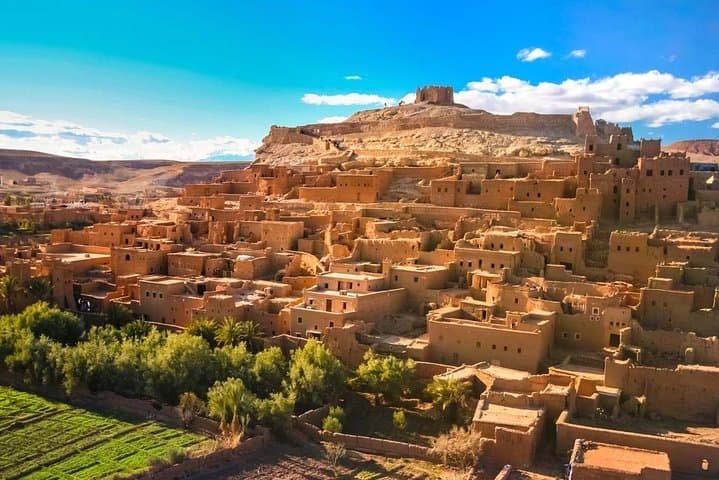
The route links UNESCO-listed Ait Ben Haddou — a fortified ksar with a cinematic past — to Todra Gorge’s vertical limestone walls and the sculpted palms of Dades. Geologically, Erg Chebbi is a classic star and crescent dune field formed by prevailing northerly winds that pile sand into ridges up to 150 meters high. Culturally the trip moves through Berber towns that were once caravan stops on trans-Saharan trade routes; local families run many of the camps and kasbah guesthouses you’ll visit.
Practical guidance: this private itinerary covers 3 days and long driving legs (expect up to 10 hours on day three). Pack sun protection and layers for cold desert nights; wear closed shoes for sand and sturdy walking on kasbah terraces. Camel rides last about two hours at sunset and sunrise; guides handle saddles and routes, but expect simple, unpaved paths between villages. Bring a small daypack, reusable water bottle, photocopies of travel documents, and an open schedule — the best moments are the quiet ones between waypoints.
moderate.
3 days.
Suitable for travelers in average fitness; must be comfortable with long vehicle days and walking on sand for up to two hours.
Camel rides are approximately two hours in Erg Chebbi — timed at sunset and sunrise for cooler conditions and best light.
The itinerary is family-friendly but not recommended for travelers with serious spinal issues; camel riding and vehicle transfers can be jarring.
Options vary by package: traditional nomad camps typically offer private tents; luxury camps provide private bathrooms and hot showers in select tents.
Expect long drives: the route crosses the High Atlas and can take about 8–10 hours on the return leg, with stops at Ait Ben Haddou and Ouarzazate en route.
Ait Ben Haddou was a fortified stop on trans-Saharan trade routes and later a favored film location; the route connects caravan-era settlements across the Draa and Todra valleys.
The Sahara’s dune systems are sensitive to off-track vehicle use and water scarcity; choose operators that limit their footprint and support local communities.
Deep South Travel Marrakech operates guided outdoor trips and adventures with an emphasis on safety, stewardship, and memorable experiences.
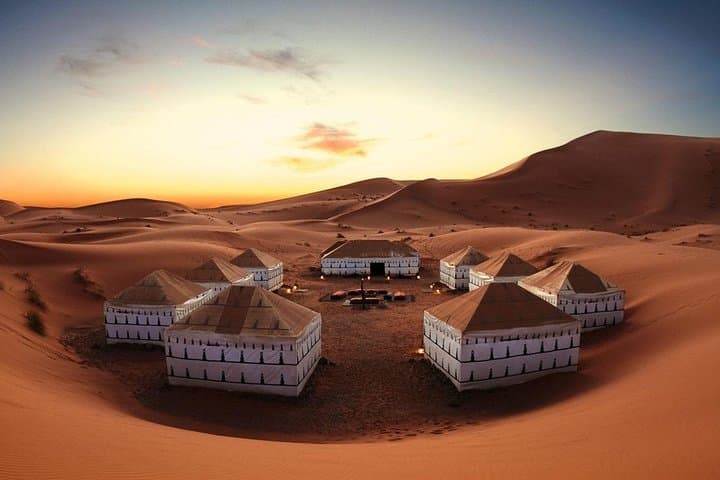
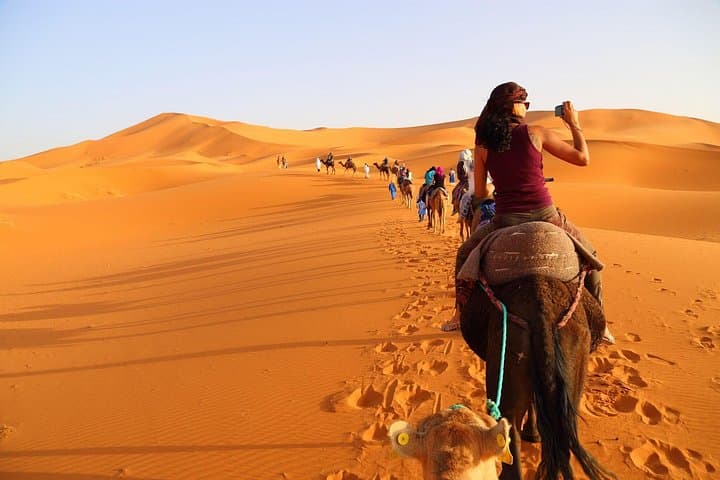
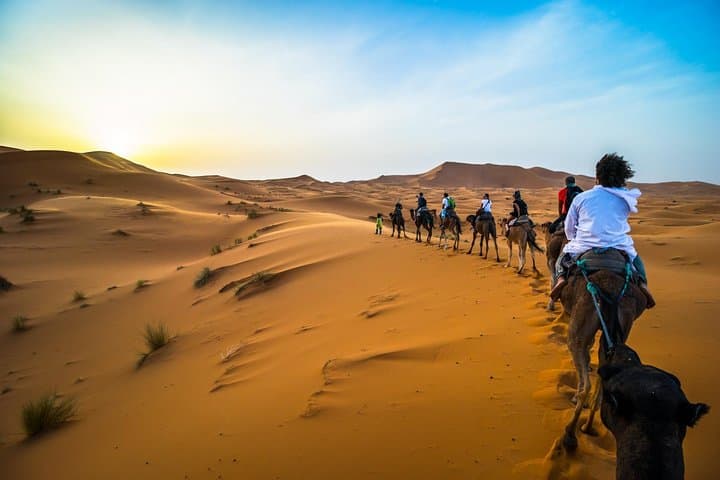
A dust-sweet wind pushes across the road as you leave Marrakech at dawn, Atlas ridgelines sliding behind the vehicle and the villages of the road of a thousand kasbahs waking into light. By afternoon the landscape opens into ochre valleys and the first flanks of the High Atlas give way to the baked plains that lead toward Erg Chebbi. At sunset in Merzouga, a line of camels steps crest the duneface; the dunes glow like hot copper and a small camp lights up against the night.
A dust-sweet wind pushes across the road as you leave Marrakech at dawn, Atlas ridgelines sliding behind the vehicle and the villages of the road of a thousand kasbahs waking into light. By afternoon the landscape opens into ochre valleys and the first flanks of the High Atlas give way to the baked plains that lead toward Erg Chebbi. At sunset in Merzouga, a line of camels steps crest the duneface; the dunes glow like hot copper and a small camp lights up against the night.
The route links UNESCO-listed Ait Ben Haddou — a fortified ksar with a cinematic past — to Todra Gorge’s vertical limestone walls and the sculpted palms of Dades. Geologically, Erg Chebbi is a classic star and crescent dune field formed by prevailing northerly winds that pile sand into ridges up to 150 meters high. Culturally the trip moves through Berber towns that were once caravan stops on trans-Saharan trade routes; local families run many of the camps and kasbah guesthouses you’ll visit.
Practical guidance: this private itinerary covers 3 days and long driving legs (expect up to 10 hours on day three). Pack sun protection and layers for cold desert nights; wear closed shoes for sand and sturdy walking on kasbah terraces. Camel rides last about two hours at sunset and sunrise; guides handle saddles and routes, but expect simple, unpaved paths between villages. Bring a small daypack, reusable water bottle, photocopies of travel documents, and an open schedule — the best moments are the quiet ones between waypoints.