THE ADVENTURE COLLECTIVE® · Independent discovery and booking for outdoor travel

Traverse the High Atlas, explore the Drâa Valley and spend a star-lit night in the dunes of Erg Chegaga on this private three-day desert safari. Expect long drives, cultural stops, a camel ride and an overnight bivouac under vivid skies.
Traverse the High Atlas, explore the Drâa Valley and spend a star-lit night in the dunes of Erg Chegaga on this private three-day desert safari. Expect long drives, cultural stops, a camel ride and an overnight bivouac under vivid skies.
A diesel-scented convoy slips out of Marrakech at dawn, climbing Tizi n’Tichka as the High Atlas opens like a folded map. Sunlight strips the red of the kasbahs to gold; in the distance the road runs toward palms and ochre earth. By late afternoon you arrive in M’hamid, where a palm grove breathes cool air and camels stand patient under date palms.
Verified experiences and guided adventures in the surrounding area.
Operated by Tombouctour · Marrakech, Marrakesh-Safi
A diesel-scented convoy slips out of Marrakech at dawn, climbing Tizi n’Tichka as the High Atlas opens like a folded map. Sunlight strips the red of the kasbahs to gold; in the distance the road runs toward palms and ochre earth. By late afternoon you arrive in M’hamid, where a palm grove breathes cool air and camels stand patient under date palms.
The route traces millennia of trade and geology. The Drâa Valley’s irrigation lines and earthen kasbahs mark human adaptation to scarce water; Tamgroute’s clay ceramics and its small Koranic library speak to a living craft culture. Geologically, the trip moves from uplifted alpine ranges to alluvial plains and finally to the sandy seas of Erg Chegaga, an area of large transverse dunes shaped by persistent Saharan winds.
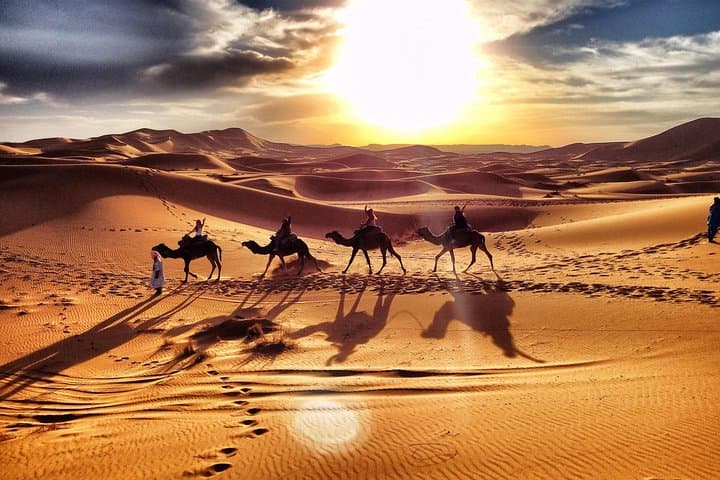
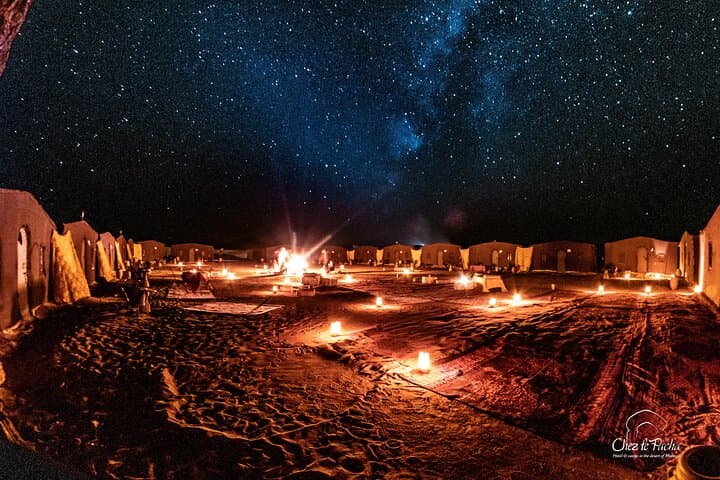
Culture here is tactile—handwoven Berber rugs in Taznakht, pottery firing in Tamgroute, and campfire conversation with guides who read stars like maps. At Chegaga you sleep in a desert bivouac; the dunes press and retreat like a quiet audience and the Milky Way feels close enough to touch.
Practical guidance: travel by 4x4—roads vary from tarmac to firm desert track—allow long driving stretches and early starts to beat heat. Pack layered clothing for cold desert nights, bring at least 3–4 liters of water per person per day, and wear closed shoes for sand and rocky stretches. Expect minimal facilities in the bivouac; tipping and local purchases support small desert communities.
easy.
3 days (~72 hours).
Suitable for travelers in general good health; involves short walks, a camel ride and mostly vehicle transfers.
Yes—this private tour is classified as physically easy with vehicle transfers between sites; however, camel rides and desert terrain may be uncomfortable for very young children or those with mobility issues.
Overnight one night is in a desert bivouac (camp) with basic facilities; M’hamid and Chegaga stays are in local guesthouses or camps as described in the itinerary.
Lunches, breakfasts and dinners listed in the inclusions are provided; bring extra drinking water and snacks for long transfers.
Bring motion-sickness remedies if needed, pack layers, have accessible water and plan for early starts and stops at scenic viewpoints.
The route follows ancient caravan corridors from Saharan trade networks; kasbahs and palm groves grew where water allowed trade and agriculture to persist.
Travel impacts in the Erg Chegaga area are concentrated around bivouac sites and vehicle tracks—stick to established routes, take all waste with you and prioritize locally operated camps that support communities.
Tombouctour operates guided outdoor trips and adventures with an emphasis on safety, stewardship, and memorable experiences.
A diesel-scented convoy slips out of Marrakech at dawn, climbing Tizi n’Tichka as the High Atlas opens like a folded map. Sunlight strips the red of the kasbahs to gold; in the distance the road runs toward palms and ochre earth. By late afternoon you arrive in M’hamid, where a palm grove breathes cool air and camels stand patient under date palms.
A diesel-scented convoy slips out of Marrakech at dawn, climbing Tizi n’Tichka as the High Atlas opens like a folded map. Sunlight strips the red of the kasbahs to gold; in the distance the road runs toward palms and ochre earth. By late afternoon you arrive in M’hamid, where a palm grove breathes cool air and camels stand patient under date palms.
The route traces millennia of trade and geology. The Drâa Valley’s irrigation lines and earthen kasbahs mark human adaptation to scarce water; Tamgroute’s clay ceramics and its small Koranic library speak to a living craft culture. Geologically, the trip moves from uplifted alpine ranges to alluvial plains and finally to the sandy seas of Erg Chegaga, an area of large transverse dunes shaped by persistent Saharan winds.
Culture here is tactile—handwoven Berber rugs in Taznakht, pottery firing in Tamgroute, and campfire conversation with guides who read stars like maps. At Chegaga you sleep in a desert bivouac; the dunes press and retreat like a quiet audience and the Milky Way feels close enough to touch.
Practical guidance: travel by 4x4—roads vary from tarmac to firm desert track—allow long driving stretches and early starts to beat heat. Pack layered clothing for cold desert nights, bring at least 3–4 liters of water per person per day, and wear closed shoes for sand and rocky stretches. Expect minimal facilities in the bivouac; tipping and local purchases support small desert communities.