THE ADVENTURE COLLECTIVE® · Independent discovery and booking for outdoor travel

Spend three concentrated days with a private Egyptologist exploring Giza’s pyramids, the Egyptian Museum, the Citadel, and Coptic Cairo. This practical guide outlines what you’ll see, the history behind it, and how to prepare for long days under the Egyptian sun.
Spend three concentrated days with a private Egyptologist exploring Giza’s pyramids, the Egyptian Museum, the Citadel, and Coptic Cairo. This practical guide outlines what you’ll see, the history behind it, and how to prepare for long days under the Egyptian sun.
You step from the car onto warm limestone at Giza and the wind seems to push you toward the silhouette of the Great Pyramid — a structure that still measures human ambition in blocks and angles. Over three compact days this private tour moves through Cairo’s most arresting chapters: the Pyramids and Sphinx on the Giza Plateau, the funerary steps of Saqqara and Memphis’s ruined statuary; the museum rooms that hold Tutankhamun’s gold; the citadel’s ramparts and Mohamed Ali’s alabaster curve; and finally the new National Museum of Egyptian Civilization and the quiet courtyards of Coptic Cairo.
Verified experiences and guided adventures in the surrounding area.
Operated by Egyptravel Tours · Cairo, Cairo Governorate
You step from the car onto warm limestone at Giza and the wind seems to push you toward the silhouette of the Great Pyramid — a structure that still measures human ambition in blocks and angles. Over three compact days this private tour moves through Cairo’s most arresting chapters: the Pyramids and Sphinx on the Giza Plateau, the funerary steps of Saqqara and Memphis’s ruined statuary; the museum rooms that hold Tutankhamun’s gold; the citadel’s ramparts and Mohamed Ali’s alabaster curve; and finally the new National Museum of Egyptian Civilization and the quiet courtyards of Coptic Cairo.
Geology here is visible: quarried limestone and granite hewn into kings’ houses, and the Nile’s alluvial plain that allowed a civilization to concentrate labor and monuments. Politically and culturally, modern Cairo sits atop layers of Pharaonic, Greco-Roman, Islamic and Coptic histories; Khan el-Khalili still carries the trading rhythms of the Mamluk era. Local guides (Egyptologists on this tour) bring hieroglyphs, dynasties and the Pharaohs’ Golden Parade into readable stories.
Practical guidance: each day includes walking on uneven stone and exposed desert heat — aim for early starts at Giza and mid-afternoon museum visits to avoid high sun. Bring a brimmed hat, sturdy walking shoes, sunscreen and small bills for tipping and market bargaining. Expect 6–8 hours of guided time per day, comfortable transport between sites, and wheelchair-accessible options on request. With planning, the three days feel like a condensed archaeological field season — intense, vivid and entirely manageable.
moderate.
3 days (approx. 72 hours).
Suitable for most travelers with the ability to walk 2–4 miles per day on uneven surfaces and climb short stairways.
Entrance fees for the mentioned sites are included, but the inside-the-pyramid ticket and any optional extras (like camel rides) are typically not included.
The tour lists wheelchair-accessible transportation and many surfaces are accessible, but some archaeological sites have steps and uneven terrain — check specifics during booking.
The meeting point is Tahrir Square in downtown Cairo (in front of KFC near the Egyptian Museum); pickup and drop-off at the same point is standard unless otherwise arranged.
Autumn through spring (October–April) offers milder temperatures; summer can be very hot, especially at open-air sites like Giza and Saqqara.
Cairo’s layers reflect millennia: Pharaonic capitals at Memphis and Saqqara, medieval Mamluk trading networks at Khan el-Khalili, and Ottoman-era fortifications at the Citadel.
Visitor pressure at Giza and in museum spaces requires respectful routing and limited touching; support sites that use revenues for conservation and local community programs.
Egyptravel Tours operates guided outdoor trips and adventures with an emphasis on safety, stewardship, and memorable experiences.


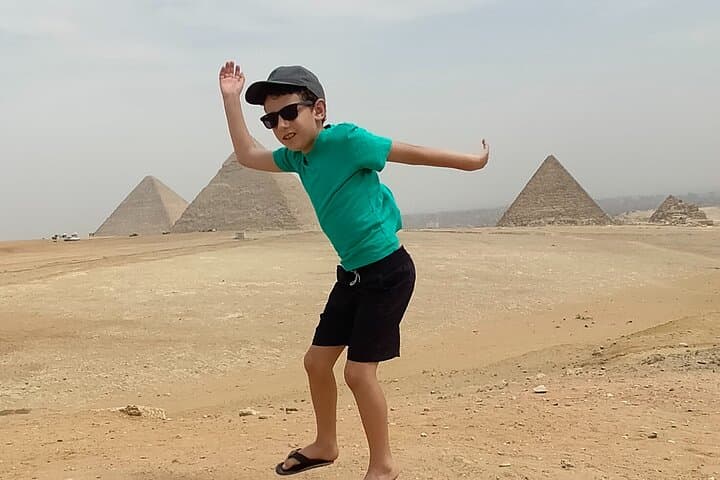

You step from the car onto warm limestone at Giza and the wind seems to push you toward the silhouette of the Great Pyramid — a structure that still measures human ambition in blocks and angles. Over three compact days this private tour moves through Cairo’s most arresting chapters: the Pyramids and Sphinx on the Giza Plateau, the funerary steps of Saqqara and Memphis’s ruined statuary; the museum rooms that hold Tutankhamun’s gold; the citadel’s ramparts and Mohamed Ali’s alabaster curve; and finally the new National Museum of Egyptian Civilization and the quiet courtyards of Coptic Cairo.
You step from the car onto warm limestone at Giza and the wind seems to push you toward the silhouette of the Great Pyramid — a structure that still measures human ambition in blocks and angles. Over three compact days this private tour moves through Cairo’s most arresting chapters: the Pyramids and Sphinx on the Giza Plateau, the funerary steps of Saqqara and Memphis’s ruined statuary; the museum rooms that hold Tutankhamun’s gold; the citadel’s ramparts and Mohamed Ali’s alabaster curve; and finally the new National Museum of Egyptian Civilization and the quiet courtyards of Coptic Cairo.
Geology here is visible: quarried limestone and granite hewn into kings’ houses, and the Nile’s alluvial plain that allowed a civilization to concentrate labor and monuments. Politically and culturally, modern Cairo sits atop layers of Pharaonic, Greco-Roman, Islamic and Coptic histories; Khan el-Khalili still carries the trading rhythms of the Mamluk era. Local guides (Egyptologists on this tour) bring hieroglyphs, dynasties and the Pharaohs’ Golden Parade into readable stories.
Practical guidance: each day includes walking on uneven stone and exposed desert heat — aim for early starts at Giza and mid-afternoon museum visits to avoid high sun. Bring a brimmed hat, sturdy walking shoes, sunscreen and small bills for tipping and market bargaining. Expect 6–8 hours of guided time per day, comfortable transport between sites, and wheelchair-accessible options on request. With planning, the three days feel like a condensed archaeological field season — intense, vivid and entirely manageable.