THE ADVENTURE COLLECTIVE® · Independent discovery and booking for outdoor travel

A compact three-day private loop from Surabaya that pairs Mount Bromo’s ash-swept ridgelines with Ijen’s turquoise lake and sulfur-mining terraces. Early starts, steep sections, and long drives reward you with dramatic sunrises and volcanic spectacles.
A compact three-day private loop from Surabaya that pairs Mount Bromo’s ash-swept ridgelines with Ijen’s turquoise lake and sulfur-mining terraces. Early starts, steep sections, and long drives reward you with dramatic sunrises and volcanic spectacles.
You arrive before dawn, the jeep engine humming as the sky thins from ink to cold blue. At 2–4 a.m. the landscape is a silhouette: the crater rims of Mount Bromo and distant cones of the Tengger massif like dark teeth. On day one you drive through highland pine and lava-browned scrub to a guesthouse at Cemara Lawang, where volcanic breath and crisp air set the tempo.
Verified experiences and guided adventures in the surrounding area.
Operated by East Java Paradise Travel · Cemara Lawang / Probolinggo, East Java
You arrive before dawn, the jeep engine humming as the sky thins from ink to cold blue. At 2–4 a.m. the landscape is a silhouette: the crater rims of Mount Bromo and distant cones of the Tengger massif like dark teeth. On day one you drive through highland pine and lava-browned scrub to a guesthouse at Cemara Lawang, where volcanic breath and crisp air set the tempo.
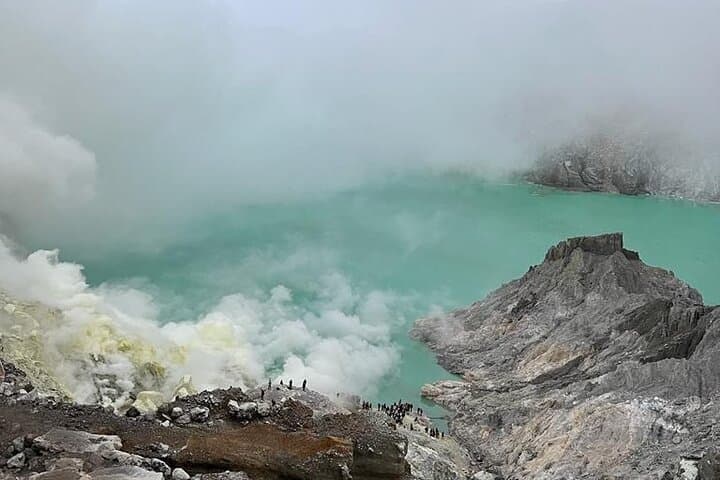
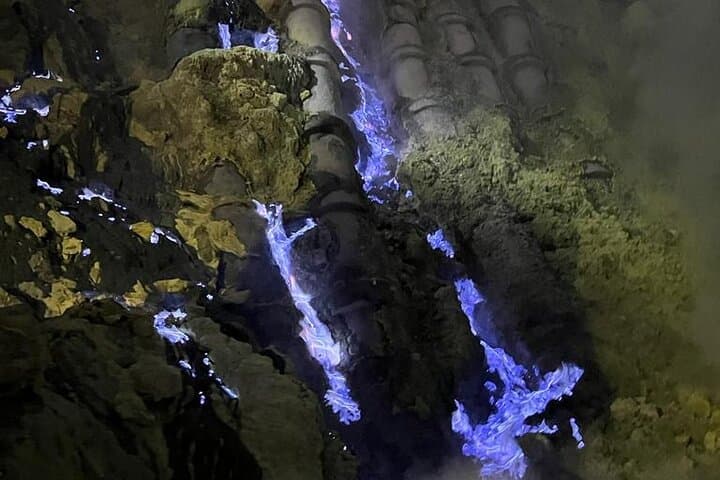
These twin volcanic sites tell different geological stories. Bromo’s open caldera and steep crater are the product of a massive collapse and persistent eruptions; Ijen is a younger stratovolcano with a highly acidic turquoise crater lake and active sulfur mining—miners haul baskets of bright yellow sulfur from the rim below the haze of gas.
Culturally the Tengger people maintain Hindu-Buddhist rituals here; offerings and small shrines punctuate trails around Bromo. Banyuwangi and Bondowoso at Ijen’s base are working towns where coffee stalls and simple warungs serve breakfast to climbers.
Practical guidance: the Ijen hike is 3 km one-way from the parking area, 1–2 hours with sections of steep stair and scree; Bromo sunrise viewpoints sit around 2,600 m with cold winds and loose sand underfoot. Expect early starts (03:00), intermittent sulfur fumes at Ijen—bring a respirator or gas mask—and layered warm clothing for pre-dawn temperatures near freezing. Wear sturdy boots with good traction, carry 1–2 liters of water, and plan transfers carefully—roads are narrow and drives between sites take several hours. With preparation, the contrast of ash-swept ridgelines and the surreal turquoise lake makes this compact three-day loop a vivid introduction to Java’s volcanic backbone.
moderate.
3 days.
Moderate fitness—able to hike 1–2 hours uphill with a light pack and tolerate early wake-ups and long vehicle transfers.
Bromo’s main walks are short (30–60 minutes around the crater area) while the Ijen approach from the parking area is about 3 km one-way and typically takes 1–2 hours depending on fitness.
Due to steep sections, unstable footing and sulfur fumes, these tours are not recommended for infants, pregnant travelers, or those with serious back or heart conditions.
Yes—the tour commonly departs from Surabaya or Malang with long drives; many operators offer pickup from hotels, airports or train stations in those cities.
Guides and local drivers are strongly recommended—guides know safe viewpoints, route conditions and local regulations, and drivers manage the remote road network between sites.
The Tengger massif is the remnant of a massive caldera collapse; Ijen’s sulfur mining dates back generations and remains an important local livelihood despite hazardous conditions.
Both sites are ecologically sensitive—stay on marked paths, avoid littering, and limit time near the crater lake due to acidic conditions and fragile vegetation.
East Java Paradise Travel operates guided outdoor trips and adventures with an emphasis on safety, stewardship, and memorable experiences.
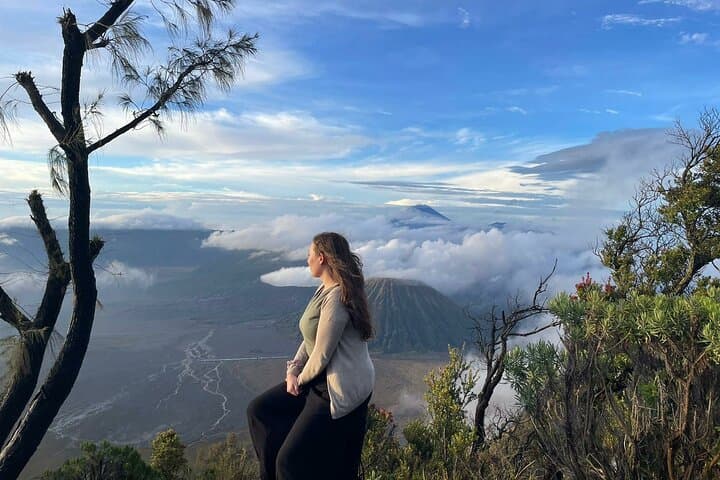
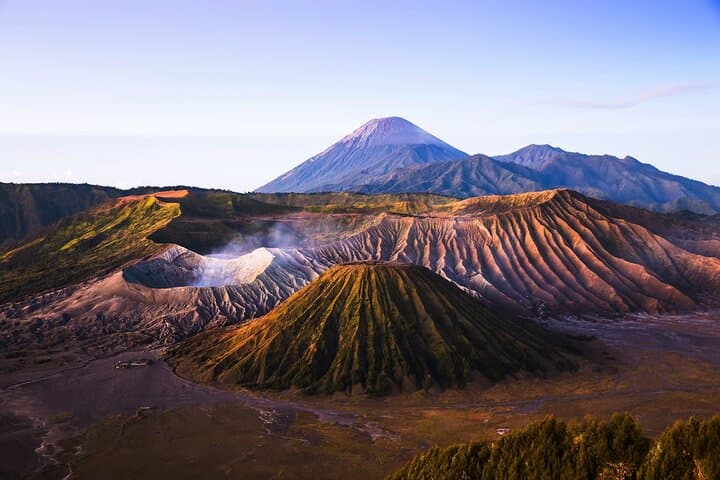
You arrive before dawn, the jeep engine humming as the sky thins from ink to cold blue. At 2–4 a.m. the landscape is a silhouette: the crater rims of Mount Bromo and distant cones of the Tengger massif like dark teeth. On day one you drive through highland pine and lava-browned scrub to a guesthouse at Cemara Lawang, where volcanic breath and crisp air set the tempo.
You arrive before dawn, the jeep engine humming as the sky thins from ink to cold blue. At 2–4 a.m. the landscape is a silhouette: the crater rims of Mount Bromo and distant cones of the Tengger massif like dark teeth. On day one you drive through highland pine and lava-browned scrub to a guesthouse at Cemara Lawang, where volcanic breath and crisp air set the tempo.
These twin volcanic sites tell different geological stories. Bromo’s open caldera and steep crater are the product of a massive collapse and persistent eruptions; Ijen is a younger stratovolcano with a highly acidic turquoise crater lake and active sulfur mining—miners haul baskets of bright yellow sulfur from the rim below the haze of gas.
Culturally the Tengger people maintain Hindu-Buddhist rituals here; offerings and small shrines punctuate trails around Bromo. Banyuwangi and Bondowoso at Ijen’s base are working towns where coffee stalls and simple warungs serve breakfast to climbers.
Practical guidance: the Ijen hike is 3 km one-way from the parking area, 1–2 hours with sections of steep stair and scree; Bromo sunrise viewpoints sit around 2,600 m with cold winds and loose sand underfoot. Expect early starts (03:00), intermittent sulfur fumes at Ijen—bring a respirator or gas mask—and layered warm clothing for pre-dawn temperatures near freezing. Wear sturdy boots with good traction, carry 1–2 liters of water, and plan transfers carefully—roads are narrow and drives between sites take several hours. With preparation, the contrast of ash-swept ridgelines and the surreal turquoise lake makes this compact three-day loop a vivid introduction to Java’s volcanic backbone.