THE ADVENTURE COLLECTIVE® · Independent discovery and booking for outdoor travel

A private three-day itinerary that pairs Angkor’s greatest temples with life on Tonle Sap. Expect carved sandstone, giant stone faces, floating villages and hands-on artisan visits with private transport and a local guide.
A private three-day itinerary that pairs Angkor’s greatest temples with life on Tonle Sap. Expect carved sandstone, giant stone faces, floating villages and hands-on artisan visits with private transport and a local guide.
You step out of your hotel into Siem Reap air that already hums with morning: motorbikes threading past colonial facades, tuk-tuks idling, and a distant line of temple spires cutting the sky. Over three days this private tour moves deliberately through stone and water — Banteay Srei’s pink sandstone carvings, the brooding stone faces of Bayon, and the tree-wrapped corridors of Ta Prohm — then out to the slow, breathing expanse of Tonle Sap and its floating communities.
Verified experiences and guided adventures in the surrounding area.
Operated by Private Tour Guide-Cambodia · Siem Reap, Siem Reap Province
You step out of your hotel into Siem Reap air that already hums with morning: motorbikes threading past colonial facades, tuk-tuks idling, and a distant line of temple spires cutting the sky. Over three days this private tour moves deliberately through stone and water — Banteay Srei’s pink sandstone carvings, the brooding stone faces of Bayon, and the tree-wrapped corridors of Ta Prohm — then out to the slow, breathing expanse of Tonle Sap and its floating communities.
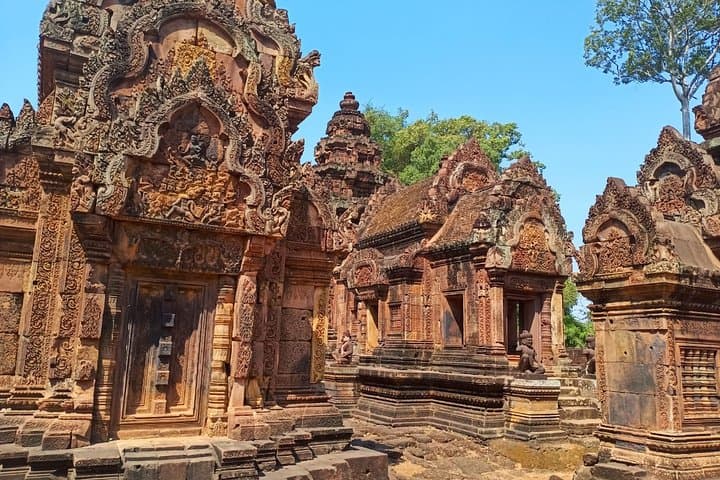
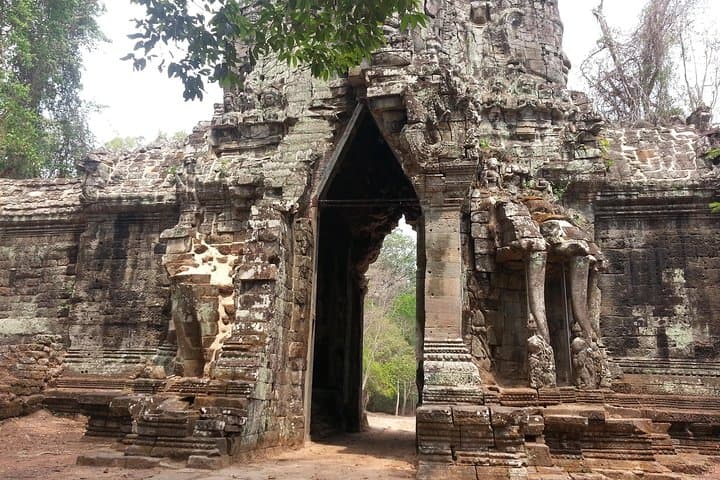
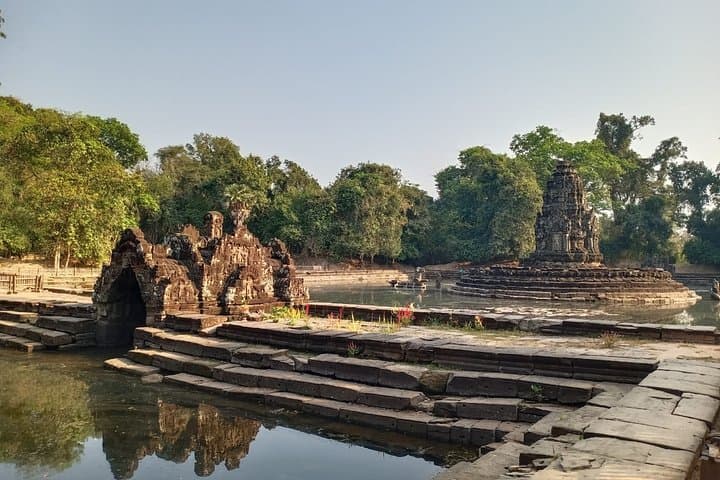
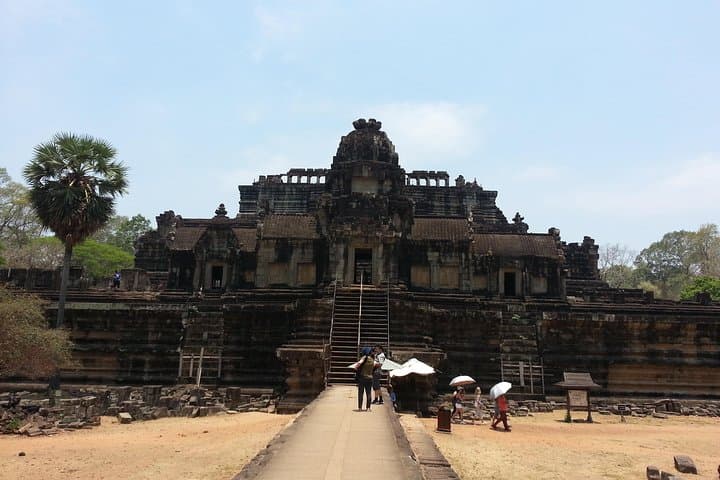
Angkor’s monuments are the visible work of the Khmer Empire (9th–13th centuries). Angkor Wat, raised by Suryavarman II, reflects both Hindu cosmology and sophisticated hydraulic engineering: barays and canals that once fed rice fields and supplied reservoirs. Banteay Srei’s intricate reliefs are carved from a softer, rose-hued sandstone, while later Bayon towers bear the enigmatic smiling faces of Jayavarman VII’s era.
On the lake, waterways take on personality: channels that open and close with the seasons, wooden houses rising and lowering with the flood. Local culture is present in markets, lacquer workshops and the artisans at Artisans d’Angkor where traditional crafts are revived.
Practical guide: expect full days on paved and packed-earth surfaces, brief boat rides, and multiple temple stair sections. Carry water, sun protection and modest clothing for temples (shoulders and knees covered). Start early to avoid midday heat and crowds; bring insect repellent for Tonle Sap boat trips. With a private guide and transport, pacing is flexible — plan for three active days with moderate walking and many photo stops.
moderate.
2–3 days.
Suitable for travelers with moderate fitness who can manage several hours of walking each day and short stair climbs.
Yes — entrance to Angkor Archaeological Park requires a pass (1-, 3-, or 7-day options) which your guide or operator can help arrange prior to or on arrival.
Many operators provide wheelchair-accessible transport and some paths are flat, but several temples have steep steps and uneven surfaces — confirm accessibility details in advance.
Meals are usually not all-inclusive; most tours stop for lunch and can accommodate dietary restrictions with advance notice to the operator or guide.
The dry season (late November–April) offers cooler, more predictable weather for temple walks; the wet season raises Tonle Sap water levels, improving boat access to the flooded forest.
Angkor was the heart of the Khmer Empire; many temples date from the 9th–13th centuries and display shifts from Hindu to Buddhist patronage.
Visitor impacts are managed through regulated ticketing and site pathways; on Tonle Sap, rising tourism and seasonal ecology make responsible boating and waste practices important.
Private Tour Guide-Cambodia operates guided outdoor trips and adventures with an emphasis on safety, stewardship, and memorable experiences.
You step out of your hotel into Siem Reap air that already hums with morning: motorbikes threading past colonial facades, tuk-tuks idling, and a distant line of temple spires cutting the sky. Over three days this private tour moves deliberately through stone and water — Banteay Srei’s pink sandstone carvings, the brooding stone faces of Bayon, and the tree-wrapped corridors of Ta Prohm — then out to the slow, breathing expanse of Tonle Sap and its floating communities.
You step out of your hotel into Siem Reap air that already hums with morning: motorbikes threading past colonial facades, tuk-tuks idling, and a distant line of temple spires cutting the sky. Over three days this private tour moves deliberately through stone and water — Banteay Srei’s pink sandstone carvings, the brooding stone faces of Bayon, and the tree-wrapped corridors of Ta Prohm — then out to the slow, breathing expanse of Tonle Sap and its floating communities.
Angkor’s monuments are the visible work of the Khmer Empire (9th–13th centuries). Angkor Wat, raised by Suryavarman II, reflects both Hindu cosmology and sophisticated hydraulic engineering: barays and canals that once fed rice fields and supplied reservoirs. Banteay Srei’s intricate reliefs are carved from a softer, rose-hued sandstone, while later Bayon towers bear the enigmatic smiling faces of Jayavarman VII’s era.
On the lake, waterways take on personality: channels that open and close with the seasons, wooden houses rising and lowering with the flood. Local culture is present in markets, lacquer workshops and the artisans at Artisans d’Angkor where traditional crafts are revived.
Practical guide: expect full days on paved and packed-earth surfaces, brief boat rides, and multiple temple stair sections. Carry water, sun protection and modest clothing for temples (shoulders and knees covered). Start early to avoid midday heat and crowds; bring insect repellent for Tonle Sap boat trips. With a private guide and transport, pacing is flexible — plan for three active days with moderate walking and many photo stops.