THE ADVENTURE COLLECTIVE® · Independent discovery and booking for outdoor travel

Move from stone galleries to flooded villages on a private three-day circuit through Angkor’s major temples and remote Khmer capitals. Expect early starts, uneven stone underfoot, and a mix of iconic sites and off-grid ruins like Koh Ker and Beng Mealea.
Move from stone galleries to flooded villages on a private three-day circuit through Angkor’s major temples and remote Khmer capitals. Expect early starts, uneven stone underfoot, and a mix of iconic sites and off-grid ruins like Koh Ker and Beng Mealea.
The morning light in Siem Reap slices through fig roots and long shadows, and on a private three-day circuit you move from carved sandstone corridors into open paddy country and then deep jungle silence.
Verified experiences and guided adventures in the surrounding area.
Operated by Tour Guide-Siem Reap · Siem Reap, Siem Reap Province
The morning light in Siem Reap slices through fig roots and long shadows, and on a private three-day circuit you move from carved sandstone corridors into open paddy country and then deep jungle silence.
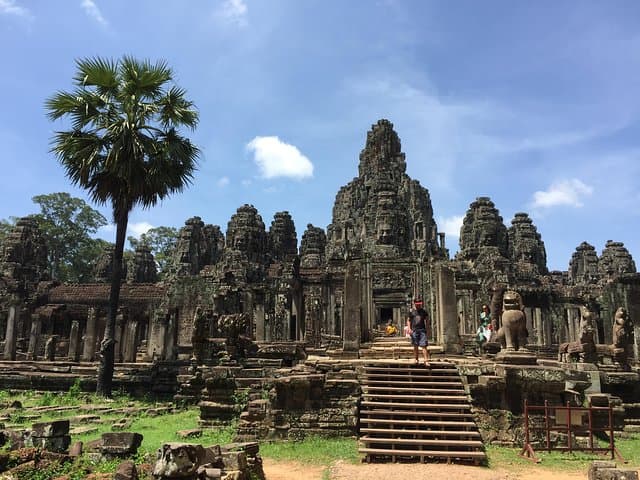
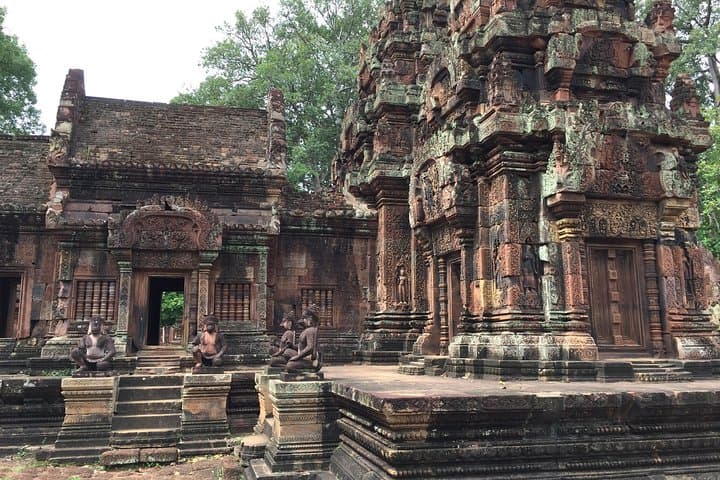
You begin amid the great galleries of Angkor Wat and the carved faces of Bayon, where bas-reliefs record market days, festivals and battles. Over three days the route unfurls historically: early Angkorian mountain-temples and brick towers of Hariharaliya, the pink sandstone finesse of Banteay Srei, the jungle-split pillars of Ta Prohm, and out to the remote Koh Ker pyramid, Prasat Thom—an imperial capital once lost to forest.
Geology here is simple: laterite foundations overlain by sandstone blocks that weather with time, while the surrounding Tonle Sap and rice plains shape local life and seasonal flood cycles. Culturally, this tour mixes temple architecture with rural living—the floating villages of Kompong Khleang give a counterpoint to stone sanctuaries.
Practical guidance: plan early starts to avoid heat and crowds; much walking is on uneven stone and raised causeways, with short climbs (wooden stairways restored at some sites). Bring breathable layers, plenty of water, and cash for site fees and local vendors. Expect private transport by air-conditioned van, a professional guide, and a relaxed daily pace that accommodates photography and quiet exploration.
Respect temple etiquette (covered shoulders/knees) and allow extra time for rural transfers—some off-the-beaten-path roads are unsealed. With a private guide, the three-day loop balances iconic highlights and remote discoveries, rewarding both history lovers and adventurous walkers.
moderate.
3 days.
Suitable for people in average physical condition who can manage several hours of walking per day and short stair/climb sections.
Yes—entry to the Angkor Archaeological Park requires an Angkor Pass; your operator typically arranges or reminds you to purchase it in Siem Reap.
Expect several hours of walking each day over uneven terrain and stone steps, with vehicle transfers between sites—pace is usually relaxed with frequent stops.
They are far less crowded than Angkor Wat and Bayon, offering quieter exploration, but access involves longer drives over rough roads.
The operator lists it as suitable for all fitness levels, but uneven surfaces and stair sections can be challenging—ask about shorter routes or vehicle access for limited mobility.
These sites span centuries of the Khmer Empire when capitals shifted and monumental masonry reflected political power—Koh Ker briefly served as a capital in the 10th century.
Ongoing restoration and visitor management are focused on stabilizing fragile stonework and supporting local communities; stick to marked paths and avoid touching bas-reliefs.
Tour Guide-Siem Reap operates guided outdoor trips and adventures with an emphasis on safety, stewardship, and memorable experiences.


The morning light in Siem Reap slices through fig roots and long shadows, and on a private three-day circuit you move from carved sandstone corridors into open paddy country and then deep jungle silence.
The morning light in Siem Reap slices through fig roots and long shadows, and on a private three-day circuit you move from carved sandstone corridors into open paddy country and then deep jungle silence.
You begin amid the great galleries of Angkor Wat and the carved faces of Bayon, where bas-reliefs record market days, festivals and battles. Over three days the route unfurls historically: early Angkorian mountain-temples and brick towers of Hariharaliya, the pink sandstone finesse of Banteay Srei, the jungle-split pillars of Ta Prohm, and out to the remote Koh Ker pyramid, Prasat Thom—an imperial capital once lost to forest.
Geology here is simple: laterite foundations overlain by sandstone blocks that weather with time, while the surrounding Tonle Sap and rice plains shape local life and seasonal flood cycles. Culturally, this tour mixes temple architecture with rural living—the floating villages of Kompong Khleang give a counterpoint to stone sanctuaries.
Practical guidance: plan early starts to avoid heat and crowds; much walking is on uneven stone and raised causeways, with short climbs (wooden stairways restored at some sites). Bring breathable layers, plenty of water, and cash for site fees and local vendors. Expect private transport by air-conditioned van, a professional guide, and a relaxed daily pace that accommodates photography and quiet exploration.
Respect temple etiquette (covered shoulders/knees) and allow extra time for rural transfers—some off-the-beaten-path roads are unsealed. With a private guide, the three-day loop balances iconic highlights and remote discoveries, rewarding both history lovers and adventurous walkers.